Showing posts with label Language. Show all posts

Tuesday, March 24, 2026

An Anniversary of Atrocities

Today is the 50th anniversary of Argentina’s most brutal military dictatorship ever but, in the beginning, it was a bloodless displacement of President Isabel Martínez de Perón, widow of the famous caudillo Juan Domingo Perón. It soon devolved, though, into a bloodbath of some 30,000 Argentines—among them María Eugenía Sanllorenti de Massolo, my brother-in-law’s first wife.

                                               Maru Sanllorenti, mother of Manuel Massolo

A student activist, “Maru” was abducted on the street in the city of La Plata, about 50 km southeast of Buenos Aires, but by good fortune her husband Carlos Massolo, her infant son Manuel, and my wife María Laura (Manuel’s aunt) escaped that fate because they were at home in a house near the city’s hippodrome. Given that many babies and infants were abducted and gifted to military families, we are fortunate that Manuel is still with us.


                                              Poster for Manuel's Exhibition in Buenos Aires


Today Manuel is an occupational therapist and a painter, whose artistic reflections on the coup and its aftermath—Dictadura a Diario (Dictatorship Day by Day)— are on display this month at the Casa de la Provincia de Buenos Aires, a short walk from the Congreso Nacional (National Congress Building). In addition to his day job and painting, Manuel also speaks to visiting overseas tour groups at the Parque de la Memoria, which features a wall with names of all those who disappeared under the dictatorship, in northern Buenos Aires barrio of Núñez.

                               Manuel points out Maru's name to his son at the Parque de la Memoria.


In recent years, the coup’s anniversary has been marked by solemn ceremonies attended by the country’s highest authorities. That’s not the case this year, as “libertarian” President Javier Milei, elected in 2024, is a coup denialist who has gone about dismantling these events and sabotaging institutions and groups that held the coupmongers to account. That said, Argentine courts have recently ruled against appeals from pilots who threw prisoners from helicopters into the ocean, and others who aided illegal adoptions of kidnapped children.


President Milei’s political party goes by the name of La Libertad Avanza (“Freedom Moves Forward”), and it has taken credit for reducing inflation and encouraging foreign investment (at the expense of skyrocketing unemployment). Nevertheless, that seems an odd moniker for an entity that declines to address the issue of Argentina’s human rights violations—the President’s only observations on massive demonstrations taking place today were that it didn’t tell the whole story. It’s perhaps noteworthy that new colloquialisms now describe Milei’s fanatical followers as libertarados (roughly translatable at “liberdimwits”) and libervirgos (‘liberincels”). There are probably many others even less complimentary.

Tuesday, June 28, 2022

Tuesday Topics: Patagonia, Reopening Chile, Vaccines, Masks & Linguistics, and Falklands Flights

When I arrived in Santiago de Chile in late February of 2020, to begin updating Moon Handbooks Patagonia for the upcoming sixth edition, what we now recognize as the COVID pandemic had barely begun and few of us appreciate what was a transformative event it would be. A couple weeks later, after I had crossed into northern Argentine Patagonia, its significance had become apparent and I managed to return to Chile before the border shut down and then, after various delays, to home in California.

When I landed in Santiago during the pandemic's earliest days, there were only the most basic temperature checks for airport arrivals.

After that lengthy delay, I’m once again planning—tentatively—to return to Chile in November. While I did travel to Buenos Aires and surroundings in March and April, I didn’t even consider a detour into Chile because its government had been slow to acknowledge foreign-administered vaccinations—an approval that’s necessary to obtain a pase de movilidad (mobility pass) permitting access to museums, restaurants, and other sites of interest to non-resident visitors.

Chile's acceptable vaccines list, according to Minsal (Health Ministry)

At that time, it was taking weeks to obtain the obligatory homologación, requiring an extended quarantine that made tourist travel inconvenient at best. Under pressure from the tourism sector, though, it has now instituted a process that should take no more than 48 hours through the Health Ministry’s vaccination website. Unfortunately, this does not (yet?) appear in English or any other foreign language but, since the policy in question is barely a week old, perhaps that’s just a short-term glitch? For those of us competent in Spanish that’s not an issue, but for the upcoming season it would seem essential.


What Is a Mask? A Linguistic Digression

A Chilean mascarilla

Ever since the pandemic started, we’ve been wearing masks and, when out in public, I still wear one (Alameda County, where I live, has only just rescinded its indoor mask mandate). I was in Chile when the pandemic started but before the mandate but, after I returned home quickly, the mascarilla soon became universal there and is still obligatory indoors and in outdoor spaces where it’s not possible to maintain one meter of distance between individuals. Mascarilla, by the way, is a diminutive of máscara, but I think the latter implies something that covers the entire face. In English, of course, we have just one term that covers both, though there qualifiers—“surgical mask,” for instance.

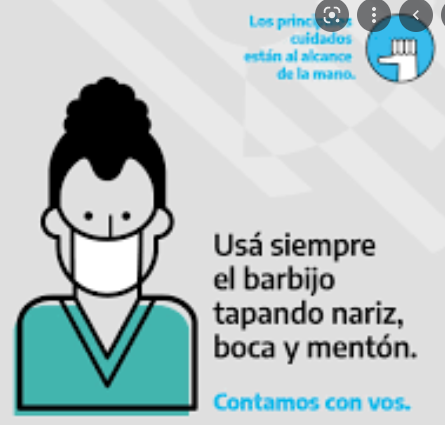
Instructions for your barbijo.

In Argentina, where I recently spent a month-plus, there are no mascarillas—rather, there are barbijos and tapabocas, two words that seem etymologically or otherwise curious. Barbijo derives from barba (beard), which feels odd since both men and women wear them, so perhaps it should be “barbijx” in interest of inclusive language?

This tapabocas covers more than just the mouth.

Alternatively, Argentines use tapabocas, which literally means “mouth covering”—oddly inappropriate, one would think, when masks are supposed to cover both the mouth and nose. Nevertheless, during my time there, Argentines were pretty conscientious about wearing their masks properly—both indoors and outdoors.


SCL to PUQ to MPN

Mount Pleasant International Airport (MPN) in the Falklands

Meanwhile, flights from the South American continent to the Falkland Islands will resume this coming Saturday, July 2nd. Since the Islands—insular Patagonia, if you will—form an important entry in the book, I’m very keen to return. Also, having lived there for more than a year in 1986-7 and revisited half a dozen times, I have many friends and acquaintances whom I am keen to revisit.

The Offices of International Tours and Travel (LAN has since been rebranded as LATAM)

According to an email I received from Sally Ellis, of Stanley’s International Tours and Travel, “The LATAM airlink with Chile will resume on 02 July with its normal route of Santiago - Punta Arenas - Falklands roundtrip, and a roundtrip possible from [the Argentine provincial capital of] Rio Gallegos if you travel to the Falklands on the second Saturday of each month and return on the third Saturday of each month.” It’s worth noting here that anyone flying from Punta Arenas to the Falklands and disembarking in Río Gallegos on return could run afoul of Argentine immigration—since Argentina consider the Falklands to be theirs, they may not give you an entry stamp at the airport and, when you try to leave at another border post, officials there might say you entered the country illegally.


Before the pandemic hit, there was an alternative route via Brazil and the central Argentine city of Córdoba but, according to Sally, “The Brazil route has no resumption date yet but will not be before the summer - maybe November?” I’ve never taken this route, but I wouldn’t rule it out at some point—especially since it would give me a chance to revisit one of Argentina’s most historic provincial capitals and its nearby Sierras.

Sunday, December 3, 2017

Would You Like the Good News First? Money & Visa Updates

In the context of southern South America, two topics about which I often write are money and visas, and on both I have good news and bad news. Here, today, I’ll deal with the two topics separately.

MONEY
Less than two weeks ago, I dealt with the issue of Argentina’s ATMs and the fact that they’re such a quilombo (a slang term, meaning a mess, that derives from an earlier usage that meant a brothel). I haven’t used an ATM in that time but good news is that, according to The Wall Street Journal’s local correspondent Taos Turner, Argentine banks have raised the limit for individual transactions to A$3,300 (about US$192; when I made my last withdrawal, I could only obtain A$2,000, about US$143). This is a step forward, though it still doesn’t come close to the permitted amounts from Chilean and Uruguayan ATMs.
For foreign account-holders, the cost of an Argentine ATM transaction rose by 67 percent in November.
The bad news is that the banks have raised their transaction charge to A$175 (almost exactly US$10), as opposed to the previous charge of A$106.20 (about US$6). That sounds bad, and it is, but with the new withdrawal limit that amounts to only 5.3 percent as opposed the earlier 5.31 percent. In Argentine banking, that appears to count as progress…

VISAS
In visa matters, the news is better, especially for Australians and Canadians. Early last year, Argentina suspended its so-called “reciprocity fee” for US visitors, in hopes that Argentines would gain access to the United States’ Visa Waiver Program, which permits cheaper and more expeditious travel to the Colossus of the North. That, however, occurred before a far more xenophobic administration took over the US government, and Chile remains the only South American country eligible for the Visa Waiver (unless you want to count Guyane, which is an overseas département of France). In principle, if the US refuses to reciprocate, Argentina could reinstate the fee for US visitors.
Soon, both Australian and Canadian visitors will be exempt from Argentina's "reciprocity" fee.
Recently, however, it’s taken steps in the other direction. The previous Argentine administration had also inflicted “reciprocity” fees on Australians and Canadians, but the current government eliminated the fee for Aussies last July, and has taken steps to to do so for Canadians by the first of the year. Nationals of both countries will find one less obstacle if they desire to visit Buenos Aires and beyond.

Brazil is also making it a bit easier to visit that country although, in my opinion, it still has a long way to go. I’ve not crossed the Brazilian border in some time, but applying for a Brazilian visa has always been inconvenient. It used to involve going in person but, when I tried to do so in Buenos Aires, the consulate there informed me that they could not issue a visa because my intended visit was too far in the future (to the best of my memory, it was two or three months before). I was able to get one-day service at the Puerto Iguazú consulate, to cross to the Brazilian side of the falls, but they would only accept payment in Argentine pesos, even though the visa fee was advertised in US dollars.
For US passport holders, the pleasure of a day-trip from Argentina to Brazil's side of Iguazú Falls will still cost US$160.
Now, though, intending visitors can apply for the visa online, but the Brazilians are still missing an opportunity that the Argentines are taking advantage of—eliminating the visa entirely would do much more to encourage travel to South America’s largest country. In fact, the Brazilians did so briefly last year, when they suspended all tourist visa requirements during the Olympics.


The argument, of course, is that as long as the US and other countries oblige Brazilians to obtain advance visas, it’s only fair Brazil should require the same for citizens of those countries. To some degree I sympathize with that argument and, as an advocate of open borders, I think US visa requirements are far too restrictive. That said, from a purely pragmatic viewpoint, Brazil gains nothing from subjecting potential visitors to bureaucratic obstacles. Argentina appears to have learned that lesson.

Monday, November 6, 2017

"Chinitos" - in Baseball and Buenos Aires


Last week, I watched in disappointment as my beloved Los Angeles Dodgers lost the deciding seventh game of baseball's World Series to the Houston Astros. Except for Game Seven, it was an exciting Series between the sport's two best teams, and the 'Stros were deserving—but there was also one disheartening blot on their first championship in the franchise's 55-year history.
My Dodgers lost the Series last Wednesday, but memorabilia was still on sale at LAX Saturday night.
That was the fault of Houston first baseman Yuliesky Gurriel. Elated over hitting a Game Three home run off the Dodgers' Yu Darvish, the Cuban-born Gurriel bought into a racist stereotype by narrowing his eyelids, using his index fingers, toward the Japanese-born Darvish. He also, apparently, mouthed the Spanish insult chinito (Chinaman) at Darvish and later gave an unconvincing public apology even as baseball commissioner Rob Manfred considered suspending the Houston player.

Many of former Argentine president Carlos Menem's opponents vilified him as a turco (Turk)
Here it bears mention that Cubans, and other Latin Americans, often apply the term chino indiscriminately for anybody of Asian ancestry, and there are other similar slurs. Argentines, for instance, may refer to anybody of Middle Eastern origins as as a turco (Turk).  Enemies of former president Carlos Menem—of Syrian descent—sometimes called him a turco de mierda ("shitty Turk").
A small supermercado chino in my Buenos Aires neighborhood of Palermo
Still, such terms are not always racist. Throughout the city of Buenos Aires, for instance, there are small Chinese-owned supermarkets—glorified convenience stores in many cases—that are known descriptively as supermercados chinos or, simply, chinos.
I was reminded of that when, on my Saturday night flight from Los Angeles to Lima, I watched the Argentine film Un Cuento Chino (loosely translated as "Chinese Takeaway," trailer above), starring Ricardo Darin as the irascible owner of a small hardware store who finds himself sheltering—ambivalently—Jun Quian, a young Chinese man (played by Ignacio Huang) who has arrived in the Argentine capital in search of a long-lost uncle.

Neither speaks a word of the other's language but, as it happens, both Darin's character and his Chinese guest have more in common than might be expected, but I'll plead spoiler alert on that. It does come back to the film's title—a cuento chino is a tall tale, though I don’t know the idiom’s exact etymology in Spanish.

For what it's worth, I'll close by noting that Darin's son, also an actor, goes by the nickname Chino. His female counterpart might be actress China Suarez, whose maternal grandmother’s parents were Japanese immigrants to Argentina.


Custom Search