Showing posts with label Antarctica. Show all posts

Friday, November 1, 2019

Patagonia's Adventure Connect(ion) in San Francisco

Last week, I attended a promotional event for Chilean Patagonia in the Adventure Connect series, organized by the Adventure Travel and Trade Association (ATTA). At a time when Chile’s undergoing political upheaval, the occasion brought the Magallanes regional representative of Sernatur, the national tourism secretariat, and representatives of several different operators to San Francisco as part of a national promotional tour.
The setup at San Francisco's Hotel Zetta
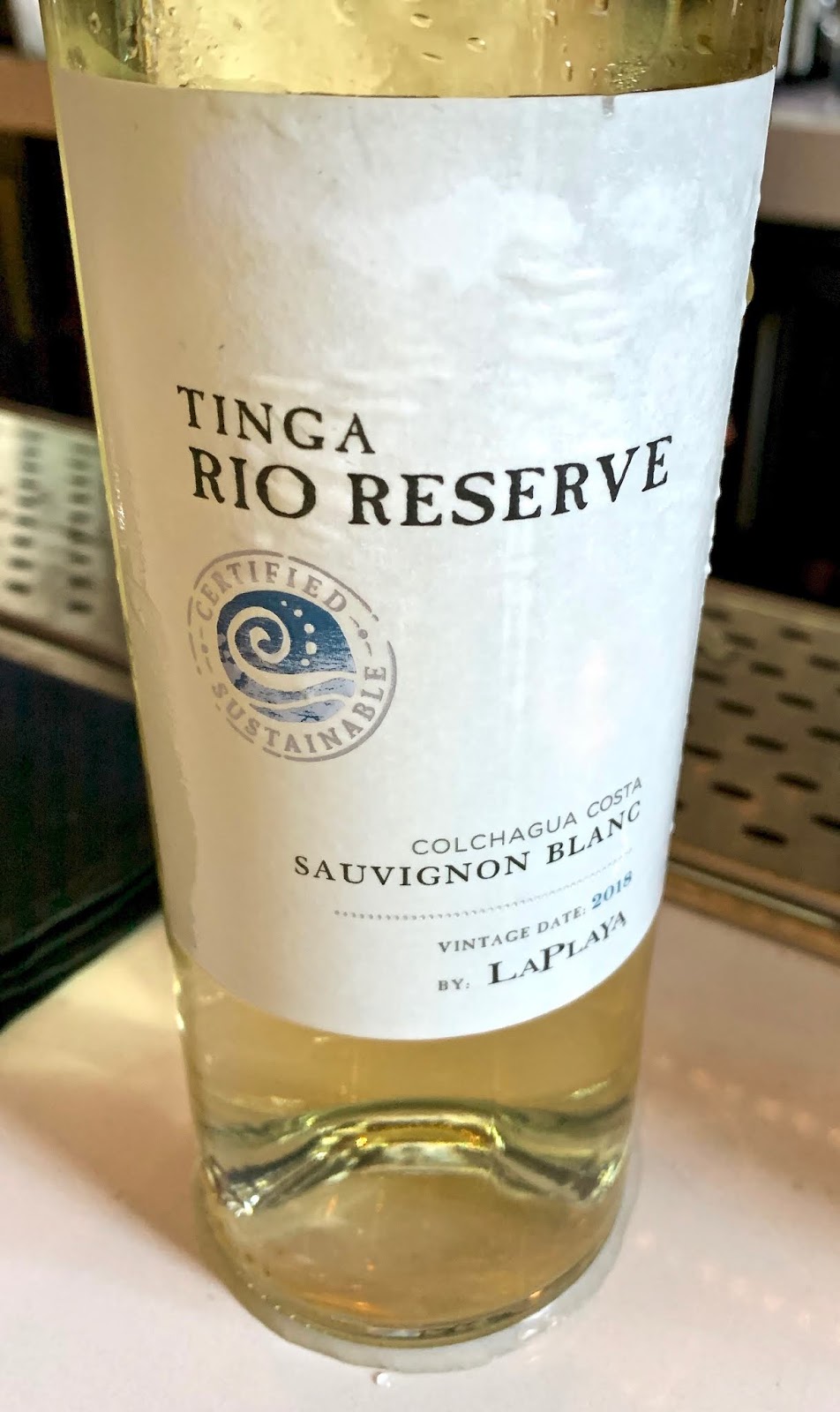
The event took place in the lobby of Hotel Zetta, where eight different operators were to discuss their services with Bay Area travel companies and invited writers (of whom I was one). The format was a sort of musical chairs in which each operator met with one or more attendees for eight minutes before a timer sounded to move elsewhere. This went on for 2-1/2 hours, with a coffee break that included a giveaway raffle, before adjourning to a conference room for a presentation by Sernatur’s regional director Ximena Castro that was probably most useful to those with less experience than mine in the region. Later, there was a Chilean social hour that included snacks and one of the finest Sauvignon Blancs I’ve ever tasted—especially welcome on an unusually hot San Francisco day.

Ximena Castro addresses the attendees.


The Chileans brought this Sauvignon Blanc along with them and, so far, I've been unsuccessful in finding it stateside.
Originally, eight different operators—some of whom I already knew—were to attend the event. In the aftermath of the recent upheavals in Santiago, though, the representatives of Antarctic Airways—with whom I would have liked to discuss their updated services—and Lago Grey - Experience Hotel were unable to get flights out of Santiago. I already knew the owners of Big Foot Patagonia Adventure and the representative of Vértice Patagonia (operator of mountain huts on the famed Paine Circuit, plus a new boutique hotel in Puerto Natales), and was familiar with Antártica 21  and Australis Cape Horn & Patagonia (both of whom sent US-based representatives). New to me were the Chile Nativo adventure operator and HD Hotel Natales (the rebranded Hotel Cisne de Cuello Negro) in Puerto Bories.

The not quite unspoken topic that permeated the meeting was what effect Chile’s recent political disruptions and disorder might have on the upcoming season. There was certainly concern, but also consensus that the Región Metropolitana de Santiago and the coastal region of Valparaíso would be more directly hit than remote Magallanes. That said, cruise ship and hotel cancellations would certainly affect a city like the regional capital of Punta Arenas, which has seen some demonstrations. I recently saw an online story—can’t find the link now—whose headline spoke of “80 percent cancellations” in Chile, but what the story actually said was that 80 percent of hotels and other services had experienced cancellations (which could have been just a single cancellation each for some).

That’s not to dismiss the issue of vandalism and disorder by a destructive fringe, even as the great majority of demonstrations have been peaceful, but President Sebastián Piñera’s embattled government has cancelled the upcoming COP climate conference (at which Swedish activist icon Greta Thunberg was due to appear and also the Asia-Pacific Economic Cooperation summit.

Personally, I would not hesitate to travel to Santiago, Valparaíso or elsewhere in Chile at present, even though I’d advise those with little or no experience of the country to be on alert. In a recent newsletter, the private Federación de Turismo de Chile cited the Subsecretaría de Turismo to the effect that  “our tourism continues to function throughout the country and the most popular destinations visited by international tourists, such as San Pedro de AtacamaElqui Valley, the islands of Rapa Nui [Easter Island] and Juan Fernández [Robinson Crusoe], the Chilean Patagonia and Torres del Paine National Park, are operating with normality.” Aeropuerto Internacional Arturo Merino Benítez is back to normal, but visitors would still do well to have travel insurance in case of disruption.

And the Money?
For foreign visitors, there may be a bright side to all this. About two months ago, the last time I wrote about exchange rates, both the Argentine and Chilean pesos were slipping against the US dollar, and that has continued with the upheaval in Chile and the recent election in Argentina, when the Peronist Alberto Fernández defeated the incumbent president Mauricio Macri.
The Dólar Blue Hoy app is a useful addition to one's smartphone.
The so-called “markets” (and many individual Argentines) have little confidence in Peronism and, consequently, Argentina’s Banco Central (Central Bank) has reinstituted a cepo cambiario (“currency clamp”) that restricts Argentines’ overseas ATM advances to US$50 per transaction (oddly, it puts no restrictions on the number of transactions per day, but those ATM charges could really add up. Meanwhile, individual Argentines can now officially purchase no more than US$200 per month, a measure that seems to be encouraging the informal dólar blue (visitors to Argentina might consider downloading the Dólar Blue Hoy app, pictured here, on their smartphones). Exactly this will develop as the Macri administration gives way to Fernández remains to be seen, but it seems likely that the informal exchange rate will benefit tourists in the short to medium term.
Chile's peso has also slipped against the US dollar and some other currencies.
In Chile, meanwhile, the peso has dipped to 740 per dollar, a fall of roughly three percent since August. This may affect prices slightly, but if foreign visitors avoid the country because of the perception of instability, services such as hotels and tour operators may drop their prices. In any event, matters are less predictable than they seemed even a few months ago.


Sunday, March 19, 2017

Biking the Vines

Once upon a time, Santiago was a small city surrounded by farmland, including extensive vineyards. Over the past century-plus, it’s turned most of that farmland into factories, houses and roads. Many of those houses now sport parras, the grape arbors that cover driveways and patios for table grapes, but there remain a handful of vineyards and wineries.
The cellars at Viña Santa Carolina, Santiago's most central winery
The closest of the wineries is Viña Santa Carolina, just a few Metro stops from the central Plaza de Armas, but it has no vines to speak of—all the grapes are trucked into town. A bit farther out, though, in the capital’s Peñalolén district, extensive vineyards still surround the facilities of Viña Cousiño Macul, which has occupied these lands since 1856.
Coal tailings at Lota are still visible from the lovingly landscaped Parque Isidora Cousiño
The Cousiños have been in Chile since 1760, and originally made their fortune from coal near the southern city of Concepción—where the lushly landscaped grounds of Parque Isidora Cousiño contrast with tailings from the mines that gave them their wealth. In downtown Santiago, the Palacio Cousiño—current undergoing restoration after the powerful 2010 earthquake—was the family’s urban gem.
Carlos Cousiño (at left) at the bar of the Grigoriy Mikheev
In 2005, I met winery owner Carlos Cousiño, who brought wine to shared with other passengers on board the Grigoriy Mikheev, a Russian vessel then under charter to the Chilean company Antarctica XXI. I’d paid an earlier visit to the winery but, recently in Santiago, I took the opportunity to do a bike and wine tour with the Santiago operator Bicicleta Verde.
Cousiño Macul's vineyards are on the eastern edge of the city.
The ride doesn’t leave from Bicicleta Verde’s downtown Santiago offices (though the company does offer tours of the city proper). Peñalolén’s a bit distant for that, but it’s still a quick trip on the exemplary Metro to Estación Quilín, despite involving a change of trains.
The bikes await the riders.
From Quilín, it’s a half-hour walk or a short taxi ride to the winery, where wrought-iron gates open onto a tree-shaded road leading to a complex of buildings dating, in some cases, to the mid-19th century. Bicicleta Verde stores its gear in a warehouse here but, on this particular morning, I was the only client on hand (I chose to avoid the hot afternoon sun). The bikes themselves are basic, with baskets, big tires, limited gears, and hand brakes, suitable for terrain that slopes only slightly from the piedmont vineyards toward the city proper. It’s not a strenuous tour, though the return to winery requires a bit more effort (especially after sampling a glass of cool rosé offered by a well-prepared guide).
The Cousiño family's private collection ages in secure subterranean cellars.

After visiting the vines, we toured the atmospheric cellars proper—dating from 1870—where the Cousiño family keeps its private stash and much of the modern equipment resides; there’s also a collection of antique paraphernalia in one museum-like room. Then it was time to conclude the tasting, before catching a cab back to the Metro.
The tasting facilities at Cousiño Macul

Thursday, October 27, 2016

The Vikings of Patagonia

When overseas visitors make their way south to Patagonia, they assume spectacular landscapes and unfamiliar wildlife, but they’re only rarely thinking of people and culture. From their arrival in the capital cities of Buenos Aires and Santiago to the tip of Tierra del Fuego, they may anticipate encounters with Spanish speakers, but that’s an oversimplification – like North America, southernmost South America became a land of immigrants. In Patagonia, Britons and Croatians stand out, but Scandinavians were also in the mix.
To Argentines, for instance, all Scandinavians are vikingos (Vikings), but the term is not always simply descriptive - it's sometimes a synonym for "slob," presumably for the historic Vikings' dubious table manners (full disclosure: I myself have three Swedish grandparents and one Norwegian). Two of Buenos Aires’s most distinctive churches show the Scandinavian influence - San Telmo's Dansk Kirke (Danish Church) and the Svenska Kyrkan (Swedish Church, pictured above) - and both the Danish and Swedish clubs have their own restaurants in the city. Legend says the Buenos Aires soccer team Boca Juniors chose their blue-and-gold colors from a Swedish vessel anchored in the nearby harbor.
In 1902, the Argentine navy's corvette Uruguay (pictured above, now docked at Buenos Aires's Puerto Madero and converted into a museum) rescued stranded Swedish Antarctic explorer Otto Nordenskjöld and his crew, who spent two years stranded on the frozen continent. Nordenskjöld also explored Patagonia, including the area around Chile's Torres del Paine, where one of the park's largest lakes (pictured below) bears his name.
Coincidentally, while hiking near El Chaltén (Argentina) in 2009, I met Nordenskjöld's great grandson Joel, who was paying a second visit to the region (the first was in 2002, when he and 16 other Nordenskjölds visited Antarctica on the centennial of Otto's rescue by the Argentines). In the following days, as his group hiked the "W" route in Paine, Joel pledged to take a swim in the frigid waters of the lake named for his grandfather.
The Scandinavians had more than Nordenskjöld’s fleeting Patagonian presence, though. Outside El Chaltén, Danish pioneer Andreas Madsen’s homestead (pictured above) is now a museum open to the public for guided tours. And in a remote sector of Argentina’s Parque Nacional Los Glaciares, between El Calafate and El Chaltén, Hostería Helsingfors (pictured below) is a remnant of Finnish pioneer Alfred Ranström’s century-old sheep ranch, but the surrounding area is open parkland where hikers can reach scenic Laguna Azul (pictured at bottom), which has its own small glacier.
Though no longer owned by the Ramströms, Helsingfors (the Swedish name for Finland’s capital of Helsinki) offers luxury lodgings and other services, with the chance to escape the crowds at the Moreno Glacier or on the Andean trails near El Chaltén. Because there’s no public transportation, though, renting a car is the only practical option for a visit unless you stay here – in which case, the transfer from El Calafate is free.

Wednesday, September 7, 2016

Where Are the Penguins?

As winter turns to spring – in the Southern Hemisphere – penguins are on the move, but it’s not for their Patagonia vacation. Rather, this is the season that most of them, after spending the winter at sea, migrate to their nesting sites in the South Atlantic and South Pacific, including Argentina, Chile and the Falkland Islands.
A solitary Magellanic penguin in the abandoned lighthouse at Isla de los Pingüinos
With that in mind, I thought I’d suggest some of my favorite sites for flightless bird-watching, except that they’re not flightless – they fly through the water! Penguin nesting sites occur on much of the coastline of both Argentina and Chile there’s even one just a couple hours from the Chilean capital of Santiago – but access is best in Patagonia.

Humboldt & Magellanic Penguins
Visitors to Chile’s southern “lakes district” can take a detour to Chiloé – similar to Vancouver Island - only 27 km from the city of Ancud, where the northerly Humboldt penguin and southerly Magellanic penguin overlap their ranges at the Monumento Natural Islotes de Puñihuil (pictured above). These similar species nest in burrows on offshore islets, but local fishermen shuttle penguin-spotters within camera distance.
Puñihuil is easily the best accessible place to see the Humboldts but, elsewhere in Patagonia the Magellanics are present in abundance. The biggest colony is at Argentina’s Punta Tombo (pictured above), near the city of Trelew in Chubut province, but there are accessible sites near the Chilean city of Punta Arenas, at the mainland Otway Sound and the offshore Isla Magdalena (pictured below, where Patagonia cruises and local excursions both stop). At all of these, it’s possible to approach the penguins closely – often they’ll approach you - though there are some restrictions.
King Penguins
King penguins, which are not migratory, stand out for their size and bright colors, but they’re more common on remote offshore islands than in easily accessible Patagonian locations. Occasionally a wanderer shows up at Punta Tombo or another site where other species breed, but the most accessible choice is the private Parque Pingüino Rey reserve (pictured above) on the Chilean side of Tierra del Fuego. This is a full-day excursion by ferry and road from the city of Punta Arenas, but it’s well worth the time.

Rockhopper Penguins
An angry rockhopper in the Falkland Islands
Exactly what their name suggests, rockhopper penguins nest on stony offshore islands on which they land by force of waves and then, painstakingly, they hop up to drier nesting spots. These are “crested penguins,” along with their close relatives the Macaroni, which occasionally (but rarely) appears among them. One of the easiest places to see rockies is the Isla de los Pingüinos (pictured above), reached from Argentina’s picturesque Puerto Deseado, where there are frequent excursions in summer on rigid inflatables – sea conditions permitting. Despite an excellent paved highway, Deseado is out of the way but, if you have the time, there’s much more to see – including albatrosses, dolphins and sea lions.

Gentoo Penguins

Gentoos (pictured above) like kings, are not migratory – they remain in the same place all year. Unfortunately for penguin-seekers, those colonies are mostly insular, away from the continent, though there are occasional appearances elsewhere. The likeliest place to see them is on the Argentine side of Tierra del Fuego, at the historic Estancia Harberton ranch,  where a small colony has established itself on a nearby islet.

An Austral Footnote
More distant and more expensive to reach, the Falkland Islands – still less than two hours from Punta Arenas by air – have almost all the above species and sometimes more. It can also be expensive and time-consuming to get around the archipelago but in just one morning, on a 4WD jaunt just outside the tiny but still sprawling capital of Stanley, I once saw Magellanics, Gentoos, and rockhoppers, plus a single Macaroni (pictured above) and one lonely king. In a small king penguin colony on an outer island, I also saw a vagrant chinstrap penguin - usually seen only in Antarctica.

An Antarctic Footnote

And now for something completely different: even more distant and expensive, Antarctica has many of these species and more. The usual way to reach the frozen continent is with an expensive cruise but, in summer, there are flights from Punta Arenas to Isla Rey Jorge (King George Island), with the possibility of an overnight stay for an introduction to this environmentally strategic destination. I photographed the chinstraps above and the Adelies below there.
Custom Search