Showing posts with label Buses. Show all posts

Friday, February 21, 2020

Buenos Aires Airports (Including the Newest)

The terminal building at Aeropuerto El Palomar
Buenos Aires has airport issues. That’s long been apparent, given the accessibility issues of the main international airport at Ezeiza, the problematical logistics of the urban Aeroparque and, now, a third airport in the suburb of El Palomar, used primarily for the burgeoning low-cost market.
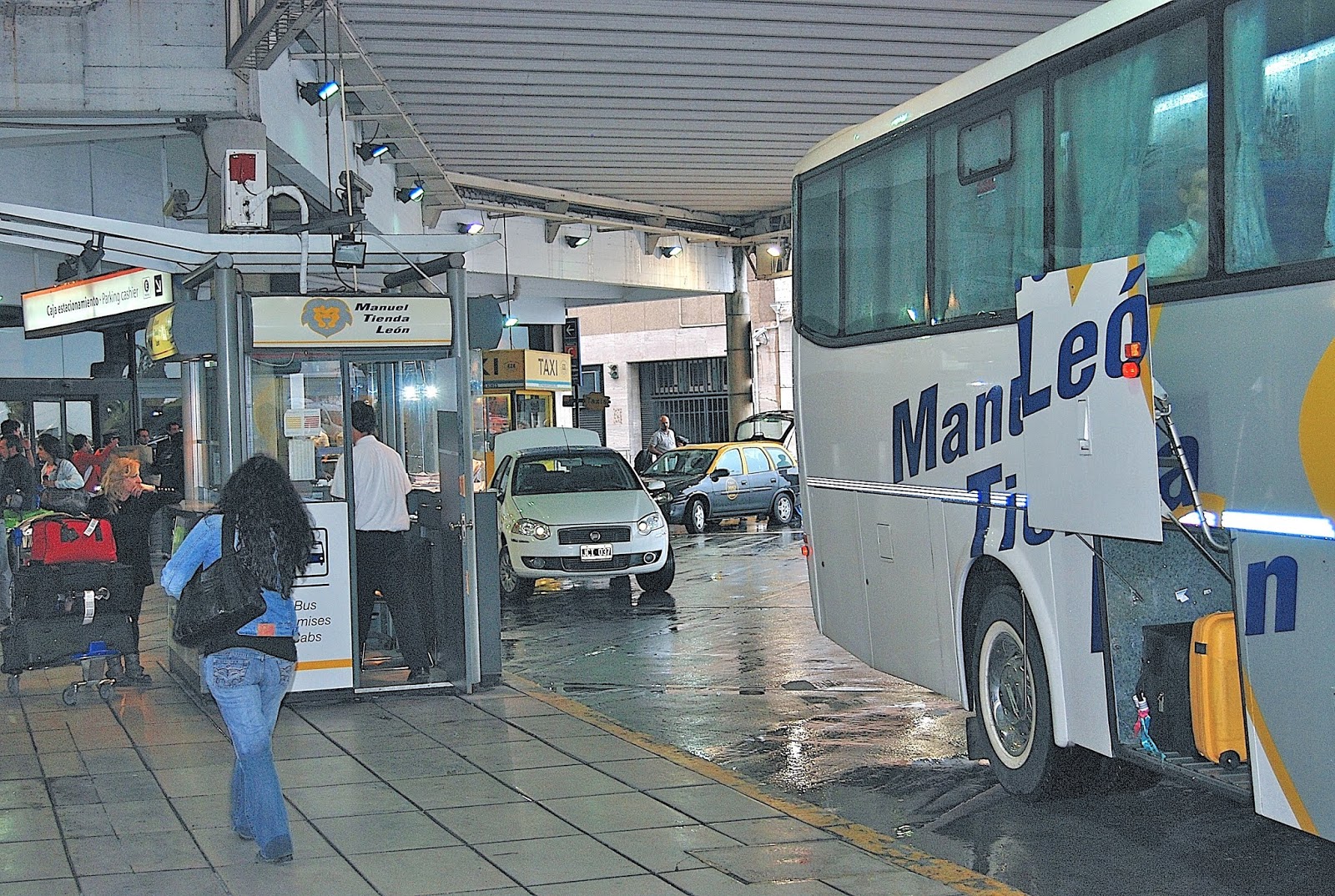
Manuel Tienda León is my default option from Ezeiza into Buenos Aires.
It’s the last of the three that I’ll be most concerned with there, but I’ll briefly mention the first two. Ezeiza, formally known as Aeropuerto Internacional Ministro Pistarini (EZE), is about 22 km south of the city center via the freeway known as the Autopista Teniente General Pablo Riccheri. That’s not far, but transportation can be problematical when suburban traffic clogs the highway at rush hour. Ideally Ezeiza would have rail service but, when I made this observation to a taxi driver, he responded that it would kill one of his main income sources (never underestimate the collective power of taxistas). When arriving at Ezeiza, I normally take the Manuel Tienda León bus/taxi combo into town—short delays don’t mean as much then—but, when leaving the country, I usually choose a cab or remise (livery car) directly there because luggage can be an issue. I still leave plenty early, though.
Aeroparque has few gates, so passengers must often take a shuttle to their plane.
Aeroparque Jorge Newbery (AEP) has different issues. It’s almost walking distance from our apartment in Palermo—or about a ten-minute cab ride—but the narrow road that runs alongside it (currently being widened by a landfill that projects into the Río de la Plata) can also get congested. Aeroparque’s biggest problem, though, is its very convenience, which brings low-flying planes to land on a crowded airfield with so few gates that passengers must often board shuttle buses for the relatively short distance to their plane. Immigration facilities also get really busy on international flights (mostly to and from neighboring countries).
Immigration gets backed up at Aeroparque.
El Palomar (EPA) is something else entirely. Only 20 km from downtown Buenos Aires, just outside the city limits, it’s a converted military airfield with only a single runway to serve FlyBondi and JetSmart, which provide cheap flights to provincial Argentine cities and to Brazil, Uruguay, Paraguay and Chile. Because of objections from neighbors, there are no nighttime flights.
The Ferroccaril San Martín is a commuter line that serves El Palomar.
On board the train to El Palomar
Getting there can be interesting. Manuel Tienda León offers remise service, but the congested approach makes public transportation a better option. The modernized Ferrocarril San Martín, a commuter line that once crossed the entire country to Mendoza, offers direct service from the central Estación Retiro, but I chose to walk from our apartment to the refurbished Estación Palermo (newly constructed overpasses have made the route quicker than it used to be). It’s 37 minutes from Retiro to El Palomar, and only 29 from Palermo, with frequencies every 15 minutes.
The gates to Aeropuerto El Palomar
This disconcerting panel stands outside the gates to Aeropuerto El Palomar.
Better yet, Estación El Palomar is barely a five-minute walk from the airport gates (presuming you’re not weighed down with heavy baggage). Some travelers may find it disconcerting, though, to be greeted by a sign that says that “This base operated as a clandestine detention center under the Air Force. According to witnesses, this was the departure point for ‘death flights’ with the purpose of killing detained and disappeared individuals from various points in the country.” During Argentina’s 1976-83 dictatorship, the military often threw sedated prisoners from planes or helicopters into the river or the open South Atlantic.
El Palomar's check-ins are congested.
After that, the terminal can’t help but be a relief, though its claustrophobic facilities are far inferior to of both Ezeiza and Aeroparque—even if conspicuous signs assure patrons that “We are modernizing El Palomar.” Not intending to fly out of there, I was unable to visit the departure areas, but I was still relieved that my own flight to Neuquén, on low-cost Norwegian Air Argentina, would depart from Aeroparque.

That scenario could change in the near future, as JetSmart has acquired Norwegian Argentina’s routes and will phase out the brand in favor of “JetSmart Argentina.” JetSmart should hold onto those gates at Aeroparque, which many if not most Porteño fliers should still find more convenient than El Palomar. That doesn’t mean, however, that I wouldn’t consider a cheap flight from El Palomar to, say, Bariloche or Ushuaia.

Saturday, February 11, 2012

Behind the Buenos Aires Transport Reform (Redux)

As yesterday’s deadline for obtaining or applying for Buenos Aires’s new SUBE integrated fare card approached, Argentine transport secretary Juan Pablo Schiavi acknowledged the attendant chaos by extending the deadline to Friday, March 2. Presumably, that will reduce the pressure and length of lines to obtain the card, but many details remain unclear – not least, what new fare structure will be after that date. Speculation ranges up to 10 pesos (about US$2.50), nearly a tenfold increase over current fares, but that seems improbable to me.
As I wrote on Wednesday, I’ll be back in town next weekend to test things myself. In the meantime, I received a series of emails from Dan Perlman of Casa Saltshaker as to his experience, beginning with his observation that “This is just so f'ing Argentine...” for its apparent disorderliness. I have edited his following comments slightly, primarily for punctuation.
According to Dan, “I tweeted your post about the SUBE cards and got hit back with multiple Argentines who follow me with ‘no, no, foreigners can get them, just go to the website and find the place nearest to you or go to any Correo Argentino [Post Office] to get one with your passport.’"

“Fine, went to the [SUBE] site and it gives no information whatsoever about who can apply or what you need to apply, but it does say, ‘go fill out the form at any Centro de Atencion’ and it gives a list of about a dozen in every neighborhood. I go to the one a few blocks from me and they've got signs plastered all over saying ‘we don't have SUBE cards here.’ So I go in and ask about it woman says, ‘the government never distributed the cards or the forms to any of the Centros de Atencion, so none of us have them. You have to go to any Correo Argentino.’"

“I go to the one closest to my house. I ask. ‘Nope, we don't have them, only the big zone branches have them.’ I go to the closest one to my house. Signs all over, ‘we have no system to process SUBE card requests for the moment.’ I ask. "Oh, the processing system has been down for days, it might be back up next week some time.’"

“Meanwhile, the government's been blogging and announcing about how they're so overwhelmed with the quantity of processing requests that they've extended the deadline for obtaining the cards.’"

“Yeah. This is working.”

Another interesting point that Dan brings up is the fact that authorities may be able to track cardholders’ usage even though, as I mentioned in Tuesday’s post, it is customary for multiple riders to use the same ticket on the Subte in particular, since no ticket is required to exit the system. The card, he says, “while tied to your name, probably doesn't show your name on the sensors - they don't have a screen that could do that, just a light to indicate it was processed and a small number readout of the balance. They'd have to replace every sensor in every bus, subway and train in order to have the ID thing make sense.”

“There is, however, an interesting Big Brother component to it all - if you go to the SUBE site, you can click on the link ‘Mis Viajes’ [My Trips], enter your card number and it will show your entire history (no idea back how far) of travels, time-stamped. I imagine the government has full access to that which would be something they could use to track someone down potentially.”

I’m not quite so convinced of that as, even if the card shows where you boarded a train or bus, it can’t show in which direction you were headed or where you got off. To repeat, there is no ticket necessary to exit any Subte train or city bus, and I can’t imagine any practical way to set one up – especially given how inept the system’s implementation has been so far.

In a follow-up message, Dan elaborates that “I'm going to go back on Monday or Tuesday to see if ‘the system’ is back up, so perhaps wait and see with that. Also, one person told me that starting sometime next week there are going to be street processing kiosks setup around the city - presumably, since they need a "system", either the intent is a wi-fi/cell connection to [the] process, or maybe it's just to fill out the paperwork and then wait for the card to arrive in the mail. I did, BTW, try filling out the form online and have heard nothing back, so who knows?”

Late Update
My wife, who's an Argentine citizen, has had better luck with her SUBE application. According to an email she just received, "We wish to notfiy you that your request has arrived at a final stage of validation and is presently being processed by Correo Argentino. We will inform you by another email on the progress of your package. Remember that the proceeding remains active and until its completion, it is not permitted to make another request either by Internet or at any other service point."

We Have a Winner! And, Perhaps, Another
Laurene Dong of Kitchener, Ontario, correctly identified Canada’s Barrick Gold as the company that proposed moving glaciers along the Argentine border in the so-called Pascua Lama project. She adds that “I'm disappointed to learn that the company that tried to remove the glaciers in northern Chile is Barrick Gold, which is Canadian, as am I.” She will be receiving a free copy of Moon Handbooks Patagonia in the mail, and is planning to visit early next year.

Meanwhile, I received another correct answer from a reader named “Randy,” who did not otherwise identify himself, in the comments section of the entry. Randy, if you don’t answer me by Monday with an address to which I can mail the book, I will have to withdraw the prize and hold it for a future contest.

Wednesday, February 8, 2012

Are Argentines "Enormous Dorks?" Behind the Buenos Aires Transport Reform

For years now, there’s been a shortage of coins in Argentina and especially in Buenos Aires, where they’ve been necessary to purchase bus, subway and train tickets. For that reason, the Porteños of Greater Buenos Aires have hoarded coins, exacerbating the problem, despite the creation of a new integrated fare system called the Sistema Único de Boleto Electrónico (SUBE, Single Electronic Ticket System) in 2009.
It’s been slow to take effect – a similar Monedero card for the Subte has seen limited acceptance  – but after years of dithering, Argentina’s federal government has finally forced the issue. With fares going up on all three systems, the Secretaría de Transporte (Transport Secretariat) recently decreed that, to continue to take advantage of current transport subsidies, riders must obtain or apply for a SUBE card by Friday, February 10. Current Monedero cards will not be eligible for the subsidized rates (the new rates are not yet completely clear).

As my friend Nicolás Kugler has written me, “We have a problem for every solution.” The SUBE card has meant blocks-long lines at the various centers where patrons can obtain them: “Long queues can be seen nowadays at every post office, kiosk, street stand, or parked bus where the SUBE sign is displayed” (The Secretariat even had to open a center in Mar del Plata, where so many Porteños spend their summer vacations).

Given the time-consuming difficulty of getting a card, which is free of charge, the agency opened a website where riders can request one electronically and receive it in the mail (presuming the post office operates more efficiently than the Transport Secretariat does). Riders must submit their name, address and DNI (national identity card) or other form of ID in order to obtain it.

Given that my wife (an Argentine) and I are currently in California – we’ll be flying to Buenos Aires next week – we decided to apply on line. My wife’s application apparently went smoothly, and her card should appear at our Palermo address shortly, but mine was a different matter. Two days after filling out my application, in which I included my passport number, I received the following email notice: “We regret to inform you that your web request for the SUBE card has been refused for inconsistencies in the personal data of the applicant. To obtain your SUBE, you should visit one of the 600 service centers listed in our web site. This notice has been sent automatically. It is unnecessary to respond to this message.”

So, it seems, non-resident foreigners are not eligible for the SUBE card which, on the face of it, appears tied to each individual’s identity card. That, however, raises the (admittedly unlikely) specter of station attendants and bus drivers checking each rider’s ID to assure that nobody was using another’s SUBE card. In practice, though I might not be able to get my own card, I expect to be able to use my wife’s, as I’m usually in town more often than she is. In fact, even when we’re traveling together, there’s no obstacle in using the same Subte ticket by just passing it back across the turnstile (no ticket is necessary to exit the system).

SUBE is an interesting acronym because, in standard Spanish, the word sube (infinitive subir) is a clever pun in that it means “climb aboard” in the second person familiar. It’s not quite correct in the Argentine context, though, because of slightly different verb forms: Argentines would say subí (in the second person familiar), while suba would be the second person formal version in both Argentine and standard Spanish.

Critics of the plan, though, have a different interpretation of the acronym. They note that, when users top up their cards, they are in effect providing the government an interest-free loan – critics might say “slush fund” - that could total up to 500 million pesos (about US$125 million). According to them, it should stand for “Somos Unos Boludos Enormes,” roughly translatable as “We’re a bunch of enormous dorks” for putting up with a bureaucratic maneuver that they see as a money grab.

I’m not quite that critical. While I think SUBE’s implementation is clumsily bureaucratic, something was necessary to integrate the system and, in the long run, it should be a positive. The issue of simply obtaining change aside, it will also mean greater safety because bus drivers, who have been vulnerable to robberies in some of Buenos Aires’s more dubious suburbs, will not have to carry any cash.

An etymological digression: the slang word boludo has off-color origins but, in today’s Argentina, it’s more innocuous than it once was – you can call a friend boludo or bolú, and I’ve even seen it in humorous TV advertisements. It is inappropriate in formal Spanish, though, and if you address a stranger as boludo, "Them could be fightin' words."

Win a Prize from Southern Cone Travel!
I am still waiting on a winner or two from the contest from Saturday on the entry immediately below this one. Please have a look and enter, or I'll have to withdraw the remaining prizes.

Tuesday, June 28, 2011

The Porteño Pedestrian: Theory & Practice

I’ve written several times about Argentine traffic safety in Buenos Aires and elsewhere, suggesting that the first rule of pedestrian survival is to appreciate that you are invisible, but it’s a topic that never seems to go away. Only a few days ago, the daily Clarín reported that pedestrian deaths in the Argentine capital have are running roughly 50 percent ahead of last year, with an average of five per month. City buses and trucks are the usual culprits.

According to Alberto Silveira, of Luchemos por la Vida (an NGO whose slogan is “road safety is no accident”), part of the problem is inadequate infrastructure: removing buses from narrow streets, turning others in pedestrian malls, and widening sidewalks would make the city safer. In the colonial barrio of San Telmo, some sidewalks are only 60 cm wide (barely two feet).

Silveira also suggests closing some streets to through traffic and installing speed bumps, though my own anecdotal observations would suggest that the speed bumps are ineffective - many Porteño drivers don’t hesitate to fly over them. On the other hand, in my own Palermo neighborhood, I’ve seen a few blocks with speed dips - in reality, gutters that help drain waters in heavy storms but are also effective in slowing drivers who don’t want to scrape the undercarriage of their vehicles. One taxi driver there told me it keeps everybody honest.

These infrastructural solutions, though, are much easier to implement than changing the habits of Argentine drivers, few of whom would ever consider yielding right of way to a pedestrian. The Clarín story notes that “the buses that come down Avenida Córdoba turn onto Cerrito at full speed, without respecting pedestrian priority and forcing them to sprint across.” Even the young and agile can find crossing 12-lane Avenida Libertador (pictured above and below) a challenge and, according to one traffic study cited by Luchemos, there are more than 700,000 violations of pedestrian right of way in the city every day. In a month, that totals more than 21 million, but leads to only 39 citations - an average of roughly one for every 540,000 violations.

There is, of course, the issue of pedestrian culpability. While it’s true that many ignore traffic signals and even cross mid-block, I’ve always thought that, given the habits of Argentine drivers, pedestrians have to try to cross wherever it’s feasible. That said, contemporary technology is now a contributor to the hazard - pedestrians texting on smartphones certainly bear responsibility when they stroll obliviously into the street, even if cars and buses are far more lethal. In theory, pedestrian violations are subject to citations and fines, but those are even rarer than moving violations for vehicles.

Speaking of moving violations, those should in principle become more common, as the Buenos Aires city legislature reduced speed limits for public buses last month: from 80 to 60 km per hour in major avenues, and 60 to 50 km per hour in other avenues. Unfortunately, the limit on normal streets remains 40 km per hour, rather than dropping to 30, and the new law does not apply to passenger automobiles. Even then, bringing down the death toll would require serious traffic law enforcement - the factor that is most lacking.

Help Support Southern Cone Travel
If you have found this article informative, please consider clicking on one or more of the AdSense links that accompany it - always presuming, of course, that it’s a product or service that interests you.

Tuesday, August 24, 2010

Chilean Patagonia's Latest Lodge


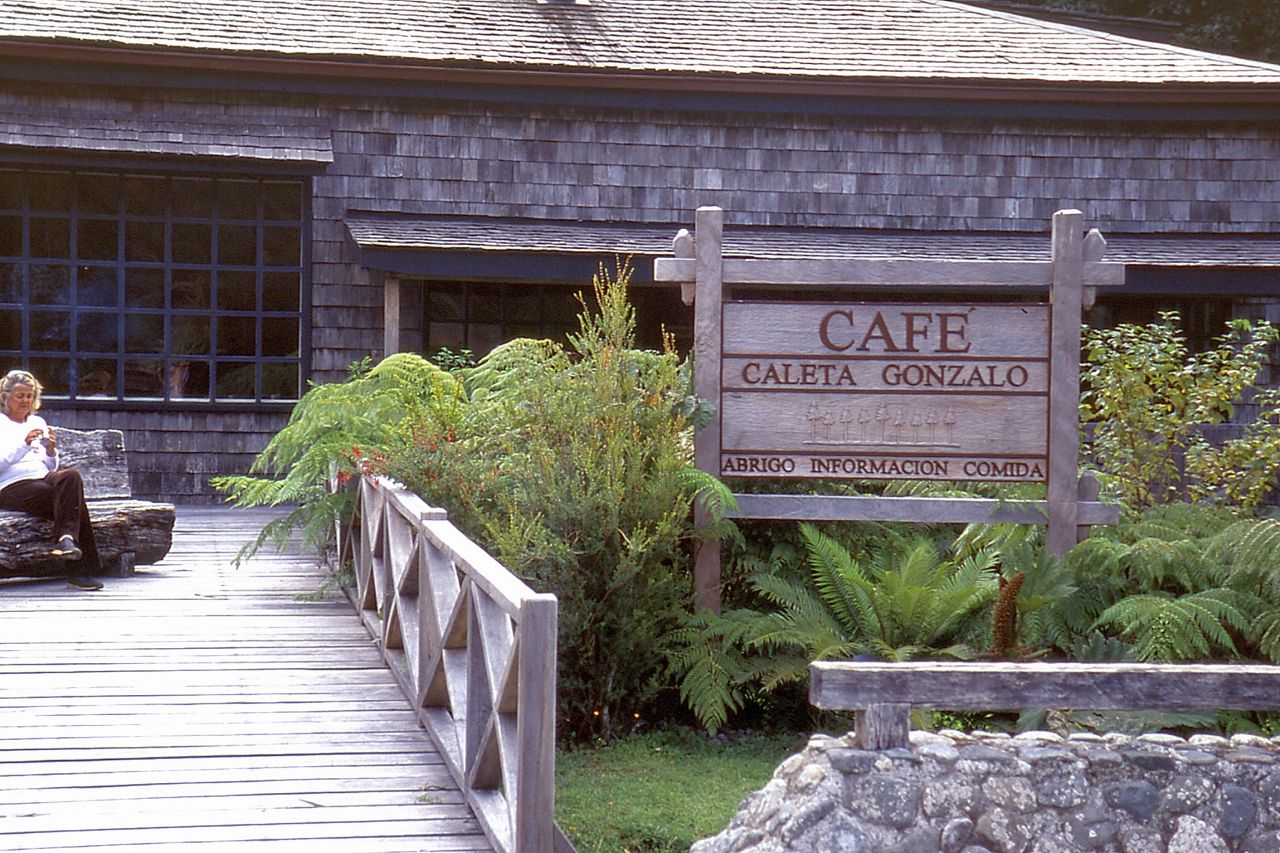
In a post just a couple months ago, I noted that Chile’s Parque Pumalín (pictured above) - closed since the eruption of Volcán Chaitén in 2008 - will reopen in December for the 2009-10 season. I have since heard from Carolina Morgado, who works for Doug Tompkins and Kris McDivitt, the environmental philanthropists responsible for the creation of Pumalín, that the facilities at Caleta Gonzalo - including the visitor center, café (pictured below) and cabañas - will reopen on December 15th.


In the course of updating the current edition of Moon Handbooks Patagonia, I expect to revisit the area later this year but, in the meantime, I’ve received further information on the pending Parque Nacional Patagonia (which, unlike the privately run Pumalín, will be part of Chile’s national park system), a public-private initiative that would unite several protected areas near the town of Cochrane. The biggest development for this season is the opening of the new lodge at Valle Chacabuco (pictured below in winter, reservas@vallechacabuco.cl), about half an hour northeast of town, which immediately becomes the area’s elite accommodations. Like Tompkins’ and McDivitt’s other properties, it suggests impeccable taste.


The lodge at Valle Chacabuco has half a dozen rooms, with a maximum occupancy of 17; the rooms vary from two single beds to double to four bunks. The rates, currently under review, range from US$250 to US$300 pp with full board, including a buffet breakfast, picnic lunch (for excursions), and prix fixe dinner; alcoholic beverages are additional. Two-hour horseback excursions (about US$40) are available on site but, otherwise, it’s up to visitors to arrange them through local and regional operators such as Andes Patagónicos and Al Sur Expediciones.


What's good about Chacabuco - its isolation in nature - is also what's bad about it. Transportation is the greatest concern in this thinly populated area, where settlements are few and far apart. Bus service is infrequent, and rental cars are available only in the provincial capital of Coyhaique (and its airport at Balmaceda), some six or seven hours north. Valle Chacabuco is 11 km from the highway junction, though it’s possible to hire a private car in Cochrane to take you to the lodge.

Saturday, July 10, 2010

A Bridge Too Near?

From Buenos Aires to Uruguay, the closest overland crossing is the one between the Argentine city of Gualeguaychú (Entre Ríos province), on the right bank of the Río Uruguay, and the smaller city of Fray Bentos, on the left bank. This is, generally, a cheaper way of reaching Uruguayan attractions such as the UNESCO World Heritage Site of Colonia del Sacramento and the capital city of Montevideo, which are only an hour and 2-1/2 hours, respectively, by Buquebús catamaran from Buenos Aires’s Puerto Madero waterfront.

That overland crossing, though, has been closed for four years by Argentine pickets protesting the Botnia pulp plant erected on the Uruguayan side of the border. Since late last month, though, the Puente Internacional General San Martín has been open again to private and commercial traffic so that bus service can once again operate on the most direct route between the two countries. Visitors to Gualeguaychú, even if they don’t plan to continue to Colonia or Montevideo, can at least do a day trip to Fray Bentos, which includes attractions such its as Museo de la Revolución Industrial (the former Liebig’s Extract of Meat factory, pictured above) and the handsome Teatro Young. Likewise, visitors from Uruguay could once again cross the river to enjoy’s Gualeguaychú’s Carnaval del País, a celebration whose exuberant dancers (pictured below at an event in Buenos Aires) are only part of the Rio-type atmosphere. Merchants on both sides of the bridge, at least, should be dancing at the prospect of increased commerce between the cities.

I have written about Gualeguaychú and the Botnia controversy several times, and don’t care too spend much more time on the political intricacies at the local, national, and international level; there’s an excellent summary of this in a recent issue of The Economist. Suffice it to say that, while the bridge is open at present and the two governments are showing good will toward a solution that would include monitoring the river with a third party to break any impasse, it’s not clear that the asambleístas who have recently retreated from blocking the bridge will continue to do so: if, after 60 days, the two governments do not come to a final agreement that’s to their liking, they’ve vowed to resume their blockade.

Wednesday, June 24, 2009

Buenos Aires: Small Change Becomes Election Issue

In a post early last year, I noted the shortages of coins in Argentina, and Buenos Aires in particular, which had made it difficult to pay for small items such as photocopies and bus fares. So acute has this shortage become that, in Argentina’s approaching mid-term congressional elections, it's become a political issue. President Cristina Fernández de Kirchner’s government recently decided to tackle the controversy by creating the Sistema Único de Boleto Electrónico (SUBE, Single System Electronic Ticket), a rechargeable public transit card usable on both the Subte (underground) and city buses.

In the elections, which will take place this coming Sunday, many observers expect the government to lose control of the lower house and suffer a reduced Senate majority, but they hope to cut their losses. One of their tactics is the hastily introduced transport measure - SUBE cards began to be distributed last Friday - that has become common in other countries. For several years now, Santiago de Chile’s Transantiago system, which includes the Metro (underground) and city buses, has had a similar system, but Buenos Aires has lagged far behind.

Whether this will be the electoral help the government hopes for is another question. In fact, the Subte, a few city-wide and suburban bus lines, and a couple suburban rail lines have had similar cards for a while; though this one unifies those systems, it’s still useless on most of the buses. Not only that, but distribution of the SUBE cards has been so slow that only 50,000 will be available before election day. Worse yet, according to the Buenos Aires daily Clarín, the cards - which are supposed to be distributed free of charge - are apparently being sold in the street.

Tuesday, July 29, 2008

Waiting for the Colectivo

Coming from the United States, where public transportation often keeps limited hours even where it's supposedly the best in the country, I've always appreciated that in Buenos Aires, I can walk out onto the street at 3 a.m. or later and, in no more than a few minutes, be riding back to Palermo on a reasonably comfortable colectivo (city bus). Despite late hours, through nearly 30 years I've never felt threatened or even uncomfortable aboard a colectivo (except when they've been so crowded it's almost impossible to move, but that rarely happens at non-peak hours).

These past several days, though, there's been no night bus service since the Thursday stabbing murder of a driver on the No. 96 bus in the provincial suburb of González Catán, a route that starts from the city neighborhood of Constitución. Demanding better security, drivers from the UTA transportation union have stopped service between 10 p.m. and 3:30 p.m., with no suggestion when they may lift the strike.

Bus routes in Buenos Aires, like that of the No. 15 bus pictured here, tend to be very long ones from the central city to the suburbs; in this case, it's a roughly 50-kilometer route that, in heavy city traffic, can take more than two hours in each direction. Unlike in much of North America, though, travel through the prosperous city tends to be safer than in the suburbs, which have many marginal shantytowns. This is what the UTA drivers see as risky, and they are appealing to provincial Governor Daniel Scioli for help.

For my part, I rarely take city buses to distant suburbs, and few other visitors should find it risky once nighttime service resumes. That doesn't mean the city is crime-free, but it won't deter me from taking the bus at any hour.

Meanwhile, as Argentines start their winter vacations, there's chaos at the city airport of Aeroparque and international airport at Ezeiza. According to the daily Clarín, more than 60 percent of flights from Aeroparque have departed late in the last 72 hours; several delays exceeded 12 hours. Most of the problems are with the recently nationalized Aerolíneas Argentinas and its close affiliate Austral, and whether they'll improve by the coming summer season is the looming question.

By then, though, you should at least be able to get a bus to the airport.

Thursday, June 12, 2008

Quality of Life, Quantity of Transport

Yesterday, the Mercer Consulting group released its annual survey of the world's best places to live, which it rates according to standards of air quality, traffic congestion, personal safety, and the like. The results are used to "help governments and major companies to compensate employees on international assignments," so the results are clearly skewed to that demographic, but it still makes for interesting comparisons among 215 world cities.

Business Week has provided an online summary of the results, in which Zürich comes in first, the highest rated US city is Honolulu (28th), and the worst is Baghdad (215th). To learn anything about Southern Cone cities, I had to go to Mercer's Argentine affiliate website, which shows San Juan, Puerto Rico, as Latin America's most highly rated city (72nd). Montevideo comes in 76th, Buenos Aires 78th, and Santiago de Chile 88th (primarily because of the public transportation chaos associated with the Transantiago bus system).

As a three-day holiday weekend approaches, though, Buenos Aires has its own long-distance transportation problems: because of roadblocks associated with a longstanding farmers' strike that shows no signs of resolution, and bottlenecks in the fuel supply due to those roadblocks and to refinery problems (although fuel prices are rising, it's not been enough to balance supply and demand). Consequently, according to the Buenos Aires daily Clarín, long-distance bus services in the country have been reduced by 60 percent, and truckers' sympathy with the farmers has also caused urban food shortages.

For international visitors, this is low season and the impact is minimal as yet, but if the ongoing tax dispute between farmers and the government continues much longer, it could affect the southern summer peak season. In a country where bus service is comfortable and affordable, this could put further pressure on a transportation sector whose air services are already overburdened.

Tuesday, April 1, 2008

Protests, Pickets, and Argentine Tourism

For the last couple weeks, the biggest news in Argentina has been farmer protests that have blocked highways in parts of the country, mostly in Buenos Aires province. Their gripe, and it comes from both large corporate landholders and smallholders, is over an almost confiscatory 44 percent tax on soy exports decreed by the federal government, which has taken similar measures in the past with beef exports. The farmers briefly lifted their roadblocks last week, but have resumed them until at least tomorrow despite government objections.

Such protest tactics are common in Argentina, but the government's objections are curious, in the sense that for more than a year it has countenanced a blockade of the highway from Gualeguaychú to the Uruguayan border, essentially ceding control of immigration and customs to opponents of a Finnish-financed pulp mill on the other side of the river. The populist government, though, has allied itself with those pickets while its domestic cheap food policies have encouraged farmers to focus on export earnings. The result has been shortages and rising domestic prices even before the current rash of roadblocks (ironically enough the government's policy has, in some ways, united both the left and right in pot-banging protests on Buenos Aires's Plaza de Mayo, and led it to encourage counter-demonstrations). There's a good summary of the crisis at Latin Business Chronicle.

For the travel and tourism industry, this has several possible repercussions. With food shortages, some restaurants have had to cut their menu offerings, and prices are likely to rise rapidly. Fuel shortages, a topic about which I wrote earlier, could combine with roadblocks to complicate overland transportation and put pressure on already overburdened domestic air routes. It's fortunate, in a sense, that the summer travel and tourism peak is past, but there's plenty to do before July's winter holidays. If not, enjoying off-season attractions such as Iguazú Falls, the scenic canyon country of northwestern Argentina, and the whales of Patagonia's Península Valdés--all of which attract ample numbers of foreigners--could be complicated.

Sunday, March 2, 2008

My Ride's Here

I was staying at the Marriott
With Jesus and John Wayne
I was waiting for a chariot
They were waiting for a train...

With only a week or so left in Buenos Aires, as I'm nearly finished with updating my guidebook to the city, I've been tying up some loose ends. One of those loose ends is checking out improvements to the public transportation system, which means another opportunity to borrow a song title from Warren Zevon, whose lyrics I've quoted above. I'm not quite ready to check out permanently as Warren did, but there's a tangophile melancholy as I get ready to leave my second home and head to Chile, before returning to California at month's end.

My main task was to ride the Subte's new Línea H, but I got sidetracked en route when, near the university medical school, I saw one of the new articulated buses that are being introduced into the city. I didn't ride it, as it wasn't going anywhere I was headed, and there aren't any on routes through my barrio of Palermo as yet. It remains to be seen how efficient they'll be in navigating narrow colonial streets in Monserrat, San Telmo, and other historic areas--despite the vehicles' flexibility, difficult turns would seem to limit their usefulness along many routes.

Anyway, back to the Subte. Línea H, which opened in October, runs from Once (a transfer station with Plaza Miserere, on Línea A) in the north to Avenida Caseros in the south. There are additional stations at Venezuela, Humberto Primo (a transfer station with Jujuy, on Línea E), and Inclán. Eventually it will run north from Once to Recoleta, uniting some of the city's poorest barrios (such as Barracas) with what is probably the richest. I was impressed, though, with the improvements to the street level station at Plaza Miserere, which is also the starting point for the Sarmiento railroad's suburban commuter lines to western suburbs in Buenos Aires province. This is traditionally a rundown line, and I don't usually recommend it for excursion destinations such as Luján (the bus provides better service and is more direct). Part of the Sarmiento is due to be undergrounded, which should reduce car-train accidents in the city.

One of the Subte's shortcomings has been that all the transfer stations are downtown, so that travel to outlying parts of the system is indirect. Going from Palermo to Caballito, for instance, means changing trains at Plaza de Mayo, then backtracking. In that sense, the Subte resembles Argentina's air transportation system. It's impossible, for instance, to fly from the northwestern city of Salta to the western city of Mendoza without passing through the Buenos Aires hub and changing planes--effectively doubling the travel time and distance of a direct flight (there are none in this instance). When Línea H is finished, the distance and time for crosstown trips should be shorter, and it may even reduce congestion in downtown trains.

Meanwhile, at Plaza Miserere, I found it possible to transfer from Línea A (the city's oldest subway line) to Línea H (the newest), but not easy. You have to enter the Subte and then follow a complicated system of low-ceilinged catwalks before emerging into a tunnel that, after a considerable walk, finally delivers you to the glistening new Once station. Trains are not yet frequent, however, and only run about every ten minutes, compared with five or six minutes on other lines. Though it was around 5 p.m., the train I rode to the end of the line at Caseros was almost empty.

Part of the reason might be that it's hard to get information about the improvements. In riding the Subte the last several days, I've observed that none of the system maps yet includes Línea H, so Metrovías still has some work to do though it finally has appeared in their online map (which is hard to find if you don't know where to look on the site). On the station platforms, the ubiquitous SubTV screens provide frequencies for every line except Línea H.

On reaching Caseros, I turned around immediately to Humberto Primo, where the transfer to Jujuy station (Línea E) and connection to San Telmo was far simpler. Still, the few passengers I saw made me wonder about the line's viability, at least until the rest of it opens. For most Porteños, the Subte takes them to and from work, but few Recoleta residents work in Barracas (and few probably ever venture there). It's possible, though, that the new line will eventually help maids and dogwalkers who make their living in Recoleta get to their jobs more quickly.

Saturday, February 9, 2008

Making Tracks for Mar del Plata?

Last Thursday the "Gran Capitán" train, which covers the 1,007 km from Buenos Aires to the Misiones province capital of Posadas, arrived five hours late. That's the good news. On its previous run, with 550 passengers en route from Posadas to Buenos Aires, it arrived 18 hours late and had to change locomotives three times. The average speed was barely 20 km per hour, and the trip took 48 hours.

It seemed ironic then that, hot on the rails of her recent announcement of a bullet train from Buenos Aires to Rosario and Córdoba, president Cristina Fernández yesterday announced plans for a similar project, to cost US$800 million or more, to the Buenos Aires province beach resort of Mar del Plata, 500 or so km south. When completed, it would whisk passengers from the federal capital to the Atlantic sands in two hours-plus. Theoretically, at least, you could spend the afternoon in Mardel and return home for dinner.

The project is audacious but passenger traffic to Mar del Plata, unlike that to Rosario and Córdoba, is decidedly seasonal. Another question is what it will cost the passengers: even with a superannuated infrastructure nearly in ruins, trains like the "Gran Capitán" are already highly subsidized, and it's only the poorest Argentines who use them. Fares from Buenos Aires to Posadas range from US$13 to US$23, depending on the ticket category, compared to about US$45 for the cheapest bus.

Either the latest bullet train will be far more highly subsidized, or it'll be so expensive that only the wealthiest Argentines will be able to afford it. Meanwhile, the "Gran Capitán" has apparently made its last trip.

Wednesday, January 16, 2008

Navigating Retiro

While I generally regard Argentine long-distance bus services highly, it's hard to say the same about Buenos Aires's superannuated bus terminal at Retiro. In the first place, access is awkward--when I took a cab from my Palermo apartment around 9 a.m. yesterday, half the 20-minute trip was spent negotiating the perpetual bottleneck in the last few blocks to the terminal. Of course, there are city buses, but they leave you beyond comfortable walking distance if you have baggage; the Subte, meanwhile, requires changing trains (baggage, again, can be a problem).

On the other hand, I showed up at the Nueva Chevallier ticket counter and learned that a bus for San Antonio de Areco, the gaucho capital of Buenos Aires province, was due to leave in ten minutes--no waiting, or so I thought. I paid my 21 pesos (US$7) for the two-hour trip, and headed for the departure bay.

Retiro is old and worn, but that's really where the problems start. It's also congested, both with buses and people. According to Chevallier's staff, the bus would arrive somewhere between Dársena (Platform) 25 and Dársena 36, and would display a sign for Río Cuarto (or Río IV), its ultimate destination, in the window. Buses normally don't pull in until just a couple minutes before their departure time, a fact which has always caused me anxiety.

The most modern buses have digital readouts so it's relatively easy to figure out their destinations, at least when the drivers bother to flip the switch on or to change them. Some just scribble the destination on a scrap of paper, in unreadably light pencil, and tape it to the window. As buses are pulling in and out all the time, you have to scramble back and forth the 50 or so meters between the extremes of your designated platforms, dodging others who are doing the same thing or else standing and blocking the way, to find out if your bus has actually arrived.

In fact, a loudspeaker announces the arrival and departure of all buses, but the rumble of idling diesels makes it difficult to hear. Even when it's audible, it's often unintelligible--I speak Spanish well, and my wife is a native speaker, but even she finds the sound quality so poor that it's almost impossible to decipher what's being said. If your Spanish is marginal, it's hopeless.

I've never missed a bus at Retiro, but this time I was concerned. After half an hour, the Río Cuarto bus hadn't shown and I worried that, in pacing back and forth, I might somehow have missed it. Keeping one eye on the platforms, I re-entered the building and approached the Chevallier counter, where they assured me it was about to arrive. It another 15 minutes it did, and we boarded, about 45 minutes behind schedule. Then, settling into my seat, I read the paper as we headed west to Areco; en route, highway construction delayed us further, so arrival time was an hour and a half behind schedule.

That, though, was atypical and won't deter me from taking buses in Argentina. I hope, though, that someday city authorities manage to undo the Retiro bottleneck.

Tuesday, January 15, 2008

Planes, and Trains, and ...Buses


When angry passengers rioted at airport delays in Buenos Aires a couple days ago, the Buenos Aires Herald came up with the best headline: "The Latest Rage." In another incident, a train en route from Mar del Plata to Buenos Aires suffered an unexplained four-hour delay in the early a.m. before arriving several hours late with similarly irritated customers.

In reality, air traffic has been erratic for some years, and train service has been unreliable at least since the 1970s. It's been almost that long since I've taken a train in Argentina, except for suburban commuter lines in the vicinity of Buenos Aires. Long-distance buses, meanwhile, carry far greater numbers of travelers far more efficiently, to more destinations, and for that reason I'm going to address that topic today.

For most Americans, at least, bus travel is almost literally below the radar--it would hardly occur to anyone from a car culture to take a long-distance bus when it's possible to fly. Partly, I think, this is class-based: in the U.S., bus passengers are widely perceived to be undesirables, people with whom, say, BMW owners would rather not associate.

In a practical sense, it's also true that services are infrequent and often inconvenient, and routes limited. I have occasion to drive from Oakland to Los Angeles once or twice a year on heavily traveled Interstate 5, and I've never seen more than one Greyhound en route in the six-hour drive (In Argentina or Chile, over a comparable distance, I would see many dozens if not hundreds of buses).

Last year, though, when a U.S. tour operator consulted me about taking a group from Bariloche, in the Patagonian lakes district, to the coastal city of Puerto Madryn, I recommended chartering a bus rather than flying. My reasoning was thus: because there are few flights between Argentine cities without passing through Buenos Aires (the de facto hub), his group would waste most of a day in airports, backtracking from Bariloche to Buenos Aires, and then waiting in BA for the connection to Puerto Madryn (presuming they arrived in time to make the connection). Chartering an overnight bus, by contrast, would mean his clients could sleep aboard (saving the cost of a hotel room, incidentally). They would arrive rested and ready to sightsee at Península Valdés, with its penguins, sea lions, and elephant seals.

I will reassure skeptics that it's possible to sleep on board. In both Argentina and Chile, the best buses are spacious double-deckers with three wide seats, instead of four narrow ones, per aisle; there are two seats on one side of the aisle and one on the other. Those seats recline almost horizontally--rather like business-class seats in an airplane. Meals are served on board or, if not, they make regular meal stops. While few travelers might care to endure the 40-hour marathon from Buenos Aires to Río Gallegos, or its 26-hour Chilean counterpart from Santiago to the Peruvian border, for overnight trips such as Buenos Aires to Córdoba or Santiago to Pucón, these buses are ideal. Schedules are frequent and fares are moderate. One drawback, though, is the near universality of cell phones, which might ring when you'd prefer to sleep.

In researching and updating my books, I normally travel by car because I need to visit some really off-the-beaten-track sights in a short period, but I do take buses on occasion. I've almost always been satisfied with the service but, that said, there are some complications about which I'll say more in another post.
Custom Search