Yesterday morning, I was looking forward to my flight home from Santiago (SCL) to SFO via Mexico City, and I decided to do an online check-in—only to learn that LATAM had cancelled that flight. The website offered a link for rebooking but, when I tried to do so, only the Mexico City-San Francisco segment of the itinerary appeared. The leg out of Chile had, apparently, disappeared into the cloud(s).
 |
| LATAM's website was not user-friendly yesterday. |
This was disturbing, to say the least, because I had made such an effort to return from Argentina to Chile and then to Santiago, having changed my original ticket in the city of Osorno. Still, with some difficulty, I managed to contact LATAM’s Santiago call center and, after trudging through the automated answering system (including a pretty long hold), I managed to speak with a live human—though I worried, at every moment, that we might somehow get disconnected and I’d have to start all over again.
At first, LATAM’s agent suggested a Thursday night flight to New York and thence to SFO but, given the mess that JFK has been with arrivals from Europe (and now spring breakers from Florida, I suspect), that was a non-starter. When I asked about alternatives, he found availability on Friday night’s non-stop to Los Angeles (my original itinerary) and SFO. I jumped at the chance although, rather than take another flight, I may consider renting a car and driving back to the Bay Area.
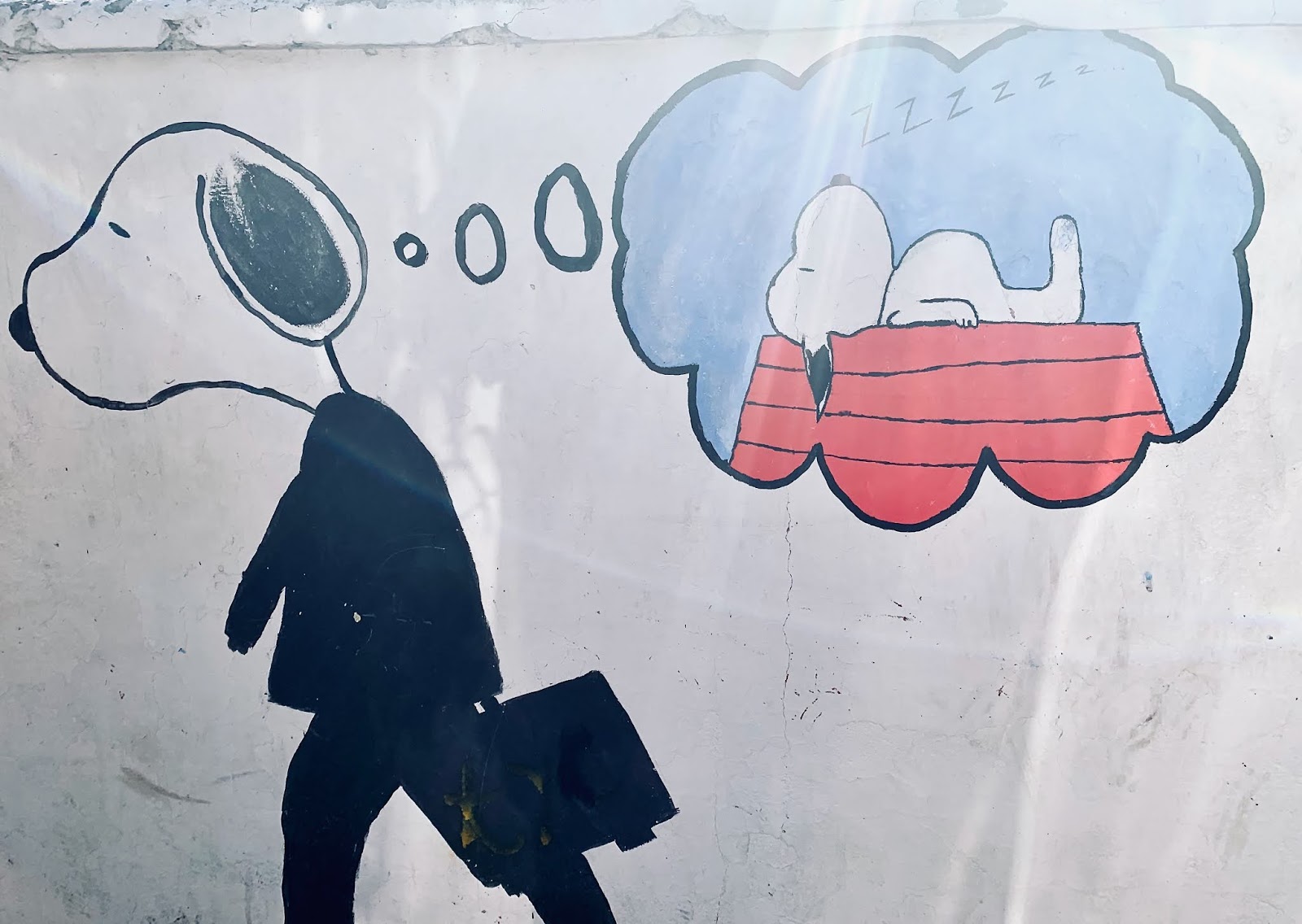 |
| Renca's Snoopy would prefer to shelter in place... |
Still, it was a letdown and, for the next few days, I’ll be biding time in Renca, a non-touristed neighborhood about which I’ve written before on this blog. Like most but not all people here, I’m staying indoors, though I do take occasional walks, avoiding the relatively few folks on the street. Some are wearing surgical masks, but others are seemingly oblivious to “keep your distance” recommendations, and middle-aged men still gather outside the local botillería (liquor store). There’s now a 10 p.m. to 5 a.m. curfew throughout the city, though its efficacy in suppressing any virus outbreak seems dubious.
 |
| The architectural details may not be the most appealing, but this expanded Renca home suggests the owners are doing well. |
Still, Renca is a changing población that, I suggested to my friend Marializ Maldonado, appears to be in transition from working class to (perhaps lower) middle class. The basic housing style consists of side-by-side units known as casas pareadas, which share a central wall and are mirror images of each other. Some people, though, have added improvements such as a second story to their homes, occasionally with balconies, and quite a few now own shiny new SUVs and minivans. Many streets are narrow one-lane alleyways, so people often park on the sidewalks (traffic moves slowly here anyway, so it’s still pedestrian-friendly). At the time the project opened, in 1965, few probably expected to ever own a car.
 |
| Many Renca residents park their cars on the sidewalk. |
There are other infrastructural improvements. Opposite Marializ’s house, a once neglected park has now become the well-kept Plaza Chile Israel (Israel’s embassy subsidized renovations here), and a formerly graffiti-covered building has become a sede vecinal (neighborhood meeting hall) with a handsome mural. There is daily maintenance, and the plaza remains a garden spot for occasional couples and a very few people who appear unaware of or unconcerned about the public health crisis.
 |
| Two years ago, this folkloric event took place on the redeveloped Plaza Chile Israel (Marializ's house is barely visible at the far left). |
That said, though I’m getting bored with staring at the computer keyboard and, at times, streaming videos on the iPad, there could be worse places to spend a self-imposed semi-quarantine. I’m still looking forward to boarding that plane for LAX on Friday night, for which I’m saving my last remaining novel, and then getting home to Oakland. There, at least, I’ll be able to work in the garden, walk the dog, and even go for a bike ride (all acceptable under California’s “shelter-in-place” guidelines).
Meanwhile, apologies to Mr. Zimmerman.


