Showing posts with label Exchange Rates. Show all posts

Thursday, December 22, 2022

Where's the Money? The Latest in Chile and Argentina

Since arriving in Chile, I’ve had four occasions to change money—thrice at ATMs and once over the counter at a casa de cambio (exchange house). Normally in Chile I use an ATM but, in the latter case, I had to pay my mechanic for auto repair that exceeded the Ch$200,000 (about US$225) withdrawal limit for a single transaction.

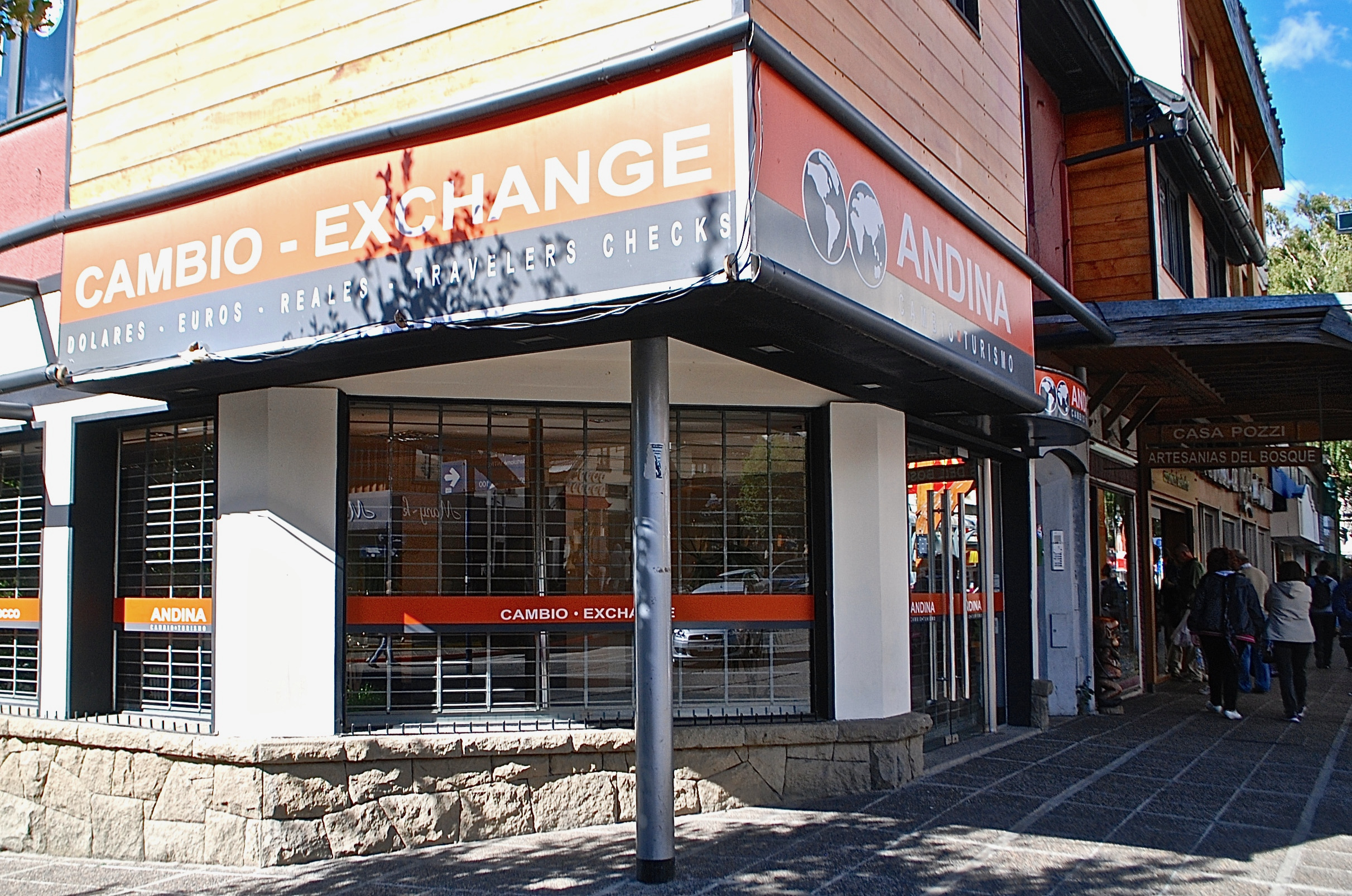
A casa de cambio in Pucón, Chile

A BancoEstado ATM (also in Pucón)

Using the ATM here still makes sense, but there are drawbacks as well. In the past, the public BancoEstado made no charge for any withdrawal, but now it collects Ch$5500 (about US$6) per transaction, amounting to a 2.75 percent fee. Later, out of curiosity (and necessity), I made a similar withdrawal from the private Banco Itaú and incurred a charge of CH$6000 (almost US$7, or 3 percent). I rather assumed that would be the private bank standard but I was mistaken—at a Banco de Chile machine, I paid Ch$8500 (nearly US$10, 4.25 percent).


Thus, BancoEstado remains my default option but, in most places, private bank machines are far more abundant. The exception is very small towns, where BancoEstado is often the only option, and that’s fine with me.


Meanwhile, there’s been another development in Chilean travel, and that has to do with credit card surcharges. Since I arrived in the country, I have experienced multiple purchases with a small additional charge for paying with a foreign credit card. Yesterday morning, for instance, my Ch$9000 breakfast (about US$10) came with a surcharge of Ch$328 (3.6 percent). There seems to be no consistency on this, however, and at least half my purchases have had no additional charge whatsoever. Still, visitors should be prepared for this.


Meanwhile, in Argentina…

The Dólar Blue is nearly double the official rate.

For several years now, one of the hassles of traveling in Argentina has been the multiplicity of exchange rates, and the necessity to carry large amounts of US cash to exchange at the “blue dollar” rate (that’s a euphemism for black market, which is widely accepted). Even with the more favorable blue rate, visitors have to carry large numbers of Argentine banknotes, because the highest value is just 1000 pesos (about US$3 at the blue rate).


Now, however, there’s been a step in the right direction, as the government recently instituted the “Dólar MEP,” which stands for Mercado Electrónico de Pagos (Electronic Payment Market). What this means is that visitors, when paying for good or services with a foreign credit card, will benefit from the blue rate rather than the official exchange rate but, according to a Bariloche friend who operates an adventure tourism agency, the situation isn’t perfect.

A cueva near our apartment in Palermo, Buenos Aires

That’s because many Argentine businesses still prefer to deal in cash, and that means visiting so-called cuevas, informal exchange houses that operate with official tolerance (though not approval). It’s also because, as yet, it’s not clear whether or not the the Dólar MEP applies to ATM transactions—will visitors still get the official and disadvangeous exchange rate when withdrawing cash from local banks? Stay tuned.

This Western Union office also serves as a cueva, and you go to the front of the line.


Monday, April 11, 2022

Blue Dollars, or Dollar Blues? Managing Money in Argentina

What is a cueva? In Spanish it’s literally a cave and some of them, like the Cueva de las Manos in southern Argentine Patagonia, are major archaeological sites and tourist attractions. But there are caves of a different sort in Buenos Aires and other Argentine cities, and any savvy traveler will get to know them because they are places to change money at an advantageous rate—unlike the traditional casa de cambio (exchange house).

A traditional exchange house in the Patagonian city of San Carlos de Bariloche

When I last visited the coastal Patagonia city of Puerto Madryn, this auto glass dealer gave the best rates for US dollars.

That’s because banks and exchange houses can only change at the official legal rate, which is barely more than half the informal but nevertheless tolerated “blue dollar” rate. In present-day Argentina, using your credit card or withdrawing cash from an ATM means, in effect, doubling the price of everything you may purchase. For the latest rates, there’s a smartphone app called “Dólar Blue Hoy,” which is available on both the App Store and Google Play.

Today's rates on the Dólar Blue app


Walking down Calle Florida, the downtown pedestrian street that’s traditionally the city’s retail hub, you’ll hear a constant chorus of “cambio, cambio” from arbolitos (street changers, known as “little trees” because they’re planted on the sidewalk). In the 1980s, when hyper-inflation was rife here, we used to change travelers’ checks (remember those?) at desks in otherwise vacant office buildings and, though we never got cheated, we never felt really comfortable with it. Today we trust our neighborhood cuevas in Palermo, but might make inquiries before visiting one in another part of the city.

Bring big Bens to the cueva.

At present, Argentina's largest banknote is 1000 pesos (about US$5).


While you may arrive here with a money belt packed with Ben Franklins, you’ll need wallet space for many more bills in a country whose largest denomination is presently 1000 pesos (roughly US$5). Be aware that, at most cuevas, hundreds are the notes of choice (though fifties are usually acceptable), and they’ll have to be in mint condition. Twenties are often unwelcome, but today the Western Union branch down the block from us changed $100 worth at just a slightly lower rate.

The closest cueva to our apartment is this Western Union office (your mileage may vary).


Your blue dollars can't buy one of our sofas.

In a few places, your blue dollar is not welcome, as this sign outside a furniture outlet in the Retiro neighborhood suggests (of course, one could change money elsewhere before making a purchase). Recently, when we visited the exceptional Museo de La Plata in Buenos Aires Province, we found it did not accept cash and we had to pay the admission fee by credit card at the official rate (given that the fee was just AR$300 per person, this was hardly a budget breaker).

Your cash is no good at the Museo de La Plata.

That’s the current scenario, but how long will it last? By November, when the next tourist season rolls around, and given the uncertainties of war in Europe and the lingering pandemic, it’s hard to speculate. One recent report suggests that the breech between the official and informal exchange may diminish over the next year-plus, but there has also speculation about dollarization of the Argentine economy. That’s something that failed in the 1990s under former President Carlos Menem and it’s certainly not gonna happen under current Peronist President Alberto Fernández. Elections are due to take place in October of 2023, though.


Post-Mortem Update

Since I first published this entry, I have learned that Buenos Aire's iconic Cementerio de la Recoleta has just instituted an admission charge of AR$1400 for foreign visitors, though it remains free of charge for Argentines. Like the Museo de La Plata (cited above), they do not accept cash, so it will now cost roughly US$12.50 at the official exchange rate. Visitors can pay online in advance or via QR code or credit card at the main gate.


Monday, August 26, 2019

Politics and Pesos...

Three Sundays ago, the government of Argentine President Mauricio Macri suffered a serious setback to his re-election campaign, when Peronist opposition candidateAlberto Fernández drew nearly 50 percent of the vote in the country’s presidential primary elections. Discontent with the economic situation, including high inflation and unemployment, propelled a protest vote against the party in power. Fernández is the odds-on favorite in the general election, which will take place October 27th.
Today's official exchange rates against the US dollar.
In the aftermath of the primary, Argentina’s peso plunged from 45 to the dollar to nearly 60 before rebounding slightly into the high 50s. That fueled inflationary fears—though one might argue that’s something Argentines are accustomed to—but the bigger problem appeared to be the Macri administration’s shambolically inconsistent approach toward the issues.
An extensive wine tasting at Aldo's tomorrow will cost about US$10.
In the short term, foreign visitors may benefit—at least until prices catch up with devaluation. For the moment I’ll just note, anecdotally, that a wine tasting tomorrow at Aldo’s—a premium restaurant just a block off Buenos Aires’s central Plaza de Mayo—will cost only about US$10. That includes accompanying snacks, plus discounts on optional wine purchases and dinner itself, if desired (Full disclosure: I have lunched anonymously at Aldo’s and would certainly recommend it).
In 2014, in Puerto Madryn, I changed my dollars at this auto glass repair shop.
Even if there’s a short-term advantage, politics may mean it doesn’t last, especially if the opposition wins in October. Under the previous government of Cristina Fernández de Kirchner, foreign exchange controls and currency manipulation made travel in Argentina awkward, and encouraged a flourishing black market where tourists and Argentines themselves would change their dollars under the table in cuevas, so-called “caves”—in one case, in the Patagonian city of Puerto Madryn, I changed my cash dollars surreptitiously in an auto glass repair shop.

Meanwhile, in Argentina’s Byzantine politics, the presidential candidacy of Alberto Fernández seems an odd one because the vice-presidential running mate is Cristina Fernández de Kirchner (no relation)—a political powerhouse in her own right who’s under multiple corruption indictments from which her current senatorial seat provides her immunity.
In 1973, when Argentines chose Héctor Cámpora as their president, they knew they'd be getting Juan Domingo Perón.
Given that Alberto Fernández served both the late former President Néstor Kirchner and his successor/wife, Cristina could be the power behind the throne, so to speak. This is not unprecedented in Argentine politics—in 1973, when Héctor Cámpora won the presidency with Juan Domingo Perón still in exile, the party’s slogan was “Cámpora al Gobierno, ¡Perón al poder!” (Cámpora to the government, Perón in power!).

Trans-Continental Coda
It’s worth noting that Argentina’s isn’t the only currency Southern Cone currency showing weakness. When I left Chile, in mid-April, their peso was at 660 to the dollar. Today it’s almost 720, nearly a ten percent decline. That may make Argentina’s neighbor somewhat more affordable, but its economy (and politics) are not nearly so volatile.

Tuesday, May 29, 2018

In and After Europe; Money Matters in the Deep South (Argentina & Chile)

This has been a busy spring, what with my return from six weeks in Chile and then, following a brief interregnum in California, nearly three weeks in the Netherlands, Belgium, and Sweden. Europe’s not an area I normally write about, except when it bears some relation to my interest in South America. I’d intended to write on this blog while in Europe, but the ten-hour time difference and short-stay cities worked against me.
Willem descends the from the 4,900-meter (15,901-foot) mountain pass of Abra Choquetacarpo (scanned from a Kodachrome slide)
I did, however, did meet up with my longtime Dutch friend Willem Oosterberg, with whom I explored Peru’s Cordillera Vilcabamba in 1979—a time when that area, near Machu Picchu, was off-limits to visitors without special permission, which I managed to obtain from government officials in Cuzco. We managed to see many unique archaeological sites, such as Yurac Rumi, on a week-long trek that we somehow managed without detailed maps.
Open only since November, Amsterdam's Not Only Tinto is an Argentine wine shop that will also offer tastings and empanadas.
The previous time my wife and I visited Amsterdam, in 1985, I recall seeing Argentine and Uruguayan parrillas—grill restaurants—across the street from each other, just as Argentine and Uruguay face each other across the Río de la Plata. This time, I estimate we saw at least ten Argentine parrillas in town (though none that claimed to be Uruguayan) and even an Argentine wine shop. On the other hand, in Rotterdam, we spotted a Brazilian rodízio just about ready to compete with a nearby Argentine grill. That said, we didn’t try any of them on this trip.
We saw no Uruguayan restaurants in the Netherlands, but this Brazilian grill is about to open in  Rotterdam.
In Bruges we did spot one Argentine grill and, in Brussels, a Peruvian food truck outside the Central Station—unfortunately, it wasn’t open when we went looking for lunch. We did enjoy a Peruvian meal in Stockholm’s trendy Södermalm district, but the most notable South American item we saw came from the city’s Nobel Museum, which displayed the “Report on Argentina” that helped earn Amnesty International a Peace Prize in 1977.
Amnesty International's 1977 report on human rights abuses in Argentina.
Money Matters in Chile (and Argentina)
Last month, before I left Chile, the US dollar had been weakening and, by extension, my travel costs had been rising. At the beginning of last year, when I was updating Moon Handbooks Patagonia, the rate was pushing 700 pesos to the dollar, which made the country a relative bargain. That didn’t hold and, when I returned in early March for a brief research trip, it had fallen to 600 pesos, making prices higher in dollar terms.
Toward the end of my stay in Chile, the dollar slipped below 600 pesos.
Over the course my six-week stay in the country the rate remained relatively stable until, just before my departure, it dipped below the 600-peso level and seemed headed farther south (so to speak). It continued to drop and then, almost as suddenly rose as high as 634. Since then it’s slipped back into the mid-620s, but that’s still a significant recovery for the dollar.
Today's official exchange rates
Historically, the International Monetary Fund has drawn lots of fire in Argentina.
I won’t go into the macroeconomics of the issue but it’s worth noting that, across the Andes, the Argentine peso is reaching new lows against the dollar. When I arrived in Argentina in mid-November, the rate was about 17.5 per dollar but now it’s at nearly 25, and then reached the point where President Mauricio Macri has asked the International Monetary Fund—long considered an ideological pariah in Argentina—for assistance in propping up the currency. On the informal “blue dollar” market, which persists despite the liberation of the formerly fixed exchange rate, it has reached nearly 26.
The informal "blue dollar" persists in Argentina, but the differential is far smaller than it used to be.
That doesn’t necessarily mean Argentina’s getting any cheaper—unlike Chile, the country still has serious inflation issues. At present, it’s about 25 percent per annum, down from 2017’s 40 percent, but this is still a fragile economy. At best, prices may remain relatively stable in dollar terms, but keep an eye on things.

Monday, November 20, 2017

Hola, ¿I’m Juanito Cash? Accessing Argentine ATMs Again…

Just over two weeks ago, just before flying south to Buenos Aires, I visited the bank to withdraw US$2000 in large bills—fifties and hundreds. Other things being equal, I’d rather not carry that quantity of cash, but in Argentina it’s an issue of economic convenience, if not necessity. For longer than I care to remember, the manipulation of exchange rates by the country’s previous government required extra-official work-arounds to avoid punishing prices and inflation (which, in fairness, have not ceased under the current government).
What Argentine banks think of you...
The perils of stashing bags of cash aside, changing money here long required seeking informal currency change sites, known as cuevas (“caves”) rather than banks and their ATMs, where one could only obtain the disadvantageous official rate. Cuevas paid the so-called blue dollar rate which, at times, was nearly double that. They did not charge a commission, and did not require waiting in line at a bank or formal exchange house.

There were shorter lines and less bureaucracy at bank ATMs, such as the one at my corner bank in Palermo, but there was still a penalty for using them. Of course, my US home bank would charge a percentage for each transaction and, moreover, the Argentine bank would collect an even larger fee.
My neighborhood cueva was closed over the weekend.
Since arriving here, I’ve usually changed at my neighborhood cueva—there are fewer these days, but they’re still around—where a grumpy old man disappears into the depths of his office and returns with the pesos I need. Friday night, though, in the interest of thoroughness, I chose to use the ATM at the corner. After entering my PIN, I had to choose how much money I would withdraw, and chose “Other” because I wanted more than the A$2000 (about US$114) amount indicated on the display
The bank on the corner is just two doors away from our Palermo apartment.
It was not to be. When I entered the figure of A$3000 (about US$170), the machine rejected it. When I reduced the number to A$2500 (US$143), it did the same. When I capitulated to the original A$2000, it proceeded, but then informed me it would impose a charge of A$106.20 (US$6.08, or 5.31 percent).
Argentina's ATM fees are, arguably, punitive.
In Chile, I regularly withdraw amounts of Ch$200,000 (US$319 at today’s exchange rate), and in Uruguay I’ve withdrawn similar amounts in US dollars (which is not possible at Argentine or Chilean ATMs). There is, of course, a one-time charge for each withdrawal, but as a percentage of the total amount that’s relatively small. In Chile, for instance, the charges range from Ch$4000 to Ch$6000 (roughly two to three percent in the case of the withdrawal above).

In many ways, Argentina is more visitor-friendly than it was recent years, but the banks’ continued insistence on multiple transactions and high commissions is not. Note also that, despite legal requirements, many Argentine businesses (including restaurants) still evade their obligation to accept credit cards in payment for services. They will often accept payment in US cash, but often at a lesser rate.

Thursday, June 30, 2016

Can Argentina (Make) Change? Are Thinner Wallets Better?

This week, many Argentines will find their wallets a big lighter – and that may be a good thing. It’s because a new 500-peso banknote (pictured above), with a value of roughly US$33 has just gone into circulation, and it solves a whole bunch of problems – at least temporarily.

That’s largely thanks to mismanagement by Argentina’s previous government, which refused to issue any banknote larger than 100 pesos (less than US$7) even as the peso plunged in value against the US dollar and other foreign currencies. It was part of their effort to deny an inflation that reached upwards of 40 per cent per annum (though it never got to the level of the 1970s and 1980s when, if Argentine governments spoke hopefully of 50 percent inflation, they meant per month).

From my own perspective, traveling extensively every year in Argentina and Chile – crossing the border with some frequency – it’s meant a wallet uncomfortably thick with Argentine currency. It was also bad for banks, though - ATM machines, obviously, do not have an infinite storage capacity and, if demand was high, they could empty quickly.

Not only that, the armored cars that refilled those ATMs had limited capacity as well, and restocking the machines required more frequent visits. This was especially troublesome in popular tourist destinations like El Chaltén, which received infrequent service from banks in the provincial capital of Río Gallegos (ironically enough, the political home base of former president Cristina Fernández de Kirchner and her husband/predecessor, the late Néstor Kirchner).
However necessary the larger bills may be, they’re no miracle cure for Argentina’s economic malaise – larger bills might, in fact, fuel the fear of inflation that’s always latent in Argentina. I still remember, more than 30 years ago, the fact of million-peso banknotes that became barely worth the paper they were printed on; more pragmatically, I wonder whether, in the none-too-distant future, today’s shiny new banknotes might fill my wallet as uncomfortably as their lower-value predecessors.


For the time being, though, I welcome the new bills as a contribution to easing economic problems that still need longer-term solutions, but there could be glitches. It’s quite possible that, as one sardonic Argentine journalist tweeted, “I come from the future. The taxi driver has no change for a 500-peso note.”
Custom Search