Showing posts with label Crime. Show all posts

Thursday, February 24, 2022

Post-WWII Argentina - Fact or (Detective) Fiction?

In my previous post, I reviewed one of my favorite streaming series with a link to southernmost South America but, while I’ve been unable to travel there (spoiler—I’m scheduled to fly to Buenos Aires on March 6th), I haven’t been purely a video couch potato. I’ve also been reading and, while I love detective stories, I’ve been doing it in a way that has more content than just potboilers.

In A Quiet Flame, German detective Bernie Gunther investigates a possible serial killer in Argentina.

Over most of the last year, I’ve been recovering from ankle surgery that requires me to do rehabilitation exercises three times daily, followed by elevating the joint to reduce the swelling for 15 minutes at a time. I use that time to read and, recently, I read the late Philip Kerr’s novel The One from the Other, in which Bernie Gunther—a former Berlin detective and anti-Nazi drafted into the Schutzstaffel (SS) during WWII—tries to track down war criminals and finds himself unjustly incriminated. Kerr’s plotline is so complex that I won’t go into more detail here, except to add that, in the end, Bernie has to flee to South America in the company of some pretty notorious “comrades.”
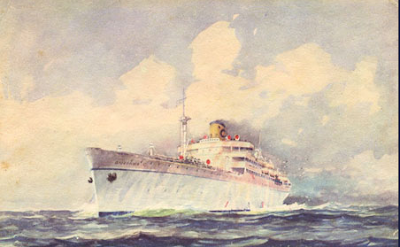
In real life and the novel, the Giovanna C carried both refugees and war criminals from Italy to Argentina.

That, of course, aroused my interest—especially so when the edition I read included the first chapter of A Quiet Flame, which describes Bernie’s 1950 arrival in Buenos Aires on the steamship Giovanna C in the awkward company of two notorious Nazis, including Adolf Eichmann. As in Germany, Gunther doesn’t hesitate to make fun of his companions, and Kerr gives provides him dialogue no less acerbic than Raymond Chandler gave Philip Marlowe and Dashiel Hammett gave Sam Spade. In one case, Bernie remarks that he repels an opponent with a punch that he compares to legendary Argentine boxer Luis Ángel Firpo.
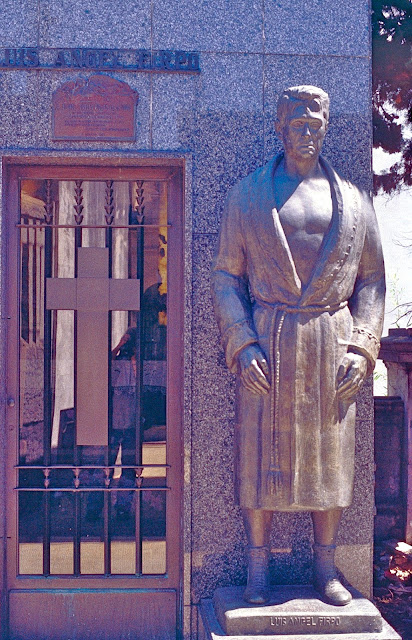
Bernie Gunther claims to pack a punch like the legendary Argentine heavyweight Luis Ángel Firpo, who once knocked Jack Dempsey onto the canvas (Firpo now resides in Recoleta Cemetery).

Like his companions, Bernie arrives under an alias but, in a meeting with then-President Juan Domingo Perón (and Perón's poodles), he has to reveal his true identity and, under pressure, he’s persuaded—forced, rather—to investigate a murder and another disappearance with links to a German-speaking community in Buenos Aires and the northern province of Tucumán (with additional links to a cold case he failed to solve in pre-war Germany).


Unlike Marlowe and Spade, Gunther had worked as a private detective when employment under the Nazi regime became untenable—a situation that may well have contemporary parallels (He had also served in Ukraine, for what that's worth). Parenthetically, Bernie manages to make some blatantly sexist comments about Evita Perón’s appearance, but also sympathizes with the health problems that killed her just a few years later.
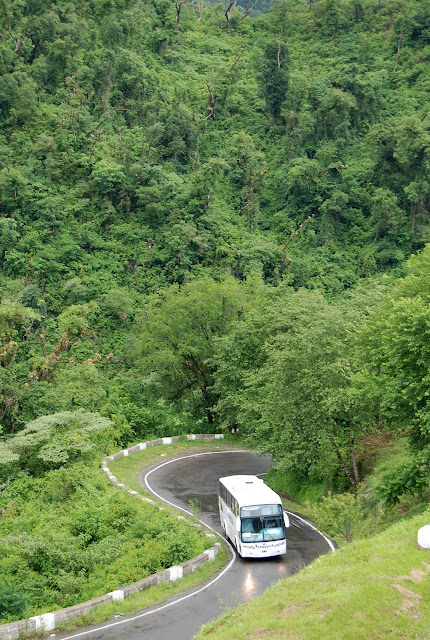
Bernie's investigation leads him to a sinister site in the subtropical sierras of Tucumán Province.

More significantly, Bernie learns of the notorious Directive 11, by which the Argentine government denied Jewish refugees entry into the country. Through him, Kerr speculates as to the existence of a Directive 12, which would have established a concentration camp in Tucumán’s subtropical forests.


According to a 2009 interview with The Wall Street Journal, Kerr (who died in 2018) decided against visiting Argentina because “I thought about it and decided that what I wanted was a historic picture, rather than the Argentina of today.” In my opinion, though, even allowing for poetic license, this novel would have benefitted from a visit to the country. In one instance, for example, Kerr appears to confuse the Argentine capital’s central shopping district of Florida with a neighborhood in the town of Vicente López, in the city’s northern suburbs—where the Nazi refugees had a safe house and Eichmann later resided for many years. Through Bernie, he's also unnecessarily harsh on a Tucumán he never saw (though it's clearly a different place today). At the very least, the publisher should have hired a proofreader familiar with Argentina—the airport city of Ezeiza, a southern Buenos Aires suburb, is consistently misspelled “Ezeira.”

Uki Goñi's book details the Perón government's complicity with the Nazis. 

At the risk of being labeled a pedant, I’ll still recommend both these novels and others by Kerr, who manages to convey the complexities of surviving in an authoritarian or even totalitarian ambience while still seeking truth and justice—even for a flawed figure like Bernie Gunther. What I'd really like to see is somebody turn all 14 novels into a streaming series.


In the course of writing A Quiet Flame, the novelist relied on Uki Goñi’s The Real Odessa, an historical account of the Nazi presence in post-war Argentina, including documentation of the Perón government’s complicity (Full disclosure: Goñi is a personal acquaintance).


Addendum

Another personal acquaintance of mine, the late geographer Dan Gade, had direct contact with another ex-Nazi, the SS officer and ethnobotanist Heinz Brücher, but it was only after Brücher’s murder in 1991 that Gade unearthed the extent of Brücher’s role in WWII and continued adherence to Nazi ideology. Questioning the impartiality of Brücher’s South American research—he also worked in Paraguay—Gade’s article might suggest that Goñi’s extensive and incisive research was only a starting point for a continued assessment of the post-war German presence.


Support Southern Cone Travel

If you’ve found this entry informative and/or useful, please consider earning me a few pennies by clicking on an ad—always presuming, of course, that it’s relevant to your interests.

Wednesday, July 24, 2013

The Risks of Soccer in La Boca


More than once, in presenting Buenos Aires to audiences in my digital slide talks, I’ve been asked about the issue of safety. Personally, I feel that Buenos Aires is safer than many if not most places in the United States, and my facetious reply is that “There are no drive-by shootings in Buenos Aires.” Firearms, while not absent, are much harder to come by in Argentina than they are in the US.
That doesn’t mean that random violence does not exist, a fact that became obvious early this week when two fans died in a shootout of opposing factions of hooligan gangs of the Boca Juniors soccer team. In fact, this happened not in La Boca itself, but at the Bajo Flores stadium of San Lorenzo, in what was supposed to be a “friendly” match (ironically enough, that’s a term used in both Spanish and English to describe an exhibition that has no effect on league standings, though fans and players obviously take it seriously). The game was suspended, and will probably be replayed next week – with no fans present.
I’m not a soccer fan and, as I’ve indicated before, I’m not particularly interested in viewing a sport where hooligan gangs are a public health hazard. Boca’s hooligan gang is known as “La Doce” (the twelfth man, so-called because of the presumed advantage their fanaticism provides to the 11 players on the field). I have, however, visited the Boca Juniors museum in the bowels of the Bombonera (pictured above), the stadium where the team plays its home games, and found it a valuable experience for understanding the role of soccer in Argentina as a whole and the barrio of La Boca in particular.
That said, the museum has one major shortcoming. While it provides exhaustive coverage of the franchise’s illustrious on-field history and the players who have worn its blue and gold colors (as indicated in the photo above), and does a pretty good job of stresses its ties to the barrio, it omits any mention whatsoever of the notorious barras bravas (which are in reality soccer mafias) that make attending a match potentially risky. When I asked museum staff about the topic, their response was evasive – suggesting that they themselves are fearful of what La Doce might do if there were any criticism of the hooligans.

Friday, November 18, 2011

Tales of Airport Security

In December of 2004, returning from my only visit to Antarctica, I was about to fly from the Patagonian city of Río Gallegos to Buenos Aires, three hours to the north.  Boarding pass in hand, I headed to security at this relatively small airport only to find nobody to check my documents and nobody manning the X-ray machine. At the gate, there was nobody to collect my pass and, until I climbed aboard the Aerolíneas Argentinas jet, nobody even to ask. Fortunately, the flight went on with no further glitches – perhaps a nostalgic reminder of commercial aviation’s gentility in the days before the Miami-Havana hijackings of the 1960s.
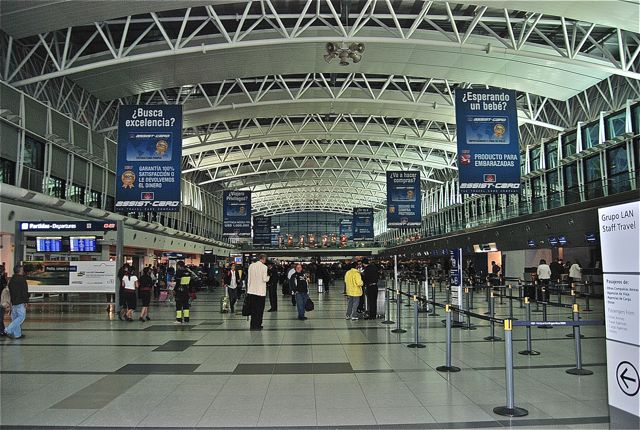
Argentine airline security has apparently improved since then; in fact, it appears to be better, and more efficient, than in the United States. According to the Buenos Aires Herald, security at the capital’s Aeropuerto Internacional Ministro Pistarini (pictured above) apprehended Houston resident Steven Lee Burditt about to board a Continental Airlines flight back to Texas - with a loaded Colt .380 and two clips of ammunition in his carry-on baggage.

Burditt claims that he had forgotten the weapon in a secret compartment before boarding his southbound flight from Houston. If he's telling the truth, that means the so-called Transportation Security Administration flat out missed it when they scanned his bag at George Bush Intercontinental Airport. According to a Houston news source, Burditt is no longer in custody, but must remain in Argentina while a judge investigates the case.
In reality, the Southern Cone countries manage to have effective airport security without indulging in the TSA’s heavy-handed ineptitude. Once, as I boarded a flight at Puerto Montt's Aeropuerto El Tepual (pictured above), Chilean security detected a Swiss Army knife in my carry-on and, instead of confiscation and a stern lecture, LanChile simply told me I could recover the item in question at their baggage counter at my destination of Coyhaique. Did I mention that this was in pre-9/11 days? Even then, Chilean oversight was better, but more reasonably administered.

The Falkland Islands, perhaps, display the extremes in security. Their Mount Pleasant International Airport (pictured above) is also a military base, built after Britain defeated Argentina in the 1982 South Atlantic War; security is ineffably polite, but extremely strict. On the other hand, at Stanley Airport (pictured below), the Falkland Islands Government Air Service (FIGAS) will check nothing other than your weight – because the pilot has to seat the passengers for the best possible balance in their ten-seater Britten-Norman Islander aircraft.

Help Support Southern Cone Travel
If you have found this article useful and informative, please consider clicking on the AdSense links in the main and side columns - always presuming, of course, that it's a product or service that interests you. Meanwhile, have a look at the video(s) from Visit Britain, our newest advertiser, in the right side column.

Saturday, May 28, 2011

Uruguay Update

Today’s entry is a potpourri of items related to Uruguay, about which I haven’t written much lately, but excursions along the country’s scenic coastline figure prominently in the new fourth edition of Moon Handbooks Buenos Aires. The book came out in February; in August and September, I’ll be doing a series of digital slide presentations at various branches of the San Mateo County Library (more details to come in a future post).

Uruguay Means Peace

One thing that makes Uruguay attractive, other than its scenic shoreline along the Río de la Plata, is its placidity. To be sure, like any capital city, Montevideo has its borderline neighborhoods, but this is a country where most people feel safe and secure. In fact, according to the 2011 Global Peace Index, which judges 153 countries according to standards of levels of domestic social conflict, military expenditures, and conflicts with other countries, Uruguay is the most peaceful country in Latin America, and 21st in the world.

Among the other Southern Cone countries, Chile ranks 39th and Argentina 55th. Iceland ranks first, while Iraq and Somalia bring up the rear at 152nd and 153rd. At No. 82, the United States ranks in the lower middle, just below Gabon and just above Bangladesh, because of its elevated military expenditures and overseas conflicts. Of course, such broad ratings oversimplify a complex topic - just as per capita GDP oversimplifies a country’s economic success - but they do provide interesting information for reflection.

Smoke-Free Uruguay under Attack
Uruguay has its international commercial enemies, though, particularly tobacco giant Philip Morris. That’s because, thanks largely to former president Tabaré Vásquez (an oncologist by training), Uruguay has some of the world’s most progressive anti-tobacco legislation. Not only does Uruguayan law prohibit smoking in public buildings, as well as restaurants and bars, but it also bans tobacco advertising and requires large health warnings on cigarette packages. Moreover, it prohibits the sale of any tobacco products bearing the misleading description of “light.”

Philip Morris International, though, has decided that Uruguay should be a test case of the limits to public health legislation. According to Mercopress Noticias, Philip Morris - whose worldwide income of US$27.2 billion approaches Uruguay’s GDP of US$40.7 billion - has brought a claim against the country in the International Center for Settlement of Investment Disputes, a branch of the World Bank. On the face of it, the tobacco monster appears to want to establish a precedent against a relatively small country that would make it difficult for other, larger countries to enact similar rules.

Uruguayans to Occupy Chilean Airspace?
Despite its political and social pacifism, Uruguay has made some international commercial incursions of its own. For several years, its flagship airline Pluna has connected Montevideo with Santiago, but now it intends to begin flying to destinations within Chile; there are no specifics, but apparently Pluna would serve some lesser destinations with relatively small planes with a capacity of roughly 90 passengers.

LAN Airlines dominates the Chilean market, with Sky Airlines a distance second and Principal Airlines third. Pluna, which offers low fares but also charges for checked baggage as well as on-board food and beverage service, could find a niche here.

Tannat & Lamb - on Saturday

For those of you fortunate enough to be in Uruguay next Saturday, several wineries from Montevideo to Punta del Este will celebrate the third annual Festival del Tannat y Cordero, celebrating the country's signature wine and the roast lamb with which it goes so well. If you can make it, don't miss it.

Paying for the Space
If you have found this article informative, please consider clicking on one or more of the AdSense links that accompany it - always presuming, of course, that it’s a product or service that interests you.

Monday, April 11, 2011

Chile Changes the Clock; Beyond Lollapalooza

I like to point out the fact that, in traveling from north to south or vice versa, most visitors to the Southern Cone countries don’t face the same jet lag issues that east-west international travelers do. Of course, that depends on the traveler’s starting point, but for those on the East Coast of the United States, for instance, the time difference is only an hour with either Buenos Aires or Santiago.

Normally, there’s an hour’s difference between Buenos Aires and Santiago, which are in different time zones, but Chile goes on daylight savings while Argentina does not. Not so long ago, that started in mid-October and only went until mid-March, but this year President Sebastián Piñera’s government changed the date to April 2nd and, then, to May 7th. Daylight savings will start again on August 20th.

The government’s principal rationale has been energy savings, though it’s not clear how much turning the lights on a little later will conserve, given that Chileans will have to turn them on earlier in the morning to go to work and/or get the kids off too school (here in Santiago, it’s still nearly dark at 8 a.m.). Other professed reasons have been public safety (extra daylight discourages crime) and the simple pleasure of evening daylight for those returning home from work.

When the change finally occurs, the difference with the rest of the world will be one hour less (but there will then be an hour’s difference with Argentina), from the Peruvian border south to the Strait of Magellan (pictured above). Remote Rapa Nui (Easter Island), however, will continue to be two hours behind the mainland.

A Chilean Lollapalooza
The first weekend of this month, in Santiago’s sprawling Parque O’Higgins, an all-star lineup performed at the initial Chilean version of the Lollapalooza pop music festival. The festival brought plenty of money into the city, with nearly every available inexpensive bed occupied - according to Pablo Fernández of Barrio Brasil’s 120-bed Hostelling International facility, demand was so high that he had to raise prices to 12,000 pesos (about US$25) in dorm rooms (when I was here in November, the price was 9,000 pesos, less than US$20). Rates for private rooms rose correspondingly in a facility that usually only has about 40 or so guests. Even the new and little known CasAltura, a self-styled “boutique hostel” in a magnificently recycled downtown mansion, filled all of its 35 beds.

There were some glitches, but the sunny autumn weekend cooperated beautifully and, by most accounts, the crowds were satisfied. The second Chilean Lollapalooza will take place the first weekend of April in 2012.

Given Chile’s thriving economy, Santiago has become an ever more popular destination for high-profile international artists. U2 played here recently and, over the next couple months, Paul McCartney (May 11), John Fogerty (May 15, the first time ever in Chile, though his former Creedence Clearwater bandmates have played the Viña del Mar festival), and even Miley Cyrus (May 4) will perform in the Chilean capital.

Saturday, December 4, 2010

The Triple Border: On the Ground and on the Screen


In the photo above, you are looking at three countries at the confluence of the Río Paraná and the Río Iguazú: Argentina in the foreground, Brazil just across the water, and Paraguay (on the far shore, where the skyline of Ciudad del Este, formerly Puerto Presidente Stroessner, is visible in the distance). This is the area known as the Triple Frontera, notorious for contraband drugs, weapons and, according to some, Islamic terrorist sympathizers - though there has never been any terrorist incident there.

This has always been a porous border - in fact, in 2002, a Lonely Planet guidebook even suggested that US citizens could “borrow” an Argentine friend’s identification to visit the Brazilian side of Iguazú Falls without paying to obtain a visa. That was a suggestion that could have landed the borrower in a Brazilian prison, and caused a small furor in both countries, but after the controversy died down, there continued to be plenty of illicit movement across the border.

Ciudad del Este is a story in its own right, in a country that (almost by acclamation) is one of the most corrupt in the world. Some years ago, when a reporter from The Wall Street Journal interviewed a local “businessman” about the possible impact of the Mercosur common market on Ciudad del Este, the response was “The way I understand it, we may have to stop smuggling things and start producing things.” In this year’s Transparency International corruption index, Paraguay ranked 146th of 178 countries, tied with (among others) Haiti, Iran and Libya.

While Argentina (106th in Transparency’s survey) and Brazil (69th) may have only a little more to brag about in this regard, freewheeling Paraguay is the poster child for uncontrolled smuggling and, according to some sources, money-laundering operations with ties to Islamic terrorist groups in Ciudad del Este. That, apparently, is the reason Oscar-winning director Kathryn Bigelow is following up her mega-success The Hurt Locker with a film about the Triple Frontier that will star Tom Hanks, with rumored participation from Christian Bale, Javier Bardem, Johnny Depp, Denzel Washington, Sean Penn, Leonardo DiCaprio and Will Smith. Shooting will commence in March (for what it’s worth, my favorite Bigelow film is the Western-vampire classic Near Dark; perhaps her new villains could be undead suicide bombers).

All the governments in question are upset that the film may portray the region as crawling with terrorists but, apparently, not so upset as to place obstacles in the way of a project that will bring millions of dollars into their countries. And in reality, the area is far from unsafe - hundreds of thousands of travelers visit Iguazú Falls every year without incident. I myself have stayed in Puerto Iguazú at least a dozen times and have never witnessed or even heard of petty crime affecting tourists (though that doesn’t mean it never happens, and the area has a certain notoriety for auto theft). The larger Brazilian city of Foz do Iguaçu is, by most accounts, a riskier place, but most visitors cross the border to see the falls and not the city. For that matter, I’ve stayed in Ciudad del Este several times as well, with never a hint of an incident.

Postscript
One interesting development in the Transparency International survey is Chile’s status as No. 21. That’s not surprising in one regard, since Chile is invariably the most corruption-free country in all of Latin America, but this year it has overtaken the United States, which ranks 22nd (tied with Belgium) and is now barely ahead of Uruguay.

Friday, October 8, 2010

Travel Alert: It's Safer Abroad

Earlier this week, Europe travel guru Rick Steves published an online commentary on the US State Department’s travel alert for the Old World. In his article Steves, who is one of the world’s best ambassadors for international travel (and whom I know slightly), tried to put it all in perspective: the previous week, there were 500 firearms deaths in the United States alone and, as he points out, “Each year 12 million Americans travel to Europe and 12 million return home safely. I can’t remember the last time an American tourist in Europe was hurt by a terrorist.”

In my own writings, I have tried to deal candidly with the topic of personal security in the Southern Cone countries, and have concluded that Argentina, Chile, and Uruguay are at least as safe as Europe for foreign visitors. Still, it can be a hard sell in a region with a stereotypical reputation for drug violence (as in Colombia and Mexico), erratic authoritarian leaders (as in Venezuela), and a legacy of brutal military dictatorships (as in 1970s Argentina, Brazil, Chile and Uruguay).

Latin America is diverse, though, and in today’s Southern Cone, political violence is almost unheard of, even if intemperate language between (and even within) opposing political factions is often the rule rather than the exception. It doesn’t help, though, when locals themselves, spurred by sensationalist coverage of gruesome but atypical crimes, exaggerate the issue of “insecurity” even if, statistically speaking, their chances of being a victim are miniscule.

Every city and country, of course, have bad neighborhoods, such as Buenos Aires’s so-called Fuerte Apache (actually just outside the city limits). Still, foreign visitors are unlikely to even see those neighborhoods except at a distance - they’ll be visiting tourist-friendly barrios such as Palermo, Recoleta and San Telmo instead. In remote areas such as Patagonia, serious crime is nearly non-existent.

As Steves implies, though, Southern Cone inhabitants might have more to worry about in visiting the United States. If 35-year-old Adolfo Ignacio Celedón of Santiago (his hometown's placid Parque Metropolitano is pictured above) had not traveled to this country, he would not have been shot to death by yet unknown assailants last September 18th in Berkeley, California - only a couple miles from my own home in Oakland - in the presence of his American fiancée. In the aftermath, San Francisco Chronicle reporter Henry K. Lee found himself inundated with requests from the Chilean media for information about the senseless killing, and the story made the front page in the Santiago daily La Nación.

One commentator on the article recalled another instance in which a “hateful racist” killed two vacationing Chileans and wounded three others in Florida in 2009. Another reader, charitably enough, countered that “assaults, robberies and other crimes take place everywhere, in every country.” Still, this provides some perspective on the often mistaken notion that staying home is safer than traveling.

Moon Argentina on the Road
After a brief respite, I will have two digital slide presentations on Moon Handbooks Argentina this weekend. The first will take place Saturday evening October 9th in Sacramento, California, at Tango by the River, at 7 p.m. The second takes place Sunday afternoon October 10th at the legendary Book Passage in Corte Madera, California, at 1 p.m.

Tuesday, June 22, 2010

Argentina Noir

In film and literature, Argentina is a country that lends itself to noir and neo-noir. In the underrated Nine Queens (2000), which had only a brief run in the United States, the late director Fabián Bielinsky portrayed Buenos Aires as a city of con-men (and women) constantly seeking an edge over their victims and even each other; set in the Patagonian lakes district, his second feature El Aura (2005) is a drama of deceptive identity.

Both films starred Ricardo Darín, as did Juan José Campanella’s El Secreto de Sus Ojos (The Secret in Their Eyes), which won this year’s Academy Award for Best Foreign Film. According to Publishers’ Lunch Daily, Eduardo Sacheri’s novel - the template for Campanella’s film - will soon appear in English translation under its original title - "The Question in Her Eyes" - thanks to New York City’s Other Press.

Given Argentina’s increasingly high profile, the country has also attracted foreign writers who have a harder time of it, such as US novelist Nathan Englander in the well-meaning but overrated Ministry of Special Cases (2007), set during the 1970s “Dirty War.” More recently, Scottish author Philip Kerr, who specializes in pre- and post-war Germany, has dispatched his Berlin detective Bernie Gunther to Buenos Aires in A Quiet Flame - in the company of Adolf Eichmann and other disreputable fugitives from post-war European justice in 1950.

Unjustly accused of war crimes, Gunther himself soon finds himself in the Casa Rosada, Argentina’s government house, in the company of Juan Domingo Perón and Evita, where he is assigned to track down a serial killer whom Gunther may have investigated in pre-war Berlin. Kerr’s depiction of Argentina’s political intrigues, which owes much to journalist Uki Goñi’s The Real Odessa, is plausible, especially given the notorious “Directive 11” that made it official government policy for Argentina to reject Jewish refugees in the pre-war years (Argentina, of course, was not the only country to refuse Jews entry).

Kerr’s book, though, is fiction, as there is no evidence for the existence of a “Directive 12” that would have established concentration camps in Argentina itself (Juan Perón’s government only declared war on the Axis Powers, opportunistically, in the final days of the conflict). It would be a more credible story had Kerr deigned to visit Argentina - in an interview with the Wall Street Journal, he admits that -“I thought about it and decided that what I wanted was a historic picture, rather than the Argentina of today.”

That’s particularly unfortunate because he could have benefited from visits to Jewish community sights such as Retiro’s Museo de la Shoá, which shows how Argentine Jews were treated during this period and how some died in the Holocaust. He might also have avoided some egregious geographical errors that undercut the book’s strong points - Spanish author Manuel Vásquez Montalbán’s gourmet detective Pepe Carvalho gets around much more credibly in The Buenos Aires Quintet (1997), an excellent novel on "Dirty War" themes.

Wednesday, March 31, 2010

Torture Tours

It’s hard to imagine that, someday in the future, queues of solemn tourists might file through Abu Ghraib and Guantánamo. Thirty years ago, though, it would have been equally unthinkable to suggest that, in 2010, groups of Argentine and foreign visitors would stroll the grounds and halls of Buenos Aires’s Escuela de Mecánica de la Armada, the naval mechanics’ school that was the most notorious clandestine torture center during the military dictatorship that ruled here from 1976 to 1983.

Today, the ESMA - a cluster of handsome buildings with neoclassical touches on a wooded campus in the northern city barrio of Núñez - is the main physical site of Memoria Abierta (Open Memory, link in English), an organization dedicated to preserving the grim history of state terrorism. Touring it, as I did Monday morning, is a draining experience - but not in the way it was for the more than 5,000 “desaparecidos” (disappeared persons) incarcerated, abused, and (mostly) executed here or pushed from helicopters (alive but drugged) into the Río de la Plata.

Before his term expired in 1999, President Carlos Menem - himself a victim of the repression, though he later pardoned his junta jailers - relocated the institution to Puerto Belgrano, near the city of Bahía Blanca in southern Buenos Aires province. At the same time, he ordered the ESMA's demolition and its replacement by a dubious "monument to national unity." In the end, public outcry prevented the ESMA’s destruction.

Menem's decrees infuriated human rights groups and city officials, who saw the former ESMA as the most gruesomely suitable location for a facility that would preserve and present documentary records, oral histories, sound, film, and photographs of the period. In early 2005, then President Néstor Kirchner and Buenos Aires mayor Aníbal Ibarra announced agreement to move remaining naval educational facilities elsewhere and open the ESMA grounds to visits.

Today’s tours visit the grounds and just one building, the Casino de Oficiales (Officers’ Club, pictured here), where most of the torture and other abuses took place. Astonishingly, even as torture took place in its basement and guards shoved shackled and hooded prisoners up and down the stairs - the poorly insulated third floor and the attic were areas of coffin-like confinement - officers lunched in the café and even slept in the second-floor hotel rooms.

In a extraordinary instance of Orwellian linguistics, the military’s human rights abusers dubbed the basement corridor that led to the torture chambers the Avenida de la Felicidad (“Avenue of Happiness’). Meanwhile, parts of the third floor became impromptu maternity wards for female prisoners whose babies eventually went as adoptees to military families and civilian collaborators (in total, about 500 children were born in captivity, though not all of them here).

Astonishingly, at the same time, there were acts of resistance even as some detainees appeared to collaborate. ESMA survivor Víctor Basterra, for instance, was a graphic artist who made fake IDs for military kidnappers who used them to claim their supposed relatives’ belongings (which were distributed as booty from a room called “El Pañol”). At the same time, on “conditional liberty,” he smuggled out copies of photos - a truly sinister rogues’ gallery - that later served to identify many of the torturers.

In reality, the three-hour ESMA tour is a mentally draining experience that, although I’m glad I did it, I have no desire to repeat. I can only imagine what stress the guides, who do this several times a week, must go through: though the job requires many of the same skills of any tour guide, it’s a grim task, and jokes and small talk are totally out of order. On request, tours are available in English and, soon, in German. Interior photographs are not permitted.

Monday, August 3, 2009

Safer than Home, in the Southern Cone

A few years ago, as I was delivering a slide lecture on Buenos Aires in Southern California, someone brought up the issue of personal safety in the question-and-answer period. My impulsive response, which brought a nervous laugh from the audience, was that “there are no drive-by shootings in Buenos Aires” - which there are in Los Angeles.

It’s true that, before Americans go overseas, one of the first things they think about is crime and insecurity, even if their own country can be as dangerous, or more so, than many foreign destinations. Colombia, to cite one example, has a terrible reputation that lingers from sensational - and sensationalist - stories of its drug wars and guerrilla insurgencies. Mexico, especially the cities along the US border, has seen some horrendous crimes and smuggling of drugs and people to the north is notorious.

Yet both those countries are generally safe, sometimes extremely safe, as I pointed out in writing about Colombia last year. In that context, it’s always surprised me that so many residents of Chile, Argentina, and Uruguay think that their countries are dangerous - as José Miguel Insulza, Secretary General of the Organization of American States (OAS) pointed out in a recent interview, “In spite of the social perception and public opinion alarm, countries to the south of the continent have lower rates of insecurity compared to other countries of the region.”

That’s not to say crime does not exist but, as Insulza notes, “All over the continent news begins with crimes.” A sensationalist emphasis on crime stories, which increase TV ratings and sell newspapers, does a disservice to countries and cities that don't really deserve it. To my mind, for instance, it’s a testament to urban security when park playgrounds near my Buenos Aires apartment in Palermo are full of families with kids well after dark and often until midnight or later in summer. Likewise, I’ve spent extended periods in Santiago and other Chilean cities, without excessive concern for my personal safety.

Chile, for its part, has Latin America’s most highly respected police force in its Carabineros. Argentina can’t match that, unfortunately - provincial police in Buenos Aires are notoriously corrupt and highway checkpoints are often opportunities for them to shake down motorists for minor equipment violations - but that rarely affects foreign visitors. Uruguay falls somewhere in between, but closer to Chile - its police are generally trustworthy. With all of them, though, investigative professionalism lags behind.

Buenos Aires, meanwhile, is creating a new municipal police force to take over many of the functions of the Policía Federal (pictured here), which until now has handled police matters in the city. The feds are arguably more competent than provincial forces but it remains to be seen whether the new force, whose officers are mostly ex-feds, will be any improvement.
Custom Search