Showing posts with label Santa Cruz. Show all posts

Sunday, June 17, 2018

Sipping and Surfing? Colchagua to Pichilemu

Two hours south of Santiago, as I leave the freeway, trucks with bins of grapes slow the traffic on the westbound two-lane road toward the town of Santa Cruz, in Chile’s Colchagua valley. With the warm dry March weather, it feels like September in the Napa Valley, in my home state of California. This, though, is farther than a day trip from my house, so I’ll spend several days sampling the wines and dining in the country’s premier wine district—tourist-friendly Colchagua is due to host next year’s Congreso Mundial de Enoturismo (World Wine Tourism Conference).
The balconies at Hotel TerraViña have vineyard views.
My first stop is the Danish-Chilean Hotel TerraViña, nearly surrounded by vineyards on the outskirts of town, where I’ve stayed on previous trips. From here, it’s a short stroll through the vines to Viña Laura Hartwig, which now offers carriage rides through its grounds and new tasting facilities for an expanded wine list. They’re part of the Movimiento de Viñateros Independientes (MOVI), an alliance of smaller wineries with an increasingly high profile. I sample a Cabernet, a Merlot and a blend, accompanied by a plate of almonds, cheese, cold cuts and crackers.
Wines to sample in the recova at Laura Hartwig
View across the soggy lawn at Hotel Casa de Campo
The next morning, I move across town to the Hotel Casa de Campo, where the only drawback to my spacious room is its relative proximity to the highway. Fortunately, its French doors face a sprawling lawn with views of the Chilean coast range, though I’m a bit shocked to see the flood-style irrigation in an area where water's at a premium. I’m pleasantly surprised, though, when a gardener knocks on the door with a bowl of freshly picked prunes.
Santa Cruz's Plaza de Armas
From there, I head to Santa Cruz’s walkable downtown, with a lushly landscaped Plaza de Armas surrounded by low-slung buildings and a parish church that was totally rebuilt—on its original design—after severe earthquake damage in 2010 forced its demolition. On this visit I skipped the imposing Museo Colchagua, created by Iran-Contra arms merchant Carlos Cardoen, whose foundation also financed the church’s reconstruction, but the museum’s natural history and agricultural machinery displays are well worth seeing.
The Museo de Colchagua is part of a complex that also includes a hotel and a casino.

After severe quake damage in 2010, Santa Cruz's Iglesia Parroquial underwent  demolition for a total rebuild on the original plan.
Quinotto of scallops, shrimp, and squid at Casa Colchagua 
That afternoon, I eat on the patio at Casa Colchagua, a renovated adobe just a stone’s throw from TerraViña. Rather than bread, the appetizer is a sopaipilla enhanced by the savory tomato-onion-garlic salsa known as pebre. For the main course, there’s quinotto with shrimp, scallops and squid rings–Chile’s diverse seafood is world-class—plus a pisco sour with a touch of ají verde, and a nice glass of Sauvignon Blanc.
José Antonio Bravo opens up his tiny adobe at OWM Wines
In the afternoon, I drive to the village of El Peral to visit OWM Wines, a low-tech operation that produces only blends and does much of the work manually, while bodega itself is a tiny adobe within a far larger garage full of heavy machinery. With a minimum of two guests (maximum of eight), winemaker José Antonio Bravo does the tours himself, and encourages guests to make their own blends. Later, back in Santa Cruz, I dine at Vino Bello—an established Italian option—for a seafood risotto.
Patio dining at Vino Bello
The patio and tasting room at Clos Santa Ana
The next day, an unseasonably rainy one, I meet British photographer Matt Wilson and his wife Andrea—a winemaker at Clos Apalta—for dinner at their house near the Viu Manent winery (whose wines are most readily available in California). We chat about travel writing, photography and the madness of Brexit, among other topics, and enjoy several glasses of Apalta’s wines (Apalta is not a MOVI member). The next morning, I moved to the westerly site of Clos Santa Ana, where Italian winemaker, art collector and dog fancier Luiz Allegretti invites me to a long Sunday lunch with his neighbors—one of whom is also a winemaker—and to spend the night in his sprawling colonial home, with its multiple interior patios. That’s a privilege, but Allegretti also has a tasting room for the general public.
At Clos Santa Ana, Luiz Allegretti has an eclectic art collection.
On the road to Pichilemu, there's a shrine to the Argentine folk saint Difunta Correa.
The next morning, I drive west through the coast range toward the beach town of Pichilemu, passing a large roadside shrine to the Difunta Correa (do Argentine surfers leave bottles of water for San Juan’s legendary folk saint?). Once an exclusive playground for the rich—its renovated cultural center is a Francophile structure built by the Anglo-Chilean Agustín Ross Edwards, whose name also graces the handsome waterfront park. The downtown’s seeing signs of rejuvenation, but much of the action has moved south to Punta de Lobos, which attracts a cosmopolitan surf crowd comparable to what comes to northern California during the famous Mavericks competition. Sacred to surfers, the point of the peninsula here is now a protected reserve under the aegis of the Fundación Punta de Lobos.
Pichilemu's Centro Cultural Agustín Ross was originally a casino.
Pichilemu's Punta de Lobos is sacred to surfers.
There, the budget crowd stays at La Sirena Insolente, the newest member of a small hostel chain that has comfy private rooms as well as dorms. At the other end, I stay at the luxury surf lodge Hotel Alaia, at a spacious room with ocean views and a private deck, not to mention its skateboard park, climbing wall, beach bar, a freshwater pool, and surfing lessons. I don’t ride the waves—at Punta de Lobos there are small monuments to surfers who died here—but I dine its stylish restaurant—primarily using locally sourced ingredients.
At Hotel Alaia, all the rooms have easy beach access.
At Punta de Lobos, I also find a cluster of food trucks offering some unexpected treats such as a Peruvian burrito—perhaps the ultimate in fusion cuisine? Unfortunately, when I arrive around noon the following day, the Peruvian’s hasn't yet opened, and I need to return to Santiago. That tantalizing burrito will have to wait.
When I first saw the Peruvian burrito trailer, I'd already had lunch.


Saturday, March 31, 2018

¿Un Burrito Peruano?

Two of my favorite cuisines are Mexican and Peruvian—arguably the best of their respective North and South American continents. I rarely visit Mexico any more and haven’t been to Peru (except for Lima’s international airport) in nearly as long, but Mexican food is common throughout the United States and especially California, and Peruvian gastronomy is expanding rapidly out of its homeland. There are only limited choices in my hometown of Oakland, but it’s abundant in Argentina and Chile, the two countries where I travel most.
The Buenos Aires branch of La Mar Cebichería is one of Gastón Acurio's several upscale restaurants.
The evangelist for Peruvian cuisine has been Gastón Acurio, whose Astrid y Gastón and La Mar Cebichería now have branches throughout North and South America. I’ve eaten at La Mar in Buenos Aires, Santiago and San Francisco, and at Astrid y Gastón in Buenos Aires (where La Mar eventually replaced it) and Santiago (where’s it temporarily closed pending a move to new quarters). Both of those, however, are so pricey as to make them an occasional treat as best.
Santiago's Pantaleón II is more modest than La Mar, 
but its excellent mixed ceviche costs a fraction of La Mar's.
Instead, I usually resort to modest but still excellent options such as Buenos Aires’s Status and Santiago’s Pantaleón II. Recently, I dined at La Casita de Barreales, in the Colchagua valley wine capital of Santa Cruz but, in the surfing mecca of Pichilemu, I encountered something completely different in the food trucks at Punta de Lobos.
The Morros at Punta de Lobos mark one of Pichilemu's top surf breaks.
El Burrito Pe overlooks the Morros.
I rarely eat burritos any more but, though some people dismiss their authenticity, I’ve long considered them a form of fusion cooking that we might describe as comida fronteriza—food from the porous US-Mexico border. I wasn’t quite prepared, though, to see an offering of “Peruvian burritos” at El Burrito Pe, on the road just above the landmark Morros (promontories) near the beach’s best breaks.
I can only wait for my next chance.
Unfortunately, when I stopped there I had already eaten lunch, but I spoke with the Peruvian owner and planned to return the next day, before leaving town. Unfortunately, though he said he would open at 1 p.m., there may have been circumstances beyond his control and I finally decided could wait only so long. My double-hybrid burrito with huancaína or rocoto will have to wait until my next visit to Pichi.

Thursday, December 10, 2015

Patagonia without Tompkins?

Early last year, while driving Chile’s Carretera Austral, I photographed this bumper sticker – plastered onto the back side of a highway sign – denigrating environmental philanthropist Douglas Tompkins in hopes that he would get out of Patagonia, where he helped create new protected areas in Argentina as well. While small, strong opposition to Tompkins came from local and even national government officials, and even some paranoid nationalists who even imagined that he was a Zionist.
In a sense, Tompkins’s opponents got their wish – “Patagonia without Tompkins” – when the North Face founder died Tuesday after a kayaking accident on Lago General Carrera (pictured above), a short drive north of the Parque Patagonia created by his widow Kristine McDivitt Tompkins. Ironically, in a 2012 interview in which he defended his conservation activities in Chile and elsewhere, Tompkins made the comment that “This is where I am going to croak.”

I met Tompkins a few times, but never really got to sit down and talk with him, though I did have an extensive interview several years ago with Kris Tompkins about Parque Patagonia and their other properties. Given their legacy with Parque Pumalín and similar projects, there may never be the “Patagonia without Tompkins” that his detractors hoped for.

Meanwhile, in Related News
On Tuesday, before hearing of Tompkins’s death, I paid a brief visit to Argentina’s Parque Nacional Monte León, on the Atlantic Coast of Santa Cruz province. This was another Tompkins/McDivitt project, created by purchasing the Estancia Monte León sheep farm from its owner Silvia Braun (pictured below with her husband, Juan Kuriger).
Silvia belonged to the Braun-Menéndez wool-growing dynasty but, in my contacts with her, she was something of a free spirit. While donating the park to the Argentine government, the Tompkinses retained a small section that includes the former big house as what is now Hostería Monte León. There, Silvia was contented to tend her organic garden as a Tompkins employee, so long as it let her remain in a place she loved – living in the simple trailer pictured here.


Sadly, the same day that Doug Tompkins died, I learned from Silvia’s husband that she had also died several months ago. While I didn’t know her really well, I always looked forward to seeing her at Monte León, where “Patagonia without Silvia” will be as much an oxymoron as “Patagonia without Tompkins.”

Wednesday, April 27, 2011

From the Epicenter: Chile, One Year Later (3)


In fact, the last leg of my journey through post-earthquake Chile took me farther from the epicenter, but not so far that the damage was not palpable. At the town of Curepto, for instance, virtually the entire parish church was covered with corrugated aluminum as it awaits repair, and many buildings were framed with two by fours and other supports to keep them from collapsing.

After leaving Talca, my first overnight was at the British-run Hacienda Laguna Torca near its namesake national park, a lush coastal wetland that’s home to 2,000 black-necked swans. Just inland from the town of Llico, a prime windsurfing site that got hit by the tsunami but is recovering nicely, the Hacienda suffered no serious earthquake damage, but an invasion of salt water affected its olive groves. With time and rain, fresh water is recharging the aquifer.

To the north, thanks to broad sandy beaches and the left break at Punta de Lobos, the town of Pichilemu is one of central Chile’s top seaside resorts and prime surf spots, but that also made it vulnerable to the tsunami. According to Marcel Janssen, the Dutch owner of the Pichilemu Surf Hostal, the tsunami rolled right past the bar (across the street), but the quake itself damaged the walls; it’s since been upgraded into a more stylish beachfront bar, with a deck and heated saltwater tubs for relaxation.

In and around Santa Cruz, though, the devastation was such that, at the time, the irrigation canals in some vineyards literally ran red - with wine. Where the 19th-century parish church stood facing Santa Cruz’s Plaza de Armas, there is now a vacant lot, and many other buildings are still in ruins, even if the remarkable Museo de Colchagua and its adjacent Hotel Santa Cruz Plaza have quickly recovered - the controversial Carlos Cardoén has poured money into the city, but he can’t do everything.

Some of the surrounding communities suffered serious devastation. At nearby Huique, the quake flattened parts of the historic residence of former president Federico Errázuriz Echaurren and knocked over the tower of its adjacent chapel. Other parts of the complex, already in neglect after passing into the hands of a peasant cooperative, are virtually beyond repair. At Apalta’s Bodega Neyen, where I took a tour, several hundreds bottles of premium wine fell off the shelves and shattered on the concrete floor below, but nobody was injured. The remaining stock is now protected by chicken wire that prevents it from falling.

Probably the most seriously affected was the picturesque village of Lolol, where virtually every adobe sustained severe damage and many of them still bear warning tape and spray paint tags that say “danger, total collapse.” The church is still standing, but fenced off and services now take place in an adjacent tent.

That said, the region is on the road to recovery. Amongst the devastation, Cardoén’s Museo Artesanía Lolol is an exceptional crafts museum that’s well worth a detour from Santa Cruz, and most of the wineries on the Ruta del Vino de Colchagua (whose offices appear in the photo at top) are once again open for tours and tasting. When I passed through Santa Cruz, Cardoén’s hotel was booked solid, but I managed a couple nights at the Hotel Terraviña, operated by Danish journalist Anne Sorensen and her Chilean husband.

Surrounded by its own vineyard (once part of the nearby Laura Hartwig winery, which is newly open for tours), the Terraviña opened shortly before the quake and, in its aftermath, found itself part of the relief efforts. Government officials and business travelers helped get it through the first year but, as tourist traffic has recovered, it’s become a hotel again. One of its attractions is that, though it has no restaurant of its own, two of Santa Cruz’s best - the Italian Vino Bello and the Peruvian La Casita de Barreales - are only a short stroll away through the vines.

Wednesday, March 9, 2011

Days of Wine and Rubble

In the Southern Cone countries, autumn is approaching, and that means the wine harvest season - March is the best time to visit the vineyards of Argentina, Chile and Uruguay. It also marks a change of pace - with January/February high season over, travel throughout the region feels more leisurely and, what’s more, prices fall gradually until they recover a bit in July’s winter holidays. Personally, March is my favorite month to travel in the region.

Of course, in my case, that may also have to do with the fact that I’m not facing any immediate deadline. Within a few days, as soon as I finish up the manuscript of Moon Handbooks Patagonia, I will spend the rest of the month heading north as I begin research on the new edition of Moon Handbooks Chile. The lack of deadline will be especially welcome in Chile’s Mediterranean heartland, where the vineyard zone so closely overlaps the area battered by the massive earthquake of February 27, 2010.

In terms of research, the earthquake presents a unique challenge. In the course of updating every edition of my guidebooks, I have to double-check lots of information on the ground to see what’s changed since my last visit - a shingled Jesuit church in Chiloé may have stood for the past 200-plus years, but that doesn’t mean it didn’t burn to the ground in the interim. This month, though, it will be a particular challenge to assess the damage in cities like Concepción, Talca and the Colchagua valley town of Santa Cruz, not to mention surrounding villages (Santa Cruz's 19th-century parish church, pictured above, is a thing of the past). Some sights and services, of course, will be gone, others will still be in the process of rebuilding, and others will have escape almost untouched. Still, it promises to be a challenge, and the next edition’s coverage will differ significantly from the current one - which came out only a few months before the quake.

A Small Earthquake in (Northern) Chile
Speaking of quakes, there was a 6.2 event on Saturday near the village of Putre in northernmost Chile, in the Andes east of the city of Arica, near the borders of Bolivia and Perú. My friend Barbara Knapton, who runs her Birding Alto Andino nature tours out of Putre (pictured above), says it was no big deal: “[I]t lasted about a minute. I did finally go out of the house, but it never really got worse, the electric poles were waving, the wires too, but there was no dust in the quebradas, which happens frequently when it's bad enough for the rocks to roll down. Nothing fell off of shelves…”

Uruguay's Wine Festival
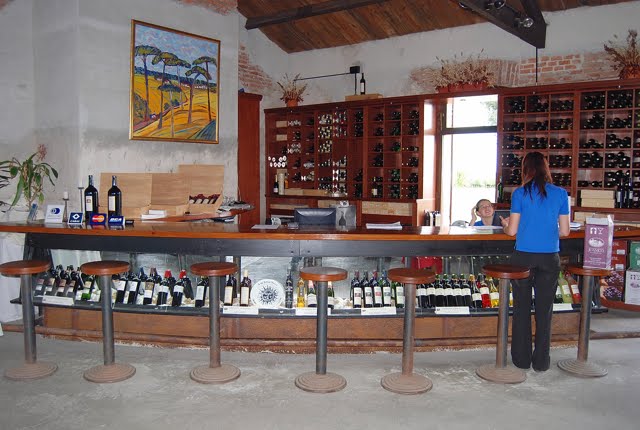
Meanwhile over the Andes and across the River Plate, Uruguay’s third annual Festival de la Vendimia (wine harvest festival) will take place this Saturday in Montevideo, nearby Canelones, and Maldonado (near the high-powered resort of Punta del Este). A dozen wineries that market themselves under the label Los Caminos del Vino (Wine Roads) will open their doors to locals and tourists alike for tours, tastings, live music and asados (barbecues) on their grounds. One of those is Establecimiento Juanicó, Uruguay's largest producer, pictured below.

I’ve written several other entries on Uruguayan wines, which are a little-known pleasure outside their home country and in a few other areas privileged to have access to their signature Tannat and other more standard varietals. Suffice it to say that, for anyone in Buenos Aires, this weekend would be an ideal time to take the high-speed ferry to Montevideo and visit a winery or two on Saturday, take the bus to Colonia del Sacramento Sunday and spend the night there, and return to the Argentine capital by catamaran after Monday lunch. All these destinations get ample coverage in my new fourth edition of Moon Handbooks Buenos Aires.
Custom Search