Showing posts with label Chilean Airlines. Show all posts

Saturday, December 10, 2022

Returning to Santiago (and all that entails)

At very long last, this past Monday, I arrived back in Chile for the first time since March of 2020, when I abruptly flew home to California as the seriousness of the COVID-19 pandemic became obvious. I was originally to arrive on the previous Saturday but, late that week, LATAM suddenly canceled my nonstop Friday flight from Los Angeles International Airport (LAX) to Aeropuerto Arturo Merino Benítez (SCL).

Thanks to my heroic travel agent—there are still such things!—I was able get rescheduled for Sunday even though not without trepidation that the new flight might also be canceled. Analía Rupar-Przebieda (an Argentine resident of Southern California) first tried to reschedule me on Delta (a LATAM partner) via Atlanta, but Delta refused (even though the SFO-LAX leg of my flight was with them). That would have gotten me to SCL on Saturday as planned, but the rescheduled LATAM left on Sunday and didn’t get me here until early Monday morning.

The lines at immigration were long, but moved surprisingly quickly.


The flight was reasonably comfortable if crowded, and I was one of few coach passengers wearing a mask (those in first and business seemed to take it more seriously). On deplaning and arriving at immigration, though, we were faced with the longest lines I’ve ever seen at any airport. We also saw a warning for monkeypox—Chile continues to take contagion seriously—but the lines moved surprisingly quickly. So did the customs and agricultural checkpoint, so I was finally officially in the country.

Is monkeypox the next big thing?


Now to get to the city, and I purchased a seat on a shared TransVIP shuttle and was surprised to find a 5.5 percent surcharge on my foreign credit card. This has also been the case on some restaurant meals, but not on a purchase I made at a downtown department store. I had arrived with a small amount of Chilean cash but, at the new international terminal, the exchange houses were offering very poor rates and there was no functional ATM anywhere to be seen.


I rested most of Monday, other than a fine Peruvian dinner at with my host Marializ Maldonado at Del Carajo, across from the Hipódromo (racetrack) in the untouristed neighborhood of Independencia. The next day, I found a BancoEstado ATM and learned that their once-free ATMs now charge Ch$5500 (roughly US$6.50) for any withdrawal from a foreign account. Yesterday I made the maximum withdrawal of Ch$200,000 (about US$230) with the private Banco Itaú at a cost of Ch$6,000 (US$7). I haven’t yet tried to change US cash in the city, because I’m saving most of that for unpredictable Argentina.

With luck, my so far trusty Suzuki will be back on the road soon.


In preparation for upcoming Patagonian road trip, I’m now awaiting replacement of the catalytic converter on my 2005 Suzuki Grand Nomade, which failed its most recent revision. The most worrisome part of this, at present, is the availability of a replacement part, though my trusted mechanic Mauricio Donoso sounds reasonably optimistic.


Another issue I’ve had to deal with is cell phone service. My US carrier provides phone and data coverage here, but with limits—not exactly clear—on how much, and I’ll be in Chile and Argentina for three months. Because my new iPhone 12 uses an E-SIM rather than a physical chip, I cannot use a pay-as-you-go option here and, without legal residence in the country, nor can I open an account with a monthly plan. Yesterday, though, my host Marializ added me to her plan (and I’ll reimburse her), but that’s not an option for the overwhelming majority of visitors. Some will be limited to WiFi.

Tuesday, June 28, 2022

Tuesday Topics: Patagonia, Reopening Chile, Vaccines, Masks & Linguistics, and Falklands Flights

When I arrived in Santiago de Chile in late February of 2020, to begin updating Moon Handbooks Patagonia for the upcoming sixth edition, what we now recognize as the COVID pandemic had barely begun and few of us appreciate what was a transformative event it would be. A couple weeks later, after I had crossed into northern Argentine Patagonia, its significance had become apparent and I managed to return to Chile before the border shut down and then, after various delays, to home in California.

When I landed in Santiago during the pandemic's earliest days, there were only the most basic temperature checks for airport arrivals.

After that lengthy delay, I’m once again planning—tentatively—to return to Chile in November. While I did travel to Buenos Aires and surroundings in March and April, I didn’t even consider a detour into Chile because its government had been slow to acknowledge foreign-administered vaccinations—an approval that’s necessary to obtain a pase de movilidad (mobility pass) permitting access to museums, restaurants, and other sites of interest to non-resident visitors.

Chile's acceptable vaccines list, according to Minsal (Health Ministry)

At that time, it was taking weeks to obtain the obligatory homologación, requiring an extended quarantine that made tourist travel inconvenient at best. Under pressure from the tourism sector, though, it has now instituted a process that should take no more than 48 hours through the Health Ministry’s vaccination website. Unfortunately, this does not (yet?) appear in English or any other foreign language but, since the policy in question is barely a week old, perhaps that’s just a short-term glitch? For those of us competent in Spanish that’s not an issue, but for the upcoming season it would seem essential.


What Is a Mask? A Linguistic Digression

A Chilean mascarilla

Ever since the pandemic started, we’ve been wearing masks and, when out in public, I still wear one (Alameda County, where I live, has only just rescinded its indoor mask mandate). I was in Chile when the pandemic started but before the mandate but, after I returned home quickly, the mascarilla soon became universal there and is still obligatory indoors and in outdoor spaces where it’s not possible to maintain one meter of distance between individuals. Mascarilla, by the way, is a diminutive of máscara, but I think the latter implies something that covers the entire face. In English, of course, we have just one term that covers both, though there qualifiers—“surgical mask,” for instance.

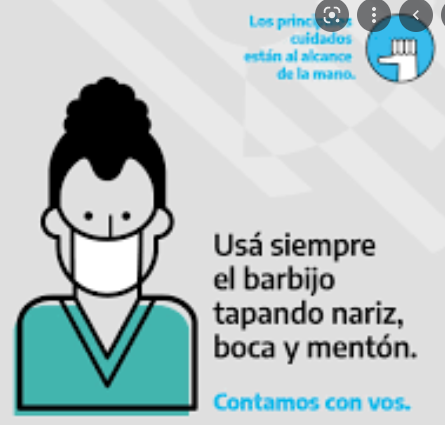
Instructions for your barbijo.

In Argentina, where I recently spent a month-plus, there are no mascarillas—rather, there are barbijos and tapabocas, two words that seem etymologically or otherwise curious. Barbijo derives from barba (beard), which feels odd since both men and women wear them, so perhaps it should be “barbijx” in interest of inclusive language?

This tapabocas covers more than just the mouth.

Alternatively, Argentines use tapabocas, which literally means “mouth covering”—oddly inappropriate, one would think, when masks are supposed to cover both the mouth and nose. Nevertheless, during my time there, Argentines were pretty conscientious about wearing their masks properly—both indoors and outdoors.


SCL to PUQ to MPN

Mount Pleasant International Airport (MPN) in the Falklands

Meanwhile, flights from the South American continent to the Falkland Islands will resume this coming Saturday, July 2nd. Since the Islands—insular Patagonia, if you will—form an important entry in the book, I’m very keen to return. Also, having lived there for more than a year in 1986-7 and revisited half a dozen times, I have many friends and acquaintances whom I am keen to revisit.

The Offices of International Tours and Travel (LAN has since been rebranded as LATAM)

According to an email I received from Sally Ellis, of Stanley’s International Tours and Travel, “The LATAM airlink with Chile will resume on 02 July with its normal route of Santiago - Punta Arenas - Falklands roundtrip, and a roundtrip possible from [the Argentine provincial capital of] Rio Gallegos if you travel to the Falklands on the second Saturday of each month and return on the third Saturday of each month.” It’s worth noting here that anyone flying from Punta Arenas to the Falklands and disembarking in Río Gallegos on return could run afoul of Argentine immigration—since Argentina consider the Falklands to be theirs, they may not give you an entry stamp at the airport and, when you try to leave at another border post, officials there might say you entered the country illegally.


Before the pandemic hit, there was an alternative route via Brazil and the central Argentine city of Córdoba but, according to Sally, “The Brazil route has no resumption date yet but will not be before the summer - maybe November?” I’ve never taken this route, but I wouldn’t rule it out at some point—especially since it would give me a chance to revisit one of Argentina’s most historic provincial capitals and its nearby Sierras.

Friday, March 19, 2021

After the Jabs? Post-Pandemic Patagonia's Not Quite There

Proof of life?

On February 24th, I received my second dose of Moderna’s COVID-19 vaccine and, two weeks later, I undertook a full-scale grocery mission to Berkeley Bowl West for the first time in a year (my wife—also fully vaccinated now—was doing the shopping in that time, while I had only made occasional brief sorties to a neighborhood grocery). It felt like a milestone, one of the first, perhaps, in my quest to return to southernmost South America (even if, for now, I may have to settle for the pears on display here).

The aisles at Berkeley Bowl, on my first visit in a year

A nice pair?

I have yet to renew my passport—having waited purposefully until a new and competent administration took over the reins of government in Washington—but, in any event, I won’t be heading south until November at the earliest. That said, I couldn’t help but notice that LATAM Airlines was offering flights from Los Angeles to Santiago for as little as US$500 r/t. For some time after I returned from Chile to LAX last March 27th, the pandemic had closed the border to all but Chilean citizens and permanent residents but now, it appears, times may be changing.


Is Chile Winning the Arms Race?

Part of the reason, surely, is Chile’s success in vaccinating its population. According to Latin America Reports, five million Chileans may have already received their inoculations, and the government has agreements with China (Sinovac), Pfizer, Johnson & Johnson, and AstraZeneca to acquire 36 million doses (the country’s population is roughly 19 million). While President Sebastián Piñera’s second term has been shaky, there’s no doubt that his administration has been proactive in protecting the population (though there’ve been conflicting data on the Chinese vaccine’s effectiveness). Quarantines, curfews, and other sanitary measures also remain in force.


What does this mean for intending for potential foreign visitors (like myself and my readers)? Because of the previous US administration’s malfeasance and negligence, it’s been worrisome that US passports may have lost the cachet they once had but, as LATAM’s promotional fare would suggest, that’s not an issue at present. That said, any trip to Chile will run into various restrictions: there are several COVID requirements, including a negative PCR test, a sworn pre-boarding statement, a health insurance policy, an electronic tracking form on arrival, and an obligatory ten-day quarantine. Santiago’s Aeropuerto Internacional Arturo Merino Benítez is the only authorized entry point, and there are additional requirements for traveling beyond Santiago, especially to Patagonia, which may entail additional PCR tests.


How Hard is the Border?

These are Argentina's open border crossings - but with restrictions

In my case, the need to cross the Argentine border complicates matters even further, but I’m probably better placed than most. At present, the only non-Argentines permitted to enter must be relatives of Argentines and, being married to one for nearly 40 years, I technically qualify—but only if there’s a family-related issue at stake. There are just a handful of open crossings, the most convenient of which is Aeropuerto Internacional Ministro Pistarini, commonly known as “Ezeiza,” in suburban Buenos Aires. The only option in Patagonia is Paso San Sebastián, shared by Argentina and Chile, in Tierra del Fuego, but if I somehow managed to enter Argentina, a patchwork of local and provincial travel restrictions could make any such achievement a pyrrhic victory. Instead, I’ll wait.


Monday, March 30, 2020

On the Way Home...

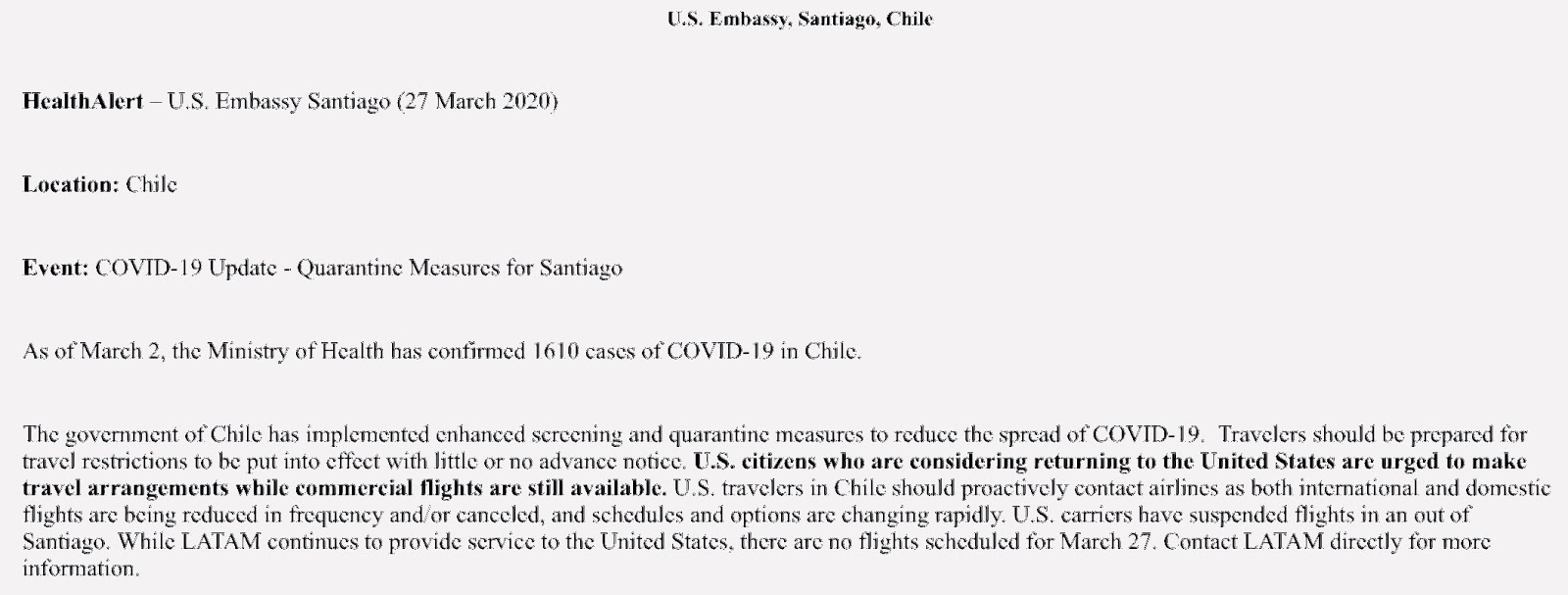
Last Tuesday, after managing to change my flight from Chile to my California home, I was killing time until, on the morning of my presumed Friday departure, I received an email from a friend in Puerto Varas. He referred me to a US embassy warning that LATAM Airlines had no scheduled flights to the United States for that day. This alarmed me, to say the least, as I wasn’t sure I could handle yet another postponement during the coronavirus crisis.
The US Embassy's alert suggested there'd be no Friday night flight.
Unwilling to accept the news from a single source—even one with the embassy’s authority—I immediately emailed a friend who works in the communications department at Nuevo Pudahuel, the concessionaire that operates Santiago’s Aeropuerto Internacional Arturo Merino Benítez. He told me that they’d received a communiqué to that effect from the airline; there would be a flight to Miami, he added, but availability was doubtful.
Nuevo Pudahuel's website showed my flight leaving on time.
This, of course, alarmed me even more, but when I went to LATAM’s flight status page, it assured me that my 11:55 p.m. departure for Los Angeles was still on schedule, even though many other flights had been canceled or delayed. Just in case, I phoned their local customer service number and got the same encouraging response. Still, I asked the agent to look into further, and she left me on hold for some time before repeating that confirmation. She added, however, that if there were any change in status I should receive an email from the airline by 6 p.m.
Neil Young's lyrics suggested the uncertainty of everything. 
On a hunch, I went to Nuevo Pudahuel’s passenger page which—despite what my friend there had written—also showed the flight to be on schedule. With Marializ Maldonado, who would drive me to the airport, I decided on waiting until 7 p.m., rechecking the online resources before departing. Neil Young’s words to "On the Way Home," sung here by Richie Furay, seemed appropriate.

At the Airport, on the Plane
When that hour arrived, we threw my bags into the car and, via a nearly empty highway, arrived at an airport that is usually swarming with people but was now almost equally empty. After confirming with floor personnel that my flight was still in order, I approached the check-in—with virtually no line—to get my boarding pass and drop my bags. It was a pleasant surprise that, even though my reservation inexplicably indicated only one bag on an international flight, LATAM accepted my second one at no additional charge.
Normally packed on a Friday evening, Santiago's airport was eerily empty.
Passing through immigration and security was equally expeditious, and I found myself with nearly four more hours to kill before departure. That left plenty of time for one last pisco sour—even though the only restaurant serving alcohol was a US chain whose name I’ll decline to mention here, I bit the bullet on an overpriced cocktail. I also ordered a chicken sandwich that was at least palatable but, except in desperation, I’ll never choose to eat there again. 
With many flights delayed or canceled, Nuevo Pudahuel has provided cots for napping.
Only about half-full, with passengers spaced fairly well, this was a bare-bones flight that served only water—no alcohol or even soft-drinks (except perhaps in business class). Having sandwiched earlier, I declined the dinner, but the next morning’s breakfast was perhaps the worst airline meal I’ve ever had. Except for one edible asparagus spear and some soggy mushrooms, it wasn’t even recognizable as food, and I really didn't want to know what it was. Nor was there tea or coffee.

Back in the USA
The baggage claim at LAX was virtually vacant.
On arrival at LAX, the airport was even emptier than SCL had been the night before, and I’ve never gone through immigration and customs faster at any US airport. There was one oddity, however—on board the flight, cabin personnel had distributed a CDC traveler health declaration that asked whether a passenger had been to China’s Hubei Province and other destinations that had seen coronavirus outbreaks.
The CDC's explanation of its health declaration.
There was no screener for arriving passengers, nor anywhere to submit the declaration (which I will now recycle).
Badly drawn, the declaration claimed to be mandatory but also seemed to state that only travelers coming from affected countries would be obliged to fill it out. In the end, though, that was irrelevant—nobody collected or even asked for the form, nor was there any box to drop it in. This, of course, could easily be a metaphor for the current administration’s ineptitude and negligence in confronting the greatest public health crisis in a century.

On the Road Again
My ticket home included a connecting flight to San Francisco, but dealing with security theater and being cooped up in another plane didn’t appeal to me, so I chose to rent a car. I’ve done this before, and often use it as an excuse to explore parts of the California coast and coast range that I don’t know as well, and also to visit a winery and have lunch in San Luis Obispo or Paso Robles.
Despite the crisis, Harris Ranch remains the go-to place along I-5 between Los Angeles and the Bay Area.
This time, though, I chose the most direct, quickest route via Interstate 5 through the Central Valley, where digital highway warning signs advised us to stay at home and avoid gatherings. I stopped at Coalinga's Harris Ranch, a classic lunch break at almost the exact midpoint of the trip; in the current crisis, the restaurant proper is closed, but they’ve set up a tent to take orders and deliver them to your car. I chose a grilled chicken sandwich and a lemonade before continuing north, arriving in Oakland around 4 p.m.
Chaltén was ready for a walk.
Here I’m sheltering in place, and couldn’t even embrace my wife or daughter, though I could give a hug to Chaltén, the rescue husky who’s quickly become part of the family. After that, we returned my rental car to Oakland International Airport and, following a light dinner, I was in bed by 8 p.m. (midnight Chilean time, though).
Our neighborhood's many restaurants mostly remain open for takeaway meals.
I awoke at 3 a.m. and, after indulging in some videos, took the dog for a walk at daybreak. On a Sunday morning, there were few people out but, in a neighborhood with many restaurants, I noticed that nearly all of them now offer takeout. For the time being, at least, this is the new normal.

Tuesday, March 24, 2020

Stuck Inside of Renca, with the LATAM Blues Again

Yesterday morning, I was looking forward to my flight home from Santiago (SCL) to SFO via Mexico City, and I decided to do an online check-in—only to learn that LATAM had cancelled that flight. The website offered a link for rebooking but, when I tried to do so, only the Mexico City-San Francisco segment of the itinerary appeared. The leg out of Chile had, apparently, disappeared into the cloud(s).
LATAM's website was not user-friendly yesterday.
This was disturbing, to say the least, because I had made such an effort to return from Argentina to Chile and then to Santiago, having changed my original ticket in the city of Osorno. Still, with some difficulty, I managed to contact LATAM’s Santiago call center and, after trudging through the automated answering system (including a pretty long hold), I managed to speak with a live human—though I worried, at every moment, that we might somehow get disconnected and I’d have to start all over again.

At first, LATAM’s agent suggested a Thursday night flight to New York and thence to SFO but, given the mess that JFK has been with arrivals from Europe (and now spring breakers from Florida, I suspect), that was a non-starter. When I asked about alternatives, he found availability on Friday night’s non-stop to Los Angeles (my original itinerary) and SFO. I jumped at the chance although, rather than take another flight, I may consider renting a car and driving back to the Bay Area.
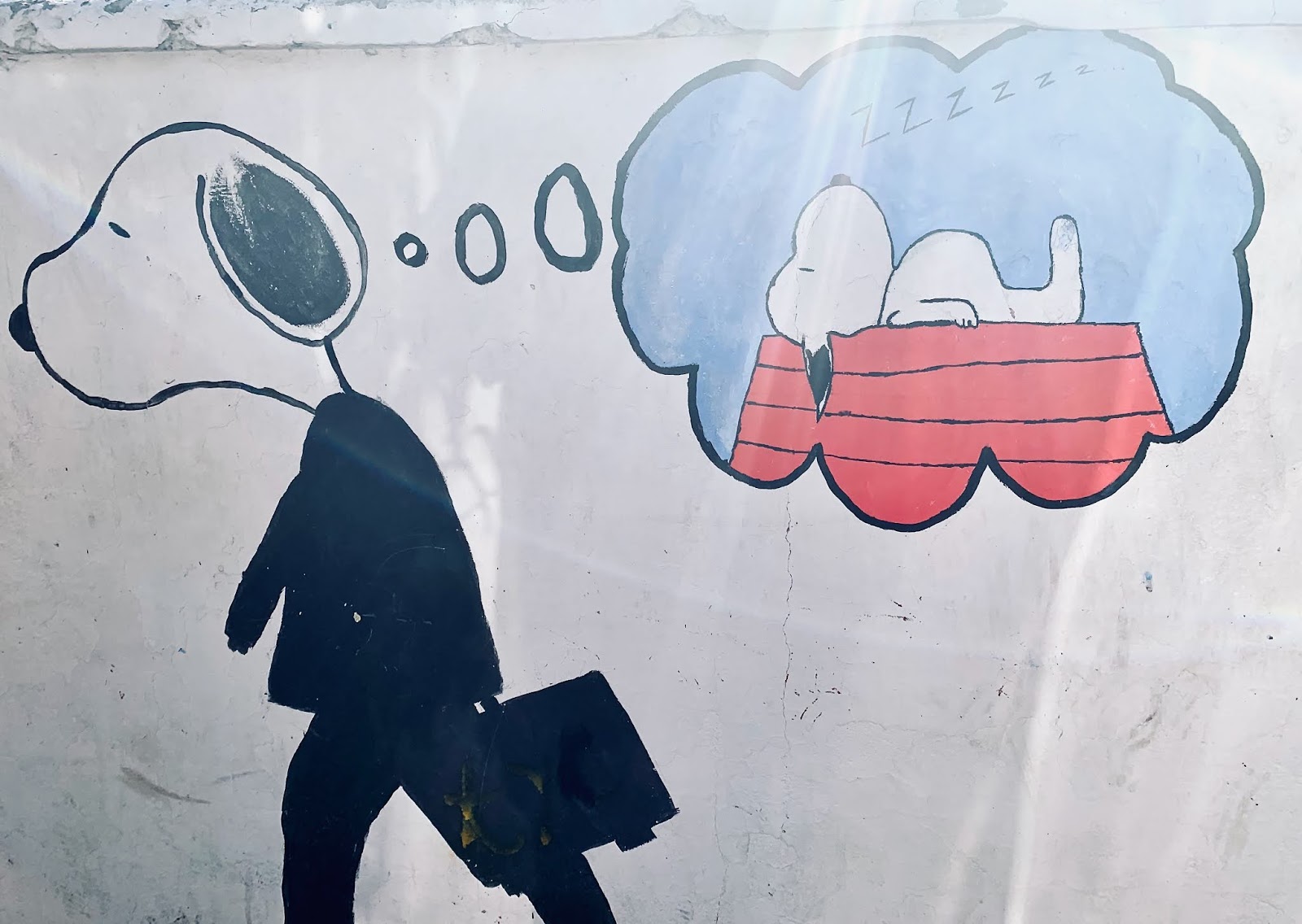
Renca's Snoopy would prefer to shelter in place...
Still, it was a letdown and, for the next few days, I’ll be biding time in Renca, a non-touristed neighborhood about which I’ve written before on this blog. Like most but not all people here, I’m staying indoors, though I do take occasional walks, avoiding the relatively few folks on the street. Some are wearing surgical masks, but others are seemingly oblivious to “keep your distance” recommendations, and middle-aged men still gather outside the local botillería (liquor store). There’s now a 10 p.m. to 5 a.m. curfew throughout the city, though its efficacy in suppressing any virus outbreak seems dubious.
The architectural details may not be the most appealing, but this expanded Renca home suggests the owners are doing well.
Still, Renca is a changing población that, I suggested to my friend Marializ Maldonado, appears to be in transition from working class to (perhaps lower) middle class. The basic housing style consists of side-by-side units known as casas pareadas, which share a central wall and are mirror images of each other. Some people, though, have added improvements such as a second story to their homes, occasionally with balconies, and quite a few now own shiny new SUVs and minivans. Many streets are narrow one-lane alleyways, so people often park on the sidewalks (traffic moves slowly here anyway, so it’s still pedestrian-friendly). At the time the project opened, in 1965, few probably expected to ever own a car.
Many Renca residents park their cars on the sidewalk.
There are other infrastructural improvements. Opposite Marializ’s house, a once neglected park has now become the well-kept Plaza Chile Israel (Israel’s embassy subsidized renovations here), and a formerly graffiti-covered building has become a sede vecinal (neighborhood meeting hall) with a handsome mural. There is daily maintenance, and the plaza remains a garden spot for occasional couples and a very few people who appear unaware of or unconcerned about the public health crisis.
Two years ago, this folkloric event took place on the redeveloped Plaza Chile Israel (Marializ's house is barely visible at the far left).
That said, though I’m getting bored with staring at the computer keyboard and, at times, streaming videos on the iPad, there could be worse places to spend a self-imposed semi-quarantine. I’m still looking forward to boarding that plane for LAX on Friday night, for which I’m saving my last remaining novel, and then getting home to Oakland. There, at least, I’ll be able to work in the garden, walk the dog, and even go for a bike ride (all acceptable under California’s “shelter-in-place” guidelines).
Meanwhile, apologies to Mr. Zimmerman.

Saturday, March 21, 2020

White Line Fever? Travel in the Time of Coronavirus

Last Monday, having heard that Chilean land borders would close on Wednesday the 18th because of the coronavirus crisis, I drove from San Carlos de Bariloche to Argentina’s Paso Cardenal Samoré border post—where mine was the only vehicle in sight. At a roadside booth, as a young Argentine gendarme (border guard) handed me a ticket to present at immigration and customs, he asked me whether I was suffering any symptoms and, then, he himself sneezed!

With all due respect to Merle and Gabo..
In fairness to him, he averted his face and blew into his elbow. When I remarked that he, instead, might have been showing symptoms, he smiled sheepishly and I continued to what might have been the quickest departure ever at what is normally the second-busiest border crossing between the two countries (only the Los Libertadores crossing between Santiago and Mendoza gets more traffic).
Argentina's border post at Paso Cardenal Samoré
The actual borderline between Argentine and Chile
Chile's tentative tactic to deal with coronavirus at the border
On Chile’s side of the border, a handful of vehicles made the process—which included filling out a brief epidemiological questionnaire—slightly slower, but the stroll through immigration, customs and agricultural inspection was still expeditious. Oddly, no official even glanced at the questionnaire, which we had to deposit in a box for presumed data collection. Then I was on my way into Chile, a tale I’ll continue below.
Welcome to Chile!
How It All Started
This trip has changed dramatically since it began in late February, when I arrived in Santiago with the goal of updating the current 5th edition of Moon Patagonia. On arrival in the capital, my biggest concern was the estallido social (social explosion) protests that—whatever their inconsistencies—have brought decades of social and economic inequality into focus. For the few days I was in town, things were relatively quiet, but there was plenty of evidence of the fierce demonstrations that left several Metro stations and other services in near-ruin (the previous link here reports what stations may be closed at any given time).
Information screens let Metro riders know which stations are closed or with limited access.
I was staying in the house of Marializ Maldonado, a long-time friend who is working for the constitutional referendum to replace the one drawn by pro-Pinochet ideologue Jaime Guzmán. Guzmán’s custom constitution disproportionately favors Chile’s more conservative elements—rather as gerrymandering favors Republicans in the United States.
Protestors have defaced monuments such as Plaza Baquedano (informally renamed Plaza de la Dignidad).  This site has since been cleaned up.
Marializ hosted several meetings of activists favoring a new constitution, the vote for which was scheduled for April 26th, but has since been postponed until October 25th because of the Coronavirus crisis. Her Revolución Democrática party considers the rowdier elements who’ve gotten the most publicity in the estallido as outsiders (a term they’ve adapted from English).
The Plaza de Armas at Lonquimay features native Araucarias and a knitted tree apparently left over from Xmas.
When I arrived, the coronavirus issue was not yet critical, and I drove south with the idea that I’d spend two months in Chilean and Argentine Patagonia. That would put me on track to submit a new manuscript toward year’s end, and I began with a long drive that took me to Curacautín, at the northern approach to Parque Nacional Conguillío, where I spent a night at the Bavarian-run guest house Andenrose. The next morning I circled the park via the town of Lonquimay and thence to Melipeuco, the park’s southern gateway but, on this occasion, I decided I couldn’t make the detour into the park.
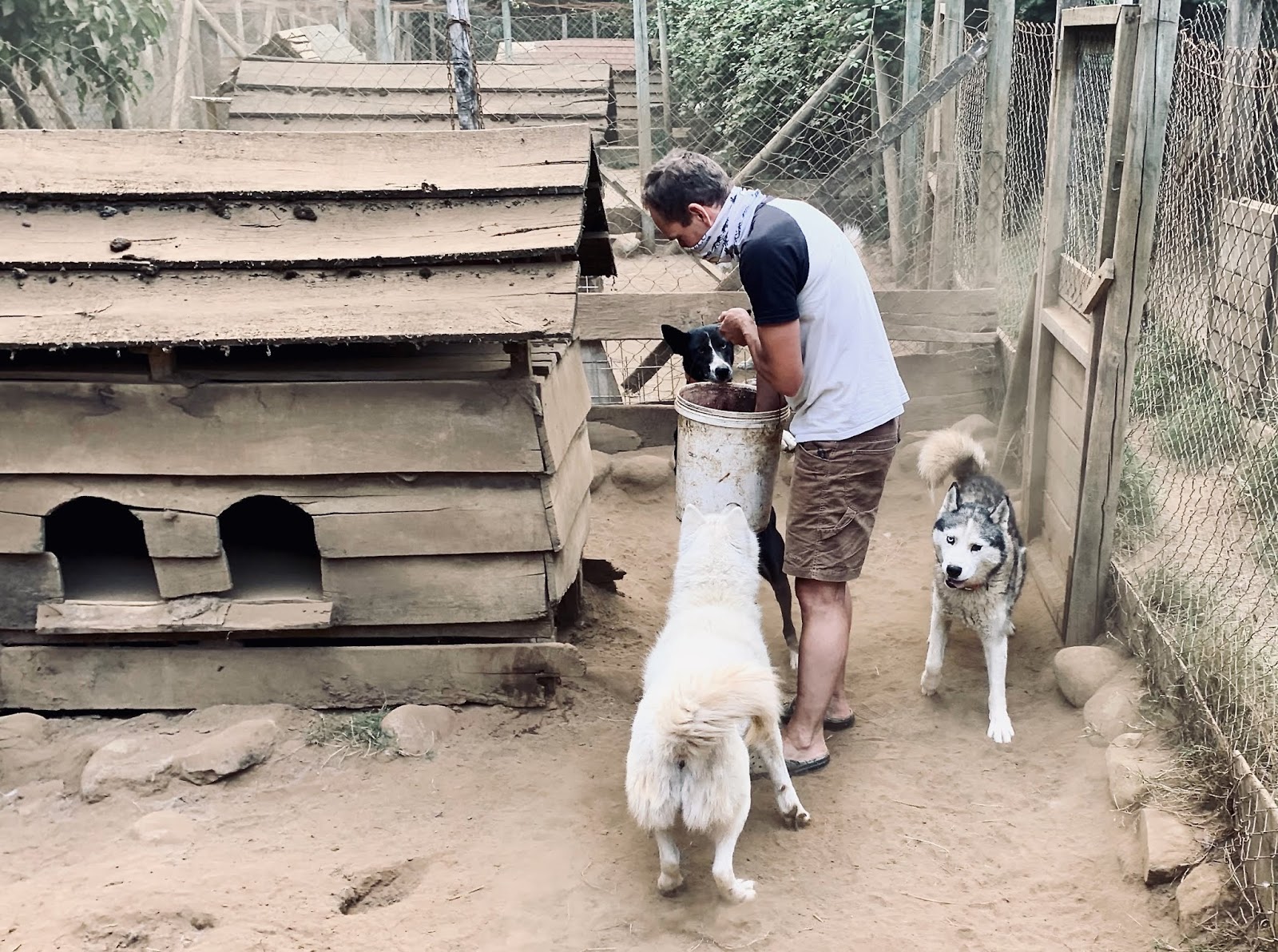
Feeding time at Aurora Austral, for just three of Konrad's 55 huskies
Instead, I continued to the lakeside town of Villarrica and, after a brief reconnoiter of the town, on to the Aurora Austral husky farm, where another Bavarian expat, Konrad Jakob, offers sledding trips in winter and carting trips in summer with his kennel of 55 huskies and a handful of mixes (full disclosure: I’m a devotee of northern dogs and have recently adopted a rescue husky, after four malamutes and one Akita). I spent two nights in one of Konrad’s cabañas, commuting to Villarrica to update practical information on the city. I only regret that I’ve never seen the area in winter, when I’d love to go mushing.
My cabaña accommodations at Aurora Austral
On the third day, I headed to Pucón, at the east end of Lago Villarrica, where I stayed at my long-time favorite Hostería Ecole, but there was an issue that aroused anxiety even before coronavirus entered the conversation. Some years ago, Chile fiddled with the regulations for non-residents crossing the border with their own Chilean vehicles. Were I unable to cross with my vehicle, it would be disastrous for my work.
Template for the declaración jurada that let me cross the border.
Fortunately, Hans and Verónica Liechti of Pucón’s Travel Aid agency had put me in touch with an American couple who own a house outside town and were in much the same non-resident situation. That couple had found an apparent loophole that allows such vehicle owners to leave the country so long as they obtain a notarized declaración jurada (“sworn declaration”) that they intend to return the vehicle to Chile. They’d done it several times and sent me a template for the document that I completed, printed out, and took to Pucón’s only notary public for verification.

When I Get to the Border…
Loretano is a worthy new Peruvian addition to Pucón's dining scene.
After three nights in Pucón, where I really enjoyed the new Peruvian restaurant Loretano (presently closed for the virus emergency), I headed east to the border at Mamuil Malal; I couldn’t completely contain my apprehension until, when I produced the declaración jurada, the Chilean customs official gave me a smiling thumbs-up. Entering Argentina was similarly routine, despite the presence of a list of various nationals subject to coronavirus quarantine but not—yet—US citizens. I got in under the wire, as that would happen a couple days later.
At the Mamuil Malal border crossing, Araucarias line the road, which passes through Parque Nacional Lanín.
Parque Nacional Los Arrayanes was presumably closed to hikers, but there was no  visible enforcement at Villa La Angostura.
The next few days were relatively routine, as I spent a night at Estancia Huechahue, two in San Martín de los Andes, and one in Villa La Angostura, where Argentina’s budding coronavirus precautions became more obvious. En route there had been evidence for concern, as I saw Argentines from a tour bus still sharing yerba mate, and many still greeting each other with kisses on the cheek—men as well as women. Argentina had closed all its national parks, though, and Parque Nacional Los Arrayanes—a popular hiking destination with an entrance in town, was supposedly off-limits (there were still people crossing the line into the park).
Probably now closed because of Argentina's widespread quarantine, the Bariloche tourist office was keeping  distance between its personnel and visitors.
Then I was headed to Bariloche—arguably Argentine Patagonia’s de facto capital, with the notion of continuing south to El Bolsón and Esquel, and then across the broad steppe to Puerto Madryn and Península Valdés. It was not to be, however, as I heard the next morning that Chile was about to close it land borders and, if I did not return before Wednesday, I would be unable to leave (and potentially unable to comply with my declaración jurada).

That information I heard second-hand but, for confirmation, I walked to the Chilean consulate—which was closed. Nevertheless, I rang the bell and, after a middling wait, was assured that US citizens like myself would be able to cross. I left almost immediately, returning via Villa La Angostura and thence to the border crossing described above. Before leaving, though, I managed to visit the new locale of Helados Jauja, arguably Patagonia's best ice creamery (the mother ship is in El Bolsón).
Helados Jauja has new quarters in Bariloche, with a secluded patio in the back.
When in Chile…
My accommodations at Zapato Amarillo were picturesque, comfortable and - in the current situation - socially remote.
After crossing the border, I headed to Puerto Octay’s Zapato Amarillo guesthouse, where the Swiss-Chilean couple Armin and Nadia Dübendorfer have hosted me many times over the years. On the outskirts of town, its stylishly rustic cabins were also an ideal place for self-quarantine, with nobody else about. I had considered staying several days, and perhaps even continuing to Puerto Varas, but after Armin and Nadia told me that international flights were being drastically reduced, I took their suggestion to drive to the city of Osorno and reschedule my April 29th departure for California. Otherwise, I would be spending nearly six weeks in Chile in virtual seclusion.
LATAM'S Osorno office switched my flight. It's a nice touch both the agent and the client can watch the computer screen.
Osorno’s about an hour away, but I was fortunate enough to find parking in the densely built downtown area, barely a block from the surprisingly small LATAM office (Osorno has an airport, but flights are fairly few). There were also few clients, so I quickly got seated and, though my preferred departure date from Santiago on Monday the 23rd was not available, the agent found me space for Tuesday the 24th. She first suggested the route via New York City, then with Delta to SFO, but having heard of huge delays at JFK immigration I chose to fly from Santiago to Mexico City, thence to SFO with Aeroméxico. Time will tell whether I’ve made the right decision, but I’m due home by 1 pm on Wednesday the 25th.

Then there remained the issue of getting back to Santiago, amid rumors there would be a toque de queda (curfew) at midnight. I returned to Puerto Octay immediately and packed my bags for the Chilean capital, a distance of roughly 970 km (about 600 miles) that I covered in 10-1/2 hours, with just two stops to fill the tank (plus some slowdowns for construction). I got to Marializ’s house at 11:30 p.m., just half an hour before the supposed curfew (that’s still not happened, though authorities are encouraging people to stay home). By then, with all apologies to Merle, I'd seen enough white lines for the day.

Here, until Wednesday, I’m in modified self-quarantine, taking short walks around the neighborhood  but avoiding contact with anybody—and making minimal purchases from the nearby shop. And writing stuff like this as, for the foreseeable future, we’ve had to suspend work on the new edition of Patagonia.
Custom Search