Showing posts with label Traffic Safety. Show all posts

Tuesday, September 10, 2013

Braniff's "Beautiful Buenos Aires," in the 1950s


More than 30 years ago, the first time I ever went to Buenos Aires, I flew from Santiago with the now defunct Braniff. That was barely a year before the company closed in 1982 but, at one time, Braniff was a prestige airline that pioneered many South American routes and even called itself the “Conquistador del Cielo” (Conqueror of the Skies).
Memories of my own first visit resurfaced when I stumbled upon Braniff’s video of “Beautiful Buenos Aires,” dating from the 1950s. Given the orderly optimism that pervades it, I’m guessing it’s the early 1950s, certainly prior to the so-called “Revolución Libertadora” that overthrew president Juan Domingo Perón in September of 1955.
In the eight-minute film, streetcars still operate downtown, private automobiles occupy parking spots directly in front of the Casa Rosada presidential palace, and architectural landmarks such as the Obelisco, the Bank of Boston, the Edificio Kavanagh, the Plaza Hotel and the US Embassy (now the ambassador’s residence) are conspicuous. Astonishingly, though, the narrator (presumably reading a scriptwriter’s words) misidentifies the Palacio de las Aguas Corrientes (the waterworks popularly known as “Obras Sanitarias”) as the Correo Central, the central post office that's now being recycled as a cultural center. As my photographs above and below show, the two don’t look much alike.
Braniff tried, though, to attract its clients with promises of premium shopping on Florida street – like “the featured street in a block party” with “practically everything the civilized world has for sale” after its closure to automobile traffic at 3 p.m. every afternoon. Today, of course, Florida and several other downtown streets are permanent pedestrian malls, but it’s no longer the elite shopping paradise it once was – partly but not exclusively because of Argentina’s current import restrictions.

To escape the crowded central city, of course, Buenos Aires had the open spaces of Palermo and the world’s largest man-made swimming pool for 100,000 bathers (something I had never heard of, though La Salada and Ezeiza are possible candidates).

One segment that shocked me, though, was that Buenos Aires was said to be the world’s only large city without traffic lights, “as pedestrians considered that to be violation of their civil rights and “heaven help the driver of a vehicle who claims right of way over them…” Instead, police on elevated pedestals directed traffic.

Once, about 20 years ago in the northern city of San Miguel de Tucumán, I had to talk my way out of a ticket for unintentionally disobeying one of those elevated traffic cops, who were an anachronism even then. Today, anybody who accepted at face value Braniff’s assertion that Buenos Aires drivers would respect pedestrians would, like Braniff itself, probably not survive to catch the flight home.

Sunday, May 5, 2013

Wining and Driving: Mendoza's New Winery Bus


Over the past couple decades, I’ve driven literally hundreds of thousands of kilometers through Argentina, Chile and Uruguay in the course of creating and updating my guidebooks to those countries. In the course of doing so, one of my favorite activities has been visiting vineyards, as the wineries of all three countries have achieved a growing presence on the global stage.

There’s a risk in this, though, as driving and consuming alcohol is, obviously, against the law. In Chile, with one of the continent’s most restrictive drunk-driving laws and a professional police force to apply it, visitors should be particularly attentive. If at all possible, use a designated driver or take a tour though, in regions like the Colchagua valley where the wineries are spread out, tours can be an expensive alternative.
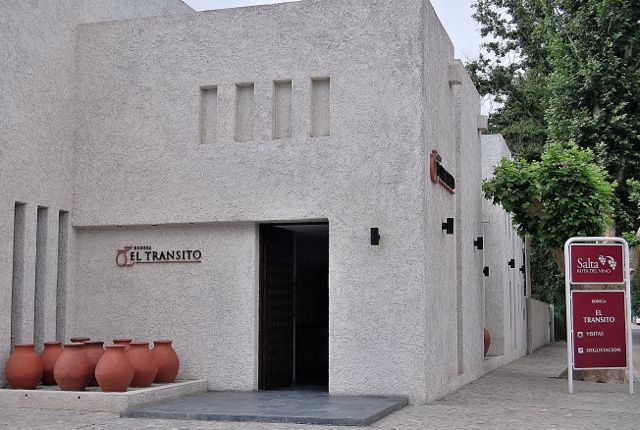
In a few places, this isn’t an issue – in the northern Argentine town of Cafayate, for instance, many wineries (such as Bodega El Tránsito, pictured above) are almost literally within staggering distance of each other, so the big issue can be crossing the street. Fortunately, Cafayate’s traffic is far less ferocious than many other Argentine towns.

On the highways, Argentina is another issue entirely. In all the years I’ve been driving there, I have seen plenty of dangerously and even willfully reckless driving, but I have never seen an Argentine policeman pull over anyone for a moving violation. It’s common, though, for Argentine police to camp out on the roadside and, between sips of yerba mate, pull over motorists to see whether their brake lights or turn signals are malfunctioning. Safety, though, is rarely their concern – rather, it’s the opportunity to supplement their meager salaries with a coima (bribe). This is common in Argentina, where particularly corrupt provincial governments control the police.

Given the slack police work, and the legal obstacles to getting any DUI conviction in Argentina, one might think alternatives for getting around the wineries in a city like Mendoza might be few, but they’re increasing in a city where more than 120 of them are open to the public. When I first did this, after the economic collapse of 2002, it was preposterously cheap to hire a car and driver for the day and, for a group of three or more persons, that’s probably still desirable. Nevertheless, there’s a new option in the Bus Vitivinícola, which connects downtown Mendoza with wineries just south of the city.
The new service offers two itineraries, known as El Sol and Luján Sur, with a hop-on, hop-off service that’s valid for up to ten hours, allowing extended tours and tasting of up to three wineries. The more northerly El Sol itinerary also stops at the suburb of Chacras de Coria, which has critical mass of accommodations and fine restaurants, and five different wineries, including Bodega Vistalba (pictured above) and Bodega Lagarde. The more southerly Luján Sur route offers a choice of seven, including Bodega Séptima (pictured below), Terrazas de los Andes, Dominio del Plata, and Bodega Tapiz. Most of these wineries have restaurants, and several also offer accommodations.
Given Argentina’s relatively lax treatment of potential DUI’s, it’s a little surprising to see this forward-looking service establish itself here first. Chilean and Uruguayan wineries would do well to look at its example (the Uruguayan cities of Montevideo and Colonia have similar sightseeing buses, but nothing that serves their wineries).

Saturday, December 15, 2012

Ceasefire in the Traffic Wars?


Arriving in Buenos Aires, I normally recalibrate my instincts to adapt to the Argentine capital’s motorists, who never even seem to see anybody in the crosswalk. I have long written that, as a pedestrian here, the first rule of survival is to appreciate that you are invisible. Making eye contact with a Porteño driver is next to impossible.
Others, though, think even less of those drivers than I do. Last month, at the Feria Internacional de Turismo, a US consular employee told me that he thought pedestrians were not invisible – rather, they were targets. I disagree on that – the fact is that most Porteño drivers look carefully at intersections to avoid other vehicles, but utterly ignore pedestrians. On those occasions when pedestrians do register, few drivers stop; rather, they swerve around them, often while cursing out the window. Once, two doors from our apartment, a policeman told me that issuing citations to drivers who fail to yield to pedestrians in a crosswalk was “not my job.”

Having established that, I can say that I’ve noticed improvements, and some Porteño friends agree with me that respect for pedestrians is growing. Etiquette may still be a minority position among Buenos Aires drivers, but some of them are learning. Credit where credit is due.

On a peripherally related matter, though, there’s been regression. In our Palermo neighborhood, in particular, motorists have begun to occupy crosswalks as their own personal parking places, forcing pedestrians out into the street where they’re even more vulnerable to speeding drivers. Only a couple days after my arrival, as I walked toward the nearby Parque 3 de Febrero, I found several cars blocking the crosswalk on the broad and busy Avenida Libertador, with a policeman standing idly nearby.
Approaching him, I asked whether or not blocking the crosswalk (including a handicapped ramp) was an infraction, and he replied that indeed it was. Then I asked him why he hadn’t written out a ticket and, in contrast to the cop who said moving violations were not his job, he pulled out his book and started to cite the vehicles in question (as pictured above). This was positive, of course, except perhaps for the fact that he had to wait for someone to ask him to do his job.
In a similar situation a few days ago, I found another vehicle blocking the crosswalk along Blvd. Cerviño, just steps away from our building. Likewise, a policeman stood nearby as pedestrians maneuvered around the vehicle (and the pile of trash that made things even worse, but that’s a separate issue that I’ll deal with in the near future).  This cop, though, was less compliant than the other – “I don’t have a citation book,” he said, and he didn’t think it would be fair to call the tow truck (ignoring fairness to pedestrians, of course). Argentina may have achieved marriage equality, but equivalent respect for pedestrians has a long way to go.


Chile Travel Adventures
I won’t get back to Chile until next year, but that doesn’t mean I won’t be paying attention to the stringbean land across the Andes. Last year, in partnership with Sutro Media, I published my first iPhone app Argentina Travel Adventures, which recently came out in an Android version as well. More recently – just a week or so ago, in fact – Chile Travel Adventures has gone live to complement Argentina in both iPhone and in Android format, so that readers can explore southernmost South America on their mobiles as well as in print. At just US$2.99 each, the apps are, figuratively if not literally, a giveaway, with regular updates at no additional charge.

Wednesday, August 8, 2012

Córdoba to Control Emissions?

Except to a handful of know-nothings who deny that humans have any effect whatsoever on their natural environment, there is virtually unanimous agreement that carbon emissions from automobiles is a major contributor to air pollution and global warming. The Argentine city of Córdoba (pictured below), though, seems primed to tackle emissions as a public health crisis in a truly novel manner.
For the longest time, one of the Southern Cone’s most disturbing features was the elevated level of tobacco consumption. That’s changed in recent decades, thanks partly to progressive tobacco-control laws that prohibit or limit smoking in restaurants and other inappropriate areas, though Chile’s statutes remain unfortunately weak. The latest in tobacco control, though, is a surprise, if not a shock – Córdoba appears ready to make driving while smoking a moving violation.

If cited for a violation, Córdoba smokers could face a fine of up to 500 pesos (roughly US$110) and lose their driving privileges for up to 90 days; for repeat offenders, penalties would at least double. According to city legislator Javier Bee Sellares, who is proposing the measure, “This ordinance attempts to modify the habit of driving while smoking because in addition to affecting public health, it’s also a traffic safety risk.” Bee Sellares added that “the fact of smoking means that one hand is always occupied with the cigarette. This becomes a menace on wheels not just for the driver, who becomes distracted from essential maneuvers, but also everyone else, whether they be pedestrians or drivers.”

In principle, anything that reduces tobacco consumption is good, but I have some doubts about this particular measure. It appears to completely ignore other comparable distractions, such as eating, drinking (liquids other than alcohol, which is already proscribed), talking or texting on a cell phone, or fiddling with the radio or MP3 player. All of these would appear to be equally risky behaviors for anyone behind the wheel of a vehicle that weighs several tons, but the ordinance apparently does not address them.

The other issue is enforcement. While Argentine anti-tobacco legislation has been surprisingly effective, especially in Buenos Aires, to enforce a smoking while driving ordinance will require great professionalism on the part of a police force that, as often as not, simply doesn’t care much about issuing moving violations. Rather, they prefer to lurk along the roadside, arbitrarily stopping motorists for minor equipment violations (such as malfunctioning turn signals) that become opportunities for bribes. I’ve never had to deal with the Córdoba police in this regard, but it’s routine in the rest of the country.

Tango by the River
On Friday August 17, at 6 p.m., I will give a digital slide lecture on Buenos Aires at Tango by the River in Sacramento. Limited to a maximum of 50 people, the event will also include tango performances; admission costs $10, or $8 in advance. I have spoken here several times before, and we always sell out, so plan in advance. Signed copies of my Moon Handbooks on Argentina, Buenos Aires (pictured below), Chile and Patagonia will be available at discount prices.

Tuesday, June 28, 2011

The Porteño Pedestrian: Theory & Practice

I’ve written several times about Argentine traffic safety in Buenos Aires and elsewhere, suggesting that the first rule of pedestrian survival is to appreciate that you are invisible, but it’s a topic that never seems to go away. Only a few days ago, the daily Clarín reported that pedestrian deaths in the Argentine capital have are running roughly 50 percent ahead of last year, with an average of five per month. City buses and trucks are the usual culprits.

According to Alberto Silveira, of Luchemos por la Vida (an NGO whose slogan is “road safety is no accident”), part of the problem is inadequate infrastructure: removing buses from narrow streets, turning others in pedestrian malls, and widening sidewalks would make the city safer. In the colonial barrio of San Telmo, some sidewalks are only 60 cm wide (barely two feet).

Silveira also suggests closing some streets to through traffic and installing speed bumps, though my own anecdotal observations would suggest that the speed bumps are ineffective - many Porteño drivers don’t hesitate to fly over them. On the other hand, in my own Palermo neighborhood, I’ve seen a few blocks with speed dips - in reality, gutters that help drain waters in heavy storms but are also effective in slowing drivers who don’t want to scrape the undercarriage of their vehicles. One taxi driver there told me it keeps everybody honest.

These infrastructural solutions, though, are much easier to implement than changing the habits of Argentine drivers, few of whom would ever consider yielding right of way to a pedestrian. The Clarín story notes that “the buses that come down Avenida Córdoba turn onto Cerrito at full speed, without respecting pedestrian priority and forcing them to sprint across.” Even the young and agile can find crossing 12-lane Avenida Libertador (pictured above and below) a challenge and, according to one traffic study cited by Luchemos, there are more than 700,000 violations of pedestrian right of way in the city every day. In a month, that totals more than 21 million, but leads to only 39 citations - an average of roughly one for every 540,000 violations.

There is, of course, the issue of pedestrian culpability. While it’s true that many ignore traffic signals and even cross mid-block, I’ve always thought that, given the habits of Argentine drivers, pedestrians have to try to cross wherever it’s feasible. That said, contemporary technology is now a contributor to the hazard - pedestrians texting on smartphones certainly bear responsibility when they stroll obliviously into the street, even if cars and buses are far more lethal. In theory, pedestrian violations are subject to citations and fines, but those are even rarer than moving violations for vehicles.

Speaking of moving violations, those should in principle become more common, as the Buenos Aires city legislature reduced speed limits for public buses last month: from 80 to 60 km per hour in major avenues, and 60 to 50 km per hour in other avenues. Unfortunately, the limit on normal streets remains 40 km per hour, rather than dropping to 30, and the new law does not apply to passenger automobiles. Even then, bringing down the death toll would require serious traffic law enforcement - the factor that is most lacking.

Help Support Southern Cone Travel
If you have found this article informative, please consider clicking on one or more of the AdSense links that accompany it - always presuming, of course, that it’s a product or service that interests you.
Custom Search