Showing posts with label Parque Nacional Patagonia Austral. Show all posts

Wednesday, March 16, 2011

Argentina, Chile and the NYT

Two Sundays ago, The New York Times travel section published a long feature on Bahía Bustamante, a remote company town on Argentina’s Patagonian coast north of Comodoro Rivadavia. Founded as a kelp gathering settlement, it’s part of the “Parque Interjurisdiccional Marino Costero Patagonia Austral,” which comprises a coastal strip roughly 100 km long in Chubut province, south and west from Cabo Dos Bahías.

Only about 30 km southeast of Ruta Nacional 3, the main coastal Patagonian highway, Bahía Bustamante dates from 1953; it once had 400 residents - most of them employees - but now has only about 40 or so. Many of them gather seaweed along the shoreline; it is then dried in the sun and trucked to Gaiman (best known for its Welsh teahouses), where a factory processes it into food additives.

At Bustamante, where I spent a couple nights two years ago, the streets take their names from species of seaweed, and its restaurant La Proveeduría serves meals that often use seaweed as a condiment. Only a handful of the houses are occupied, but some of those - the former administrators’ houses - have been transformed into stylishly retrofitted guesthouses now called Casas del Mar, facing the beach, at premium prices on an all-inclusive basis.
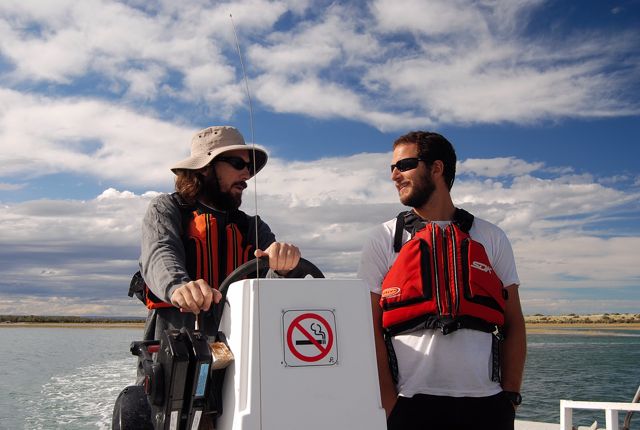
The Times article goes to great lengths to stress Bustamante’s exclusivity, almost portraying its owner Matías Soriano (pictured above, left) as a near-hermit who limits access to his own personal Galápagos - home to thousands of Magellanic penguins, cormorants, dolphin gulls, and steamer ducks, plus large colonies of southern sea lions and fur seals. It implies that Bustamante’s wealth of wildlife is available only to those able and willing to pay upwards of US$400 per night (double) for the privilege.

In fact, while Bustamante is a company town and the surrounding lands are a sheep estancia, all private property, the site is readily accessible by public roads, another of which leads south from the town of Camarones. Having met Soriano in Buenos Aires and dined with him at Bustamante, I can affirm that he’s gregarious and far more open toward budget travelers than the Times suggests - in fact, he’s even permitted people to camp nearby, and the simpler “Casas de la Estepa” offer cheaper accommodations with kitchen access (US$120 for up to three persons), though meals and excursions are extra (full-board guests have priority on the excursions).

Those excursions include a visit to an offshore island full of Magellanic penguins and other birds, but this is possible only at high tide - the five-meter tidal range makes it impossible for the flat bottom launch to navigate at low tide. At low tide, though, there are other options: on the nearby steppe, guanacos and flightless choikes (rheas) scamper through the bunch grasses and scrublands. Farther inland, Bustamante possesses a remarkable badlands with a sprawling petrified forest comparable to Santa Cruz Province’s Monumento Natural Bosques Petrificados and Chubut’s own Monumento Natural Bosque Petrificado de Sarmiento.

It would be a shame for anyone to pass up Bustamante simply because of the Times’s implied exclusivity.

Santiago’s No. 1?

Meanwhile, across the Andes, the Times recently named the Chilean capital No. 1 among places to go in 2011. In correspondent Paola Singer’s words, “Santiago has in recent years added modern museums, smartly designed hotels and sophisticated restaurants. The city has become decidedly more vibrant.” She suggests that new hotels, such as The Aubrey (pictured above) and the W Santiago (pictured below), along with arts landmarks such as the Centro Cultural Gabriela Mistral (ironically enough, once the administrative center of the Pinochet dictatorship) have turned the city around. Next month, it will host the Lollapalooza music festival.

Personally, I’ve always thought Santiago was an underrated city, but it’s always kept a lower profile than its trans-Andean counterpart of Buenos Aires. Santiago has outstanding restaurants, museums, and theaters, plus easy access to an Andean backcountry that Buenos Aires can’t come remotely close to. All that said, I can’t honestly say I’d consider it the world’s No. 1 destination - but I would say that anybody visiting Chile should spend at least a few days here before or after visiting Torres del Paine, San Pedro de Atacama, or the nearby wine country. In this case, the Times’s hyperbole is not completely misplaced.

Tuesday, August 24, 2010

Chilean Patagonia's Latest Lodge


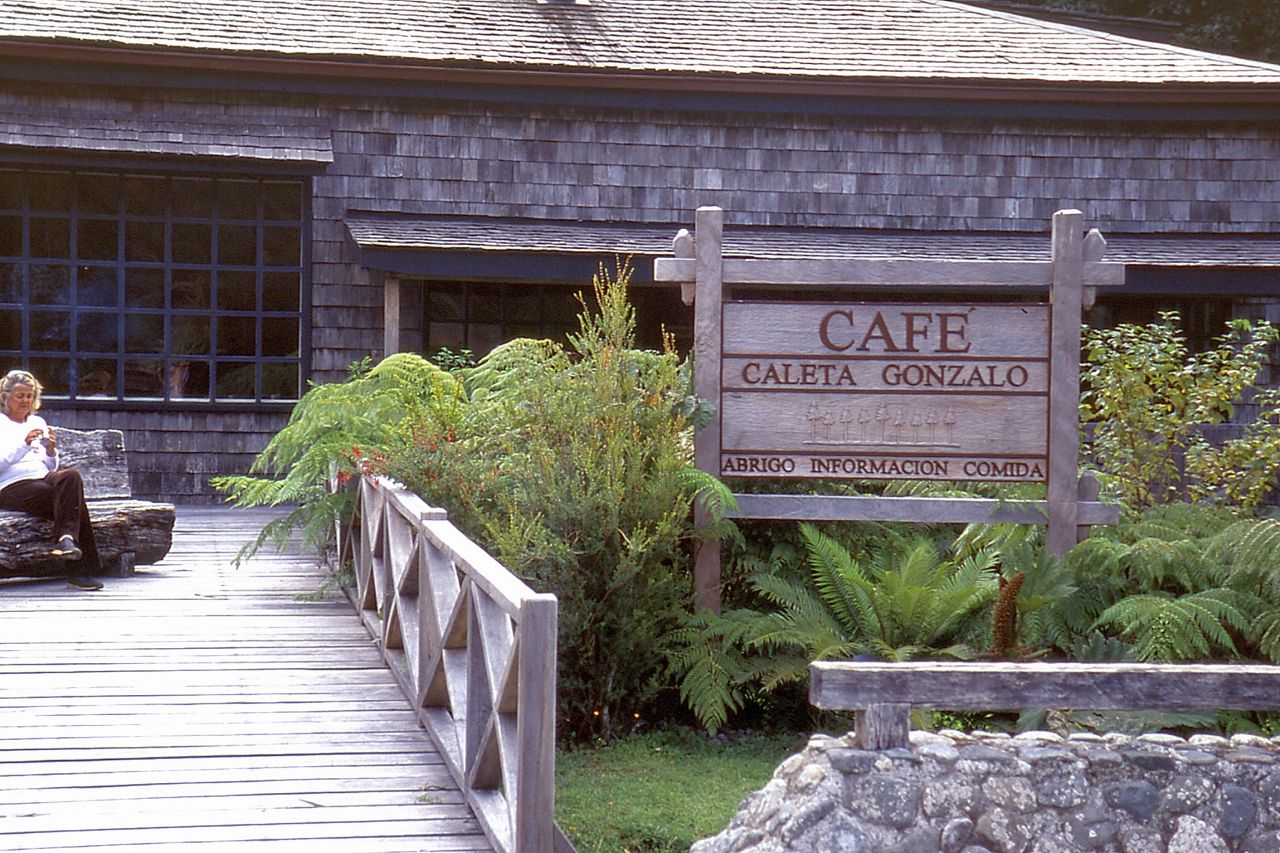
In a post just a couple months ago, I noted that Chile’s Parque Pumalín (pictured above) - closed since the eruption of Volcán Chaitén in 2008 - will reopen in December for the 2009-10 season. I have since heard from Carolina Morgado, who works for Doug Tompkins and Kris McDivitt, the environmental philanthropists responsible for the creation of Pumalín, that the facilities at Caleta Gonzalo - including the visitor center, café (pictured below) and cabañas - will reopen on December 15th.


In the course of updating the current edition of Moon Handbooks Patagonia, I expect to revisit the area later this year but, in the meantime, I’ve received further information on the pending Parque Nacional Patagonia (which, unlike the privately run Pumalín, will be part of Chile’s national park system), a public-private initiative that would unite several protected areas near the town of Cochrane. The biggest development for this season is the opening of the new lodge at Valle Chacabuco (pictured below in winter, reservas@vallechacabuco.cl), about half an hour northeast of town, which immediately becomes the area’s elite accommodations. Like Tompkins’ and McDivitt’s other properties, it suggests impeccable taste.


The lodge at Valle Chacabuco has half a dozen rooms, with a maximum occupancy of 17; the rooms vary from two single beds to double to four bunks. The rates, currently under review, range from US$250 to US$300 pp with full board, including a buffet breakfast, picnic lunch (for excursions), and prix fixe dinner; alcoholic beverages are additional. Two-hour horseback excursions (about US$40) are available on site but, otherwise, it’s up to visitors to arrange them through local and regional operators such as Andes Patagónicos and Al Sur Expediciones.


What's good about Chacabuco - its isolation in nature - is also what's bad about it. Transportation is the greatest concern in this thinly populated area, where settlements are few and far apart. Bus service is infrequent, and rental cars are available only in the provincial capital of Coyhaique (and its airport at Balmaceda), some six or seven hours north. Valle Chacabuco is 11 km from the highway junction, though it’s possible to hire a private car in Cochrane to take you to the lodge.

Monday, January 25, 2010

Ice Cream Capital of the Americas

Buenos Aires summers are hot, wet and sticky - today, the temperature reached 87° F (about 30° C) with 74 percent humidity, and neither figure has changed significantly as the sun goes down. I’ve never spent a summer on the Eastern Seaboard, but I’m guessing this is what John Sebastian was singing about in the Lovin’ Spoonful classic “Summer in the City.”

My apartment here lacks air-conditioning, but it’s got something even better. At the end of December, when I arrived in town for the first time since September, I was thrilled - and appalled - to find that Jauja, one of Argentina’s two or three best ice creameries in my opinion, had opened a branch (pictured above), just one short block from my apartment in Palermo.

Argentine helado comes from the Italian tradition, and more closely resembles soft creamy gelato than it does the denser U.S.-style of ice cream (though sorbets are also common, mostly with fruit flavors). Chains such as Chungo, which has many branches around town, can be very good, but the best are shops that produce custom flavors in relatively small batches. My personal favorite is Cadore (pictured here), which has a single inconspicuous location at the corner of Avenida Corrientes and Rodriguez Peña, a few blocks north of the Congreso Nacional - the chocolate amargo (bittersweet chocolate) and mousse de limon (lemon mousse) are exquisite (and go well together).

But back to Jauja. It is, I guess, something of a chain, but that’s all relative. Jauja began in the Patagonian hamlet of El Bolsón, (pictured here) in Río Negro province, and still produces all its ice cream there (though it has a couple retail outlets in San Carlos de Bariloche, 120 km to the north, and another in Villa la Angostura in Neuquén province, 80 km farther on). It then trucks the product more than 1,700 km (about 1,050 miles) to Buenos Aires. Despite those transport costs, Jauja is actually a little cheaper than Chungo.

Unlike Cadore, which is fiercely traditional in its flavors - and all the better for it - Jauja experiments with oddities such as calafate (a Patagonian berry) made with sheep’s milk, mate cocido (made from Argentines’ favorite infusion, resembling green tea), and even crema de maní (peanut) and cerveza (beer, as El Bolsón is famous for its hops and local brews).

As I suggested above, I’m thrilled to have Jauja so close to my apartment, but I’m also appalled. Cadore is always a temptation, but it’s halfway across town. Jauja is so close that I have to restrain myself whenever I have an urge to enjoy my favorite dessert. That’s not easy when this week’s temperatures are projected to remain in the high eighties.

Despite the quality and diversity of the ice cream here, Argentines remain relatively conservative in their tastes. According to a recent article in the daily Clarín, 18 percent of Argentines prefer dulce de leche, the sickly sweet caramelized milk flavor that they often devour straight out of the jar in its non-frozen form. The next most popular is strawberry, with only six percent, followed by chocolate.

Tuesday, March 24, 2009

Patagonia's Kelp Capital, a New National Park

In a recent post, I wrote about Argentina’s proposed Parque Nacional Isla Pingüinos, but I didn’t have time to add anything about the brand new Parque Nacional Patagonia Austral, recently declared along the shoreline of Chubut province south of the town of Camarones and Reserva Provincial Cabo Dos Bahías. It’s an unusual park, in the sense that it comprises only a strip of Argentina’s South Atlantic coastline, exactly one nautical mile out to sea and 1.5 km (nearly one statute mile) inland.

It also subsumes private property, and I recently visited one of those properties in the unique Bahía Bustamante, a sort of company town based not on mining, but on seaweed! Dating from about 1952, it once had 500 residents - most of them employees - but now has only about 40 or so. Many of them gather kelp along the shoreline; it is then dried in the sun and trucked to the Welsh-Argentine town of Gaiman, where a factory processes it into food additives.

All of the streets in Bahía Bustamante are named for species of seaweed; only a handful of the houses along them are occupied, but some of those - the former administrators’ houses - have been transformed into stylishly retrofitted guesthouses at premium prices. At the same time, there are rather cheaper accommodations with private baths and kitchens, and even some hostel facilities. In fact, it’s even possible to camp nearby, and Bustamante’s restaurant serves intriguing meals that often use seaweed as a condiment or even part of a main dish.

From Bahía Bustamante, it’s possible to take multiple excursions, including one to offshore islands that are part of the new national park and home to thousands of Magellanic penguins, cormorants, dolphin gulls, and large colonies of southern sea lions. This is possible only at high tide, though, as the five-meter tidal range makes it impossible for the flat bottom launch to navigate at low tide.

At low tide, though, there are other options: beyond the limits of the new national park Bustamante possesses a remarkable badlands that features a sprawling petrified forest that’s at least the equivalent of Santa Cruz province’s Monumento Nacional Bosques Petrificados (recently upgraded to national park status, but that’s not yet reflected on the park service’s site) and Chubut’s own Reserva Provincial Bosque Petrificado José Ormachea.

Accommodations at Bustamante’s guesthouses are all-inclusive; those staying at the cheaper accommodations pay extra for tours to the offshore islands and the petrified forest, on a space-available basis.
Custom Search