Showing posts with label Argentina. Show all posts

Tuesday, March 24, 2026

An Anniversary of Atrocities

Today is the 50th anniversary of Argentina’s most brutal military dictatorship ever but, in the beginning, it was a bloodless displacement of President Isabel Martínez de Perón, widow of the famous caudillo Juan Domingo Perón. It soon devolved, though, into a bloodbath of some 30,000 Argentines—among them María Eugenía Sanllorenti de Massolo, my brother-in-law’s first wife.

                                               Maru Sanllorenti, mother of Manuel Massolo

A student activist, “Maru” was abducted on the street in the city of La Plata, about 50 km southeast of Buenos Aires, but by good fortune her husband Carlos Massolo, her infant son Manuel, and my wife María Laura (Manuel’s aunt) escaped that fate because they were at home in a house near the city’s hippodrome. Given that many babies and infants were abducted and gifted to military families, we are fortunate that Manuel is still with us.


                                              Poster for Manuel's Exhibition in Buenos Aires


Today Manuel is an occupational therapist and a painter, whose artistic reflections on the coup and its aftermath—Dictadura a Diario (Dictatorship Day by Day)— are on display this month at the Casa de la Provincia de Buenos Aires, a short walk from the Congreso Nacional (National Congress Building). In addition to his day job and painting, Manuel also speaks to visiting overseas tour groups at the Parque de la Memoria, which features a wall with names of all those who disappeared under the dictatorship, in northern Buenos Aires barrio of Núñez.

                               Manuel points out Maru's name to his son at the Parque de la Memoria.


In recent years, the coup’s anniversary has been marked by solemn ceremonies attended by the country’s highest authorities. That’s not the case this year, as “libertarian” President Javier Milei, elected in 2024, is a coup denialist who has gone about dismantling these events and sabotaging institutions and groups that held the coupmongers to account. That said, Argentine courts have recently ruled against appeals from pilots who threw prisoners from helicopters into the ocean, and others who aided illegal adoptions of kidnapped children.


President Milei’s political party goes by the name of La Libertad Avanza (“Freedom Moves Forward”), and it has taken credit for reducing inflation and encouraging foreign investment (at the expense of skyrocketing unemployment). Nevertheless, that seems an odd moniker for an entity that declines to address the issue of Argentina’s human rights violations—the President’s only observations on massive demonstrations taking place today were that it didn’t tell the whole story. It’s perhaps noteworthy that new colloquialisms now describe Milei’s fanatical followers as libertarados (roughly translatable at “liberdimwits”) and libervirgos (‘liberincels”). There are probably many others even less complimentary.

Sunday, February 8, 2026

Baseball v. Fascism? From Argentina to the United States

 I have always been a baseball fan and, in the course of my guidebook-writing career in the Southern Cone countries, I would often say that I left home when the World Series ended and returned for Opening Day. This wasn’t quite literally true, but it did mean that I had something to occupy my time in the Northern Hemisphere when nothing was happening on the diamond (a truly appropriate description of any baseball field, including this unexpected gem in the Argentine city of Salta).

The Argentine city of Salta has a new baseball stadium, but this older diamond was still a gem.

In mid-1981, when my wife first arrived in the United States from Argentina—a country in which baseball is still a fringe sport—she immediately took to Fernando Valenzuela, the Los Angeles Dodgers’ Mexican pitcher who served as a symbol of inclusion in her new home country. It helped, of course, that I was a Dodgers fan since my childhood—since the early Jackie Robinson years—and we have maintained that loyalty toward what has long been baseball’s most admirable franchise. By signing Robinson, the Dodgers had led the way in crossing the “color line” that had excluded black players from Major League Baseball.


Dodger Stadium, where the legendary Fernando Valenzuela began his career.

That progress, however, hasn’t been without setbacks. The Dodgers won the World Series in 2024, and that victory came with an invitation to visit the White House that has been traditional since 1924. Many of us hoped that the team would decline the invitation to interact with an occupant (who shall remain nameless here) whose loathsome public persona, including overt racism, was unpleasant at best. Then, however, we could at least rationalize that the visit was part of a longstanding apolitical tradition.


Argentina's military dictatorship kidnapped and murdered my future brother-in-law's first wife in 1976.

That rationalization is no longer tenable, if it ever was. It’s truly disheartening, in face of this regime’s assault on civil liberties—resorting to widespread kidnapping, prison camps, and even summary public executions—to think that the Dodgers would once again honor the current occupant with their presence. It’s worth adding here that my future brother-in-law’s first wife, María Eugenia Sanllorenti, was kidnapped in the Argentine city of La Plata and then murdered. It was more than three decades before forensic experts identified her remains.


The Argentine dictatorship abducted Maru from this apartment in the city of La Plata in 1976.

The last straw, here, should be the White House’s grotesque caricature of former President Barack Obama (this country’s first black President) and his wife Michelle as apes in the jungle. What would Jackie Robinson say? Perhaps someone in the Dodgers ownership should ask Rachel Robinson, Jackie’s 103-year-old widow and head of the Jackie Robinson Foundation, her opinion.


At the very least, the Dodgers could decline the invitation with a statement saying “We did that last year, thank you.” Then we could wholeheartedly cheer for the Dodgers’ third consecutive championship—a three-peat—in 2026.


Should the Dodgers decline the invitation, they could face backlash from a vengeful White House that went ballistic over Bad Bunny's Super Bowl half-time show, which celebrated the culture of Puerto Rico—a territory whose inhabitants are US citizens—and other Latin American peoples. There's at least one Dodger who would almost certainly boycott an invitation—the charismatic utility infielder/outfielder Enrique (Kiké) Hernández is a Boricua who was an enthusiastic presence at Sunday's game and halftime show. Relief pitcher Edwin Díaz is also Puerto Rican.


As US citizens, both of them would have little to risk by declining the invitation. However, the Dodgers also have players from Cuba, the Dominican Republic Venezuela, Japan, and South Korea who could conceivably have their work visas revoked by a vengeful White House. There are many more in the Dodgers' minor league system, so this could wreak true havoc.


Post-Script: I just realized this is my first blog entry in more than three years. I'm not traveling quite so much now, though there is a new edition of Moon Handbooks Patagonia, and I'll try offer my insights a bit more frequently.

Thursday, December 22, 2022

Where's the Money? The Latest in Chile and Argentina

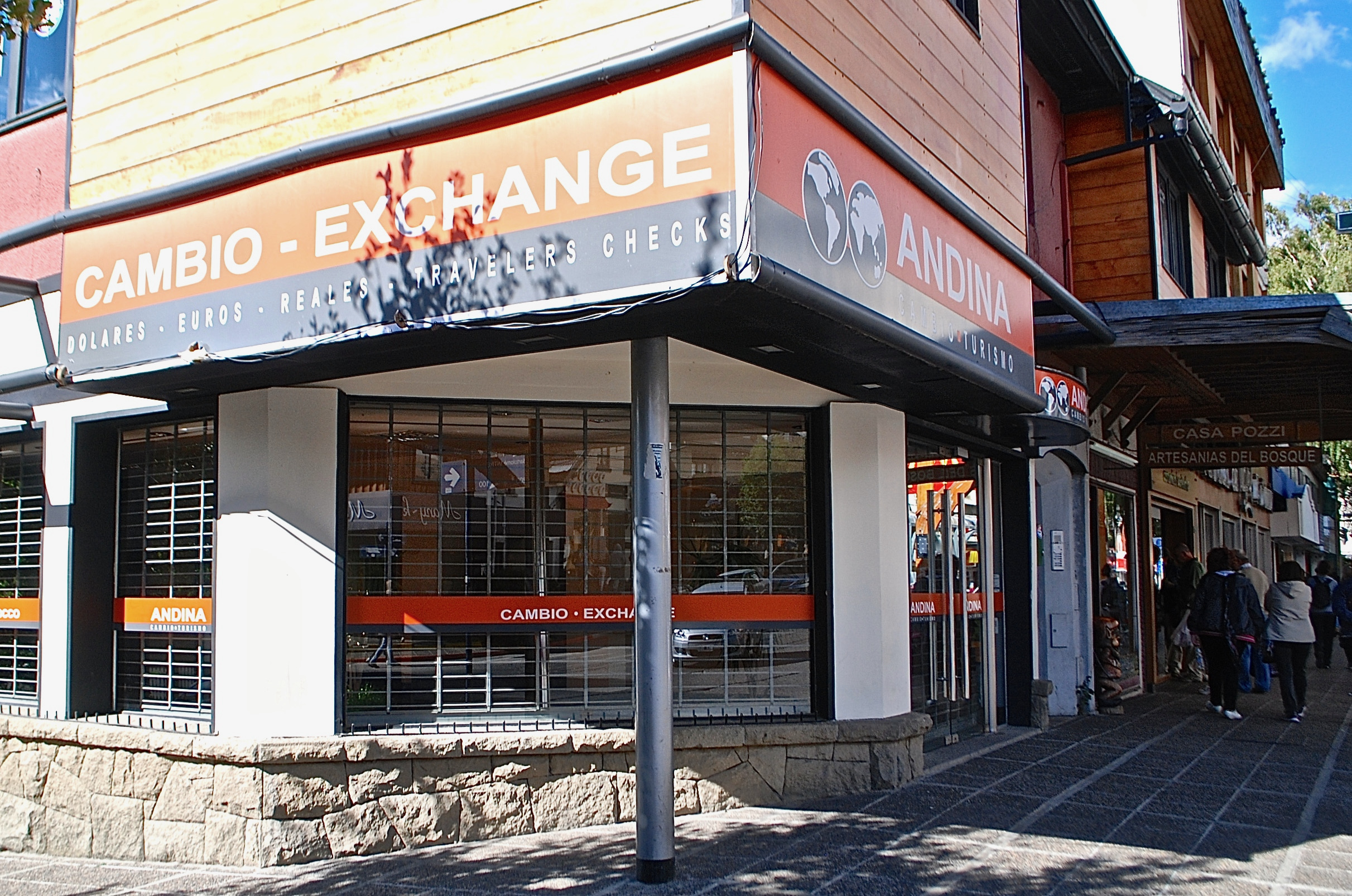
Since arriving in Chile, I’ve had four occasions to change money—thrice at ATMs and once over the counter at a casa de cambio (exchange house). Normally in Chile I use an ATM but, in the latter case, I had to pay my mechanic for auto repair that exceeded the Ch$200,000 (about US$225) withdrawal limit for a single transaction.

A casa de cambio in Pucón, Chile

A BancoEstado ATM (also in Pucón)

Using the ATM here still makes sense, but there are drawbacks as well. In the past, the public BancoEstado made no charge for any withdrawal, but now it collects Ch$5500 (about US$6) per transaction, amounting to a 2.75 percent fee. Later, out of curiosity (and necessity), I made a similar withdrawal from the private Banco Itaú and incurred a charge of CH$6000 (almost US$7, or 3 percent). I rather assumed that would be the private bank standard but I was mistaken—at a Banco de Chile machine, I paid Ch$8500 (nearly US$10, 4.25 percent).


Thus, BancoEstado remains my default option but, in most places, private bank machines are far more abundant. The exception is very small towns, where BancoEstado is often the only option, and that’s fine with me.


Meanwhile, there’s been another development in Chilean travel, and that has to do with credit card surcharges. Since I arrived in the country, I have experienced multiple purchases with a small additional charge for paying with a foreign credit card. Yesterday morning, for instance, my Ch$9000 breakfast (about US$10) came with a surcharge of Ch$328 (3.6 percent). There seems to be no consistency on this, however, and at least half my purchases have had no additional charge whatsoever. Still, visitors should be prepared for this.


Meanwhile, in Argentina…

The Dólar Blue is nearly double the official rate.

For several years now, one of the hassles of traveling in Argentina has been the multiplicity of exchange rates, and the necessity to carry large amounts of US cash to exchange at the “blue dollar” rate (that’s a euphemism for black market, which is widely accepted). Even with the more favorable blue rate, visitors have to carry large numbers of Argentine banknotes, because the highest value is just 1000 pesos (about US$3 at the blue rate).


Now, however, there’s been a step in the right direction, as the government recently instituted the “Dólar MEP,” which stands for Mercado Electrónico de Pagos (Electronic Payment Market). What this means is that visitors, when paying for good or services with a foreign credit card, will benefit from the blue rate rather than the official exchange rate but, according to a Bariloche friend who operates an adventure tourism agency, the situation isn’t perfect.

A cueva near our apartment in Palermo, Buenos Aires

That’s because many Argentine businesses still prefer to deal in cash, and that means visiting so-called cuevas, informal exchange houses that operate with official tolerance (though not approval). It’s also because, as yet, it’s not clear whether or not the the Dólar MEP applies to ATM transactions—will visitors still get the official and disadvangeous exchange rate when withdrawing cash from local banks? Stay tuned.

This Western Union office also serves as a cueva, and you go to the front of the line.


Monday, December 5, 2022

Ushuaia's "Prison without Walls:" A Book Review

Over more than four decades, I’ve visited the city of Ushuaia at least a dozen times—first, in 1979, when Argentina had nearly provoked a potentially ruinous war with Chile over three small islands in the Beagle Channel. At the tip of the South American continent, Tierra del Fuego had long had a reputation as the “uttermost part of the Earth” but, with only about 11,000 people, Ushuaia then was nothing like the Antarctic cruise ship capital it is today.

At that time, about to enter grad school at Berkeley, I had only a general understanding of the area’s lengthy penal history and, given Argentina’s brutal military dictatorship, poking around places like the former Presidio Nacional (National Prison)—then under naval control—was inadvisable. It’s this history, and related developments, that Ryan C. Edwards explores in A Carceral Ecology: Ushuaia and the History of Landscape and Punishment in Argentina, recently published by the University of California Press.

Ushuaia has always enjoyed an imposing setting, but it was once a  rugged frontier outpost.


In 1884 Argentina initially established a lighthouse and military prison at Isla de los Estados (Staten Island), a rugged offshore island at the eastern tip of Tierra del Fuego, but the extreme climate—incessant winds, rain, and snow—dictated its abandonment for a site on the big island’s southern shore in 1902. What is now the city of Ushuaia had been a rather less rugged encampment of British missionaries and Argentine gold-seekers for decades before that.

There's now a national park footpath to the Chilean border (though it's formally illegal to cross).

By some accounts, Ushuaia was nevertheless a “natural prison” from which escape was nearly impossible. The Isla Grande de Tierra was then a roadless wilderness—even though the Chilean border was technically within walking distance—surrounded by violent seas (Anarchist Simón Radowitzky, who assassinated Buenos Aires police chief Ramón Falcón 1909, did make a valiant escape attempt). Still, the Argentine government built a solid prison to confine its convicts—or did it?

Cellblocks of the former prison (now the Museo Marítimo)

The prison, which closed in 1947 but reopened as a museum 50 years later, took its architectural inspiration from Philadelphia's Eastern State Penitentiary. Of an initial plan of eight radial cellblocks, only five were completed and it was, in fact, a “prison without walls,” many of whose inmates worked in and for the community. There were violent criminals, such as the serial killer Cayetano Santos Godino, who were confined to small cells, but many others worked on outside projects—some of them dangerous, such as logging in the forests that would eventually become Parque Nacional Tierra del Fuego. Others were confinados (political prisoners), such as journalist Ricardo Rojas, who enjoyed “off-campus” housing and could meet with his colleagues away from penal supervision, could purchase better rations, and could even publish accounts of their internal exile in the “Siberia of Argentina.”

Inside the cellblocks


Originally built for timber extraction, the restored railway is now a tourist attraction at the national park.

The prison closed when a consensus developed that Ushuaia’s extreme environment, in a thinly populated area, was not conducive to reintegrating prisoners into society. That said, it was the prisoners whose labor, including building a short-line railway for timber extraction, laid the foundation for what is now the national park in a city that has also become the gateway to Antarctica for a growing fleet of international cruise ships.

The port of Ushuaia is now the gateway to Antarctica for cruise ships.

The prison facilities themselves became a naval base but, as a museum, they’re a visible part of what’s become known internationally as “dark tourism” that also includes similar sights/sites as California’s Alcatraz Island and South Africa’s Robben Island. Again, when I first visited in 1979, this was still to come. The story of how it came to be is engrossing.

This mural of prisoners in Ushuaia is a reality check on what it was like in penal days.

If I have one quibble about this book it’s that, despite the fact that the author was an undergraduate in the Department of Geography at Berkeley, he seems unaware that the author of this review (a Berkeley PhD) had written about Ushuaia in a multitude of guidebooks for various publishers over the last four decades. While I wouldn’t suggest that I have greater insights on the city and its history than his exhaustive research in both primary and secondary sources, an analysis of guidebooks (not just mine) might have added something to the topic of tourism.

Tuesday, June 28, 2022

Tuesday Topics: Patagonia, Reopening Chile, Vaccines, Masks & Linguistics, and Falklands Flights

When I arrived in Santiago de Chile in late February of 2020, to begin updating Moon Handbooks Patagonia for the upcoming sixth edition, what we now recognize as the COVID pandemic had barely begun and few of us appreciate what was a transformative event it would be. A couple weeks later, after I had crossed into northern Argentine Patagonia, its significance had become apparent and I managed to return to Chile before the border shut down and then, after various delays, to home in California.

When I landed in Santiago during the pandemic's earliest days, there were only the most basic temperature checks for airport arrivals.

After that lengthy delay, I’m once again planning—tentatively—to return to Chile in November. While I did travel to Buenos Aires and surroundings in March and April, I didn’t even consider a detour into Chile because its government had been slow to acknowledge foreign-administered vaccinations—an approval that’s necessary to obtain a pase de movilidad (mobility pass) permitting access to museums, restaurants, and other sites of interest to non-resident visitors.

Chile's acceptable vaccines list, according to Minsal (Health Ministry)

At that time, it was taking weeks to obtain the obligatory homologación, requiring an extended quarantine that made tourist travel inconvenient at best. Under pressure from the tourism sector, though, it has now instituted a process that should take no more than 48 hours through the Health Ministry’s vaccination website. Unfortunately, this does not (yet?) appear in English or any other foreign language but, since the policy in question is barely a week old, perhaps that’s just a short-term glitch? For those of us competent in Spanish that’s not an issue, but for the upcoming season it would seem essential.


What Is a Mask? A Linguistic Digression

A Chilean mascarilla

Ever since the pandemic started, we’ve been wearing masks and, when out in public, I still wear one (Alameda County, where I live, has only just rescinded its indoor mask mandate). I was in Chile when the pandemic started but before the mandate but, after I returned home quickly, the mascarilla soon became universal there and is still obligatory indoors and in outdoor spaces where it’s not possible to maintain one meter of distance between individuals. Mascarilla, by the way, is a diminutive of máscara, but I think the latter implies something that covers the entire face. In English, of course, we have just one term that covers both, though there qualifiers—“surgical mask,” for instance.

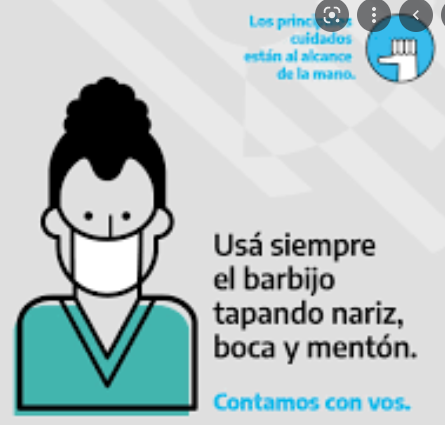
Instructions for your barbijo.

In Argentina, where I recently spent a month-plus, there are no mascarillas—rather, there are barbijos and tapabocas, two words that seem etymologically or otherwise curious. Barbijo derives from barba (beard), which feels odd since both men and women wear them, so perhaps it should be “barbijx” in interest of inclusive language?

This tapabocas covers more than just the mouth.

Alternatively, Argentines use tapabocas, which literally means “mouth covering”—oddly inappropriate, one would think, when masks are supposed to cover both the mouth and nose. Nevertheless, during my time there, Argentines were pretty conscientious about wearing their masks properly—both indoors and outdoors.


SCL to PUQ to MPN

Mount Pleasant International Airport (MPN) in the Falklands

Meanwhile, flights from the South American continent to the Falkland Islands will resume this coming Saturday, July 2nd. Since the Islands—insular Patagonia, if you will—form an important entry in the book, I’m very keen to return. Also, having lived there for more than a year in 1986-7 and revisited half a dozen times, I have many friends and acquaintances whom I am keen to revisit.

The Offices of International Tours and Travel (LAN has since been rebranded as LATAM)

According to an email I received from Sally Ellis, of Stanley’s International Tours and Travel, “The LATAM airlink with Chile will resume on 02 July with its normal route of Santiago - Punta Arenas - Falklands roundtrip, and a roundtrip possible from [the Argentine provincial capital of] Rio Gallegos if you travel to the Falklands on the second Saturday of each month and return on the third Saturday of each month.” It’s worth noting here that anyone flying from Punta Arenas to the Falklands and disembarking in Río Gallegos on return could run afoul of Argentine immigration—since Argentina consider the Falklands to be theirs, they may not give you an entry stamp at the airport and, when you try to leave at another border post, officials there might say you entered the country illegally.


Before the pandemic hit, there was an alternative route via Brazil and the central Argentine city of Córdoba but, according to Sally, “The Brazil route has no resumption date yet but will not be before the summer - maybe November?” I’ve never taken this route, but I wouldn’t rule it out at some point—especially since it would give me a chance to revisit one of Argentina’s most historic provincial capitals and its nearby Sierras.

Friday, April 22, 2022

Purgatory 2.0? EZE to DFW (and, Fortunately, Beyond)

Early last week, anticipating our flight back to California (via Dallas), we rose early and went to the closest location of CentraLab, a private medical testing company in Buenos Aires. To return to the US, being fully vaccinated against COVID-19 is still insufficient to return; it requires either a PCR or an antigen test the day before flying. It’s worth noting that this is not a 24-hour requirement; our flight was scheduled for 8 p.m. Friday evening, but any time on Thursday would have been acceptable.

Results of the antigen test (with personal info edited out)

The obligatory attestation...

We were hoping to be able to schedule the tests there, but that location did not handle COVID testing. Rather, they said, we would have to schedule an appointment online for a different venue—but one that was still only a US$2 cab ride from our apartment. If our appointment hadn’t been at 8:45 a.m., we’d have walked there but, as it was, we got there shortly after 8 and they saw us almost immediately. In just two hours we received the results and could relax. After filling out the obligatory attestation for US immigration, we finished our last full day with an Italian dinner, with my brother-in-law and his wife, at Trattoria Olivetti (its walls decorated with typewriters), just across the street from our place.

The exterior of Olivetti
And the interior...

The next afternoon, getting to the airport was a bit more complex than we anticipated. Leaving the apartment, we immediately caught a cab to the central Terminal Madero in the expectation of catching a Tienda León remise (livery car) to Aeropuerto Internacional Ministro Pistarini (aka Ezeiza). Because there were two of us, this would be only marginally more expensive than taking the bus, but on arrival we learned that there were no longer any remises operating at the site. The only option was the bus, for which we would have to wait nearly an hour, so we opted for catching another taxi in the street, for which we paid Ar$6000 including tolls.


That was more than the Ar$3820 (US$35.32) I had paid for a remise from the airport a month earlier because, lacking sufficient Argentine cash, I had to use my US credit card. In this later instance, though, I paid with “blue dollar” pesos which made the cost US$34.31 for the two of us (had we taken the first taxi all the way from our apartment, it would’ve been cheaper yet).


Arriving at Ezeiza, we found a fairly long line for our American Airlines flight to DFW, where we would have a four-hour layover before connecting to San Francisco, but we got through immigration and security quickly—or did we? While I used to enjoy flying, I’ve grown to loathe airports but I have appreciated the fact that, in Buenos Aires, we don’t have to remove our shoes and all the electronics from our carry-ons.

This guy's 2008 visit to Buenos Aires didn't go over well.

I spoke too soon, though—when we lined up to board the flight, I found myself randomly (?) singled out for a secondary check that did involve removing my shoes and my electronics, and even inspecting my iPad for, apparently, traces of explosives. For this I blame the individual in the photo above who, until 2017, was the worst president in my country’s history. He and others of his party have done lasting damage both domestically and internationally.

We didn't get much flight information...

Last month’s flight from DFW to Argentina was, without question, my worst experience ever in the air, and one I didn’t care to repeat. Here, though, my initial impression was positive as the Boeing 787 sported a great-looking touch screen for entertainment, but that didn’t last long. For some time, according to the electronic in-flight map on which I normally enjoy watching the plane’s progress, we never left the ground and the hour never changed from 7:53 p.m—“distance to destination 0 km, time to destination 0 minutes.” Eventually a rotating globe appeared, but it soon showed us off the coast of West Africa, approaching the Ivory Coast port of Abidjan!


That, of course, did not inspire confidence, and things got worse as it became apparent that the overhead reading lights did not work in any section of the plane, and to read my paperback novel I had to hold my phone’s flashlight with the book in my lap. Meanwhile, the in-flight food offerings were so unappetizing that I consumed nothing but water. Mercifully, I managed to fall asleep for about a third of the ten-hour ordeal and, when we arrived in Dallas, we passed quickly through immigration and customs, with not even a perfunctory look at our baggage.


So, this flight wasn’t quite so bad as the previous one but, that said, we were now in COVID-friendly Texas where, despite the ongoing mask mandate in airports, at least a third of all passengers couldn’t be bothered about spreading a potentially deadly disease. Fasting to avoid contributing even a penny to this dysfunctional state, we waited at our gate only to learn that a last minute change would require us to sprint more than a mile through the sprawling terminal. Texas is the new Purgatory, and it was a relief to board a flight to the comfort and safety of California.


Monday, April 11, 2022

Blue Dollars, or Dollar Blues? Managing Money in Argentina

What is a cueva? In Spanish it’s literally a cave and some of them, like the Cueva de las Manos in southern Argentine Patagonia, are major archaeological sites and tourist attractions. But there are caves of a different sort in Buenos Aires and other Argentine cities, and any savvy traveler will get to know them because they are places to change money at an advantageous rate—unlike the traditional casa de cambio (exchange house).

A traditional exchange house in the Patagonian city of San Carlos de Bariloche

When I last visited the coastal Patagonia city of Puerto Madryn, this auto glass dealer gave the best rates for US dollars.

That’s because banks and exchange houses can only change at the official legal rate, which is barely more than half the informal but nevertheless tolerated “blue dollar” rate. In present-day Argentina, using your credit card or withdrawing cash from an ATM means, in effect, doubling the price of everything you may purchase. For the latest rates, there’s a smartphone app called “Dólar Blue Hoy,” which is available on both the App Store and Google Play.

Today's rates on the Dólar Blue app


Walking down Calle Florida, the downtown pedestrian street that’s traditionally the city’s retail hub, you’ll hear a constant chorus of “cambio, cambio” from arbolitos (street changers, known as “little trees” because they’re planted on the sidewalk). In the 1980s, when hyper-inflation was rife here, we used to change travelers’ checks (remember those?) at desks in otherwise vacant office buildings and, though we never got cheated, we never felt really comfortable with it. Today we trust our neighborhood cuevas in Palermo, but might make inquiries before visiting one in another part of the city.

Bring big Bens to the cueva.

At present, Argentina's largest banknote is 1000 pesos (about US$5).


While you may arrive here with a money belt packed with Ben Franklins, you’ll need wallet space for many more bills in a country whose largest denomination is presently 1000 pesos (roughly US$5). Be aware that, at most cuevas, hundreds are the notes of choice (though fifties are usually acceptable), and they’ll have to be in mint condition. Twenties are often unwelcome, but today the Western Union branch down the block from us changed $100 worth at just a slightly lower rate.

The closest cueva to our apartment is this Western Union office (your mileage may vary).


Your blue dollars can't buy one of our sofas.

In a few places, your blue dollar is not welcome, as this sign outside a furniture outlet in the Retiro neighborhood suggests (of course, one could change money elsewhere before making a purchase). Recently, when we visited the exceptional Museo de La Plata in Buenos Aires Province, we found it did not accept cash and we had to pay the admission fee by credit card at the official rate (given that the fee was just AR$300 per person, this was hardly a budget breaker).

Your cash is no good at the Museo de La Plata.

That’s the current scenario, but how long will it last? By November, when the next tourist season rolls around, and given the uncertainties of war in Europe and the lingering pandemic, it’s hard to speculate. One recent report suggests that the breech between the official and informal exchange may diminish over the next year-plus, but there has also speculation about dollarization of the Argentine economy. That’s something that failed in the 1990s under former President Carlos Menem and it’s certainly not gonna happen under current Peronist President Alberto Fernández. Elections are due to take place in October of 2023, though.


Post-Mortem Update

Since I first published this entry, I have learned that Buenos Aire's iconic Cementerio de la Recoleta has just instituted an admission charge of AR$1400 for foreign visitors, though it remains free of charge for Argentines. Like the Museo de La Plata (cited above), they do not accept cash, so it will now cost roughly US$12.50 at the official exchange rate. Visitors can pay online in advance or via QR code or credit card at the main gate.


Thursday, March 24, 2022

Pedaling the Pampas

The Plusmar bus line crosses the Pampas from Retiro to Olavarría.

After I spent a week adapting to a five-hour time change and recovering from the hangover of perhaps the most miserable flight of my life, my wife arrived in Buenos Aires and, after a couple more days, we took the bus to her hometown of Olavarría for the first family reunion since the pandemic struck. Leaving our Palermo apartment early, we caught a 7 a.m. bus that, in the morning rush hour, took more than two hours just to get beyond the city limits. After that, it was another four hours across the interminably flat Pampas in comfortable conditions—many of Argentina’s long-distance buses have seating comparable to business class on an airplane.

The Olavarría terminal early in the morning.

Rodolfo tends his rabbits at the chacra.

After María Laura’s sister Estela picked us up at the Olavarría terminal, most of that day and the next consisted of lunches and extended family dinners with her and her brother Rodolfo, at whose house we stayed. On the Friday, though, we rose early and, after a quick breakfast, we climbed aboard borrowed bicycles for a ride to Rodolfo’s countryside chacra, where he raises rabbits, chickens (and eggs), sheep, and even a few pigs. It’s about 12 miles (20 km) outside town but, despite the endlessly flat terrain, the ride proved more strenuous than I anticipated.

There were few landmarks along the route, but this roadhouse on the paved highway was one.


Estela and María Laura at the gate to the chacra.

Accustomed to the hills of the Oakland and Berkeley, which can be steeply challenging, I expected this ride to be a breeze—and in a sense it was, as gusty headwinds slowed our progress over the bumpy sand and gravel backroads (mostly used by farm traffic). Because of those conditions, my average speed was probably lower than most of my usual rides, which usually include downhill segments that allow for coasting at higher speeds. Only one short segment was along a paved highway, where we used the firm grassy shoulder to avoid speeding trucks and SUVs.

Our route from Olavarría to El Aromo and back

In the end, our route covered 21.96 miles (35.3 km), according to the Strava app that I use for cycling. What startled me a bit is that the Health app on my phone recorded this as the equivalent of walking 20.3 miles (32.7 km), which is one indicator of the fatigue levels we all felt on returning to town and the calm waters of the Arroyo Tapalqué, part of a pleasant greenbelt just outside Rodolfo’s front door. After dismounting, though, it was siesta time.

The ride ended at Rodolfo's house in town, alongside the Arroyo Tapalqué greenbelt.


Custom Search