Showing posts with label Wine. Show all posts

Tuesday, April 27, 2021

Geriatric Espionage? (Reviewing Chile's Oscar Nominee)

In 1970, Chilean filmmaker Alejandro Jodorowsky released El Topo, a surrealist movie that seemingly created the Acid Western genre and was a Mexican entry for the Oscars (it was filmed in Mexico, but ultimately not nominated). This year, Chilean director Maite Alberdi’s El Agente Topo (The Mole Agent) is most emphatically not a sequel, but this rather differently offbeat picture earned a nomination for best documentary, even though it didn’t take home the prize last Sunday.

On one level, The Mole Agent is a real-life spy movie in which a private detective recruits Sergio Chamy, a charming 80-something widower, to infiltrate a nursing home where the detective’s client suspects her mother has been subject to elder abuse. This involves a crash course in surveillance techniques and technology for Chamy, whose sociability swiftly inserts him into a milieu where women outnumber men by ten to one.


Alberdi’s production crew filmed the entire work, with permission (but perhaps some deception), at the Hogar de Ancianos San Francisco in the Santiago suburb of El Monte, in an area I’ve visited as a lesser-known wine region.  The finished film is an outgrowth of what was originally a more general focus on Chile’s aging population—by the end of this decade, it could be Latin America’s fastest-aging country, but that’s not what foreign tourists see.


With some minor shortcomings, the Hogar de Ancianos appears to be a well-kept facility, with comfortable accommodations and pleasant gardens, that provides attentive services to its residents. Chamy eventually frustrates his handler by insisting that there is no abuse but, in the end, he concludes that loneliness and familial neglect are major issues that don’t get the attention they deserve. When the popular Chamy finally departs the home, the result is more like a feel-good comedy than an exposé.  In fact, it hardly feels like a documentary at all, and Alberti has stated that there’s interest in doing a fictional version—which she herself won’t do because she’s too invested in the one she’s just finished.

El Agente Topo is available for streaming on Hulu (with English-language subtitles, free trial available). 

Friday, November 1, 2019

Patagonia's Adventure Connect(ion) in San Francisco

Last week, I attended a promotional event for Chilean Patagonia in the Adventure Connect series, organized by the Adventure Travel and Trade Association (ATTA). At a time when Chile’s undergoing political upheaval, the occasion brought the Magallanes regional representative of Sernatur, the national tourism secretariat, and representatives of several different operators to San Francisco as part of a national promotional tour.
The setup at San Francisco's Hotel Zetta
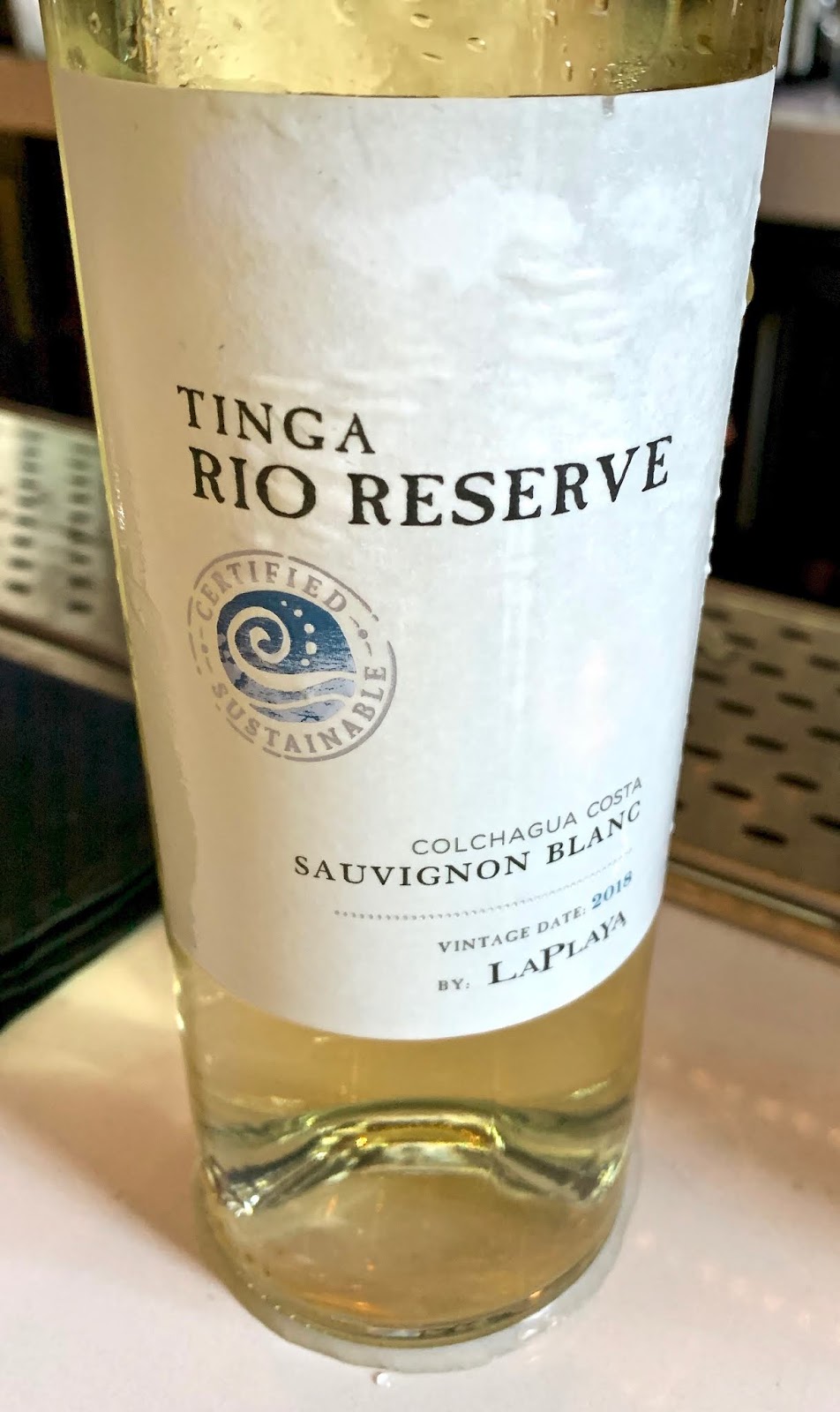
The event took place in the lobby of Hotel Zetta, where eight different operators were to discuss their services with Bay Area travel companies and invited writers (of whom I was one). The format was a sort of musical chairs in which each operator met with one or more attendees for eight minutes before a timer sounded to move elsewhere. This went on for 2-1/2 hours, with a coffee break that included a giveaway raffle, before adjourning to a conference room for a presentation by Sernatur’s regional director Ximena Castro that was probably most useful to those with less experience than mine in the region. Later, there was a Chilean social hour that included snacks and one of the finest Sauvignon Blancs I’ve ever tasted—especially welcome on an unusually hot San Francisco day.

Ximena Castro addresses the attendees.


The Chileans brought this Sauvignon Blanc along with them and, so far, I've been unsuccessful in finding it stateside.
Originally, eight different operators—some of whom I already knew—were to attend the event. In the aftermath of the recent upheavals in Santiago, though, the representatives of Antarctic Airways—with whom I would have liked to discuss their updated services—and Lago Grey - Experience Hotel were unable to get flights out of Santiago. I already knew the owners of Big Foot Patagonia Adventure and the representative of Vértice Patagonia (operator of mountain huts on the famed Paine Circuit, plus a new boutique hotel in Puerto Natales), and was familiar with Antártica 21  and Australis Cape Horn & Patagonia (both of whom sent US-based representatives). New to me were the Chile Nativo adventure operator and HD Hotel Natales (the rebranded Hotel Cisne de Cuello Negro) in Puerto Bories.

The not quite unspoken topic that permeated the meeting was what effect Chile’s recent political disruptions and disorder might have on the upcoming season. There was certainly concern, but also consensus that the Región Metropolitana de Santiago and the coastal region of Valparaíso would be more directly hit than remote Magallanes. That said, cruise ship and hotel cancellations would certainly affect a city like the regional capital of Punta Arenas, which has seen some demonstrations. I recently saw an online story—can’t find the link now—whose headline spoke of “80 percent cancellations” in Chile, but what the story actually said was that 80 percent of hotels and other services had experienced cancellations (which could have been just a single cancellation each for some).

That’s not to dismiss the issue of vandalism and disorder by a destructive fringe, even as the great majority of demonstrations have been peaceful, but President Sebastián Piñera’s embattled government has cancelled the upcoming COP climate conference (at which Swedish activist icon Greta Thunberg was due to appear and also the Asia-Pacific Economic Cooperation summit.

Personally, I would not hesitate to travel to Santiago, Valparaíso or elsewhere in Chile at present, even though I’d advise those with little or no experience of the country to be on alert. In a recent newsletter, the private Federación de Turismo de Chile cited the Subsecretaría de Turismo to the effect that  “our tourism continues to function throughout the country and the most popular destinations visited by international tourists, such as San Pedro de AtacamaElqui Valley, the islands of Rapa Nui [Easter Island] and Juan Fernández [Robinson Crusoe], the Chilean Patagonia and Torres del Paine National Park, are operating with normality.” Aeropuerto Internacional Arturo Merino Benítez is back to normal, but visitors would still do well to have travel insurance in case of disruption.

And the Money?
For foreign visitors, there may be a bright side to all this. About two months ago, the last time I wrote about exchange rates, both the Argentine and Chilean pesos were slipping against the US dollar, and that has continued with the upheaval in Chile and the recent election in Argentina, when the Peronist Alberto Fernández defeated the incumbent president Mauricio Macri.
The Dólar Blue Hoy app is a useful addition to one's smartphone.
The so-called “markets” (and many individual Argentines) have little confidence in Peronism and, consequently, Argentina’s Banco Central (Central Bank) has reinstituted a cepo cambiario (“currency clamp”) that restricts Argentines’ overseas ATM advances to US$50 per transaction (oddly, it puts no restrictions on the number of transactions per day, but those ATM charges could really add up. Meanwhile, individual Argentines can now officially purchase no more than US$200 per month, a measure that seems to be encouraging the informal dólar blue (visitors to Argentina might consider downloading the Dólar Blue Hoy app, pictured here, on their smartphones). Exactly this will develop as the Macri administration gives way to Fernández remains to be seen, but it seems likely that the informal exchange rate will benefit tourists in the short to medium term.
Chile's peso has also slipped against the US dollar and some other currencies.
In Chile, meanwhile, the peso has dipped to 740 per dollar, a fall of roughly three percent since August. This may affect prices slightly, but if foreign visitors avoid the country because of the perception of instability, services such as hotels and tour operators may drop their prices. In any event, matters are less predictable than they seemed even a few months ago.


Wednesday, April 17, 2019

Malbec World Day

Today, April 17th, is officially Malbec World Day, marking the date in 1853 when President Domingo Faustino Sarmiento established the foundation for Argentina’s wine industry by designating a French agricultural expert to import new vines from Europe. Among the varietals imported was Malbec which, a decade later, nearly disappeared in France after a Phylloxera aphid outbreak.
Argentina's 19th-century president, Domingo Faustino Sarmiento, gets the ultimate credit for  Malbec World Day.
In Phylloxera-free Argentina, though, Malbec has flourished. Since the 1990s, it’s become an icon of the industry, but it's also present in California, Chile, and some other parts of the world. While it’s still relatively rare in Europe, last year we managed to find it in Bruges (cinematic reference too tempting), and couldn’t resist sampling it.
Last year, in Bruges, we found this French Malbec on a restaurant wine list.
Malbec’s always on hand in our household, but this World Malbec Day has a poignant aspect. On March 8th, as I was traveling in Chile, our beloved Alaskan malamute Malbec—nearly 15 years old—had to be euthanized.
This is our first World Malbec Day without this 2004 vintage.
Having returned home, I still expect to see him in one or another of his customary resting places when I get out of bed in the morning, and as I walk around the house during the day. On this Malbec World Day, we’ll raise a glass to him this evening, and encourage all his admirers to do so. He left a lasting imprint (pawprint) here.
Before Malbec died, the attending vet made us a pawprint.

Friday, September 21, 2018

At the Awa

Some seven decades ago, the Hotel Antumalal broke the mold of classic Chilean “Lakes District” hotels with a Bauhaus-style structure on a hill overlooking Lago Villarrica, on the western outskirts of Pucón. In the interim, it’s become a landmark that’s drawn famous clientele including Queen Elizabeth II, King Leopold of Belgium, Barry Goldwater and Jimmy Stewart (and me?).
Pucón's Hotel Antumalal introduced Bauhaus-style architecture into Chile's lakes region.
In fact, I’ve stayed several times at the Antumalal, most recently in March. A few days later, though, I had the pleasure of spending two nights at the recently opened Hotel Awa, whose bold contemporary design comparably contrasts with the Mitteleuropa style of nearby Puerto Varas’s emblematic architecture. The Awa occupies a similar lakeside setting to the Antumalal, but its multi-story concrete, glass and girder exterior is more conspicuous—perhaps, in part, because the Antumalal’s had so many decades to cultivate its elaborate gardens.
Hotel Awa, as seen from the lakeshore
View of Lago Lago Llanquihue, when I finally got the curtains to rise
While the Awa’s exterior is imposing, its interior is cozy, with regional woods and other local decorative touches, but also large picture windows looking onto Lago Llanquihue. The rooms are also contemporary, with more electrical outlets than I’ve ever seen despite rustic touches that include hiding the flat-screen TV—accessed by opening the lid of a leather trunk. For me, the room’s most confusing aspect was the remote control that raised and lowered the curtains—I never quite got it right, and I recommended that the manager leave written instructions for using it.
An old steamer trunk hides the flat-screen TV at the foot of the bed.
While the Awa is happy to entertain overnight guests with bed and breakfast, it also offers excursions in the area and all-inclusive packages, including meals in its restaurant. On my first full day, when it was pouring rain in a Marine West Coast climate that resembles the Pacific Northwest—“Awa” means water in Mapudungun—I took a guided hike to Laguna Cayutué, on the southern edge of Parque Nacional Vicente Pérez Rosales. The trail, through dense Andean forest, often resembled a stream, so it took extra effort to avoid muddying boots and clothing and, at the end of the day, I returned soaked.
The weather doesn't always cooperate with hikes in the area.
Diners at the Awa's restaurant
The truffled pork loin ended the day more than satisfactorily.
So, I decided to take a soak in the spacious Jacuzzi before descending to the Awa’s restaurant for a truffled pork loin complemented by a barley-based risotto from its own vegetable garden and garnished with a hazelnut sauce. And, of course, there were a pisco sour and a glass of Carménère to accompany the main course, before a white and dark chocolate parfait. The next morning, I awoke to clearer weather with views across Lago Llanquihue—after I somehow managed to raise the curtains.

Sunday, June 17, 2018

Sipping and Surfing? Colchagua to Pichilemu

Two hours south of Santiago, as I leave the freeway, trucks with bins of grapes slow the traffic on the westbound two-lane road toward the town of Santa Cruz, in Chile’s Colchagua valley. With the warm dry March weather, it feels like September in the Napa Valley, in my home state of California. This, though, is farther than a day trip from my house, so I’ll spend several days sampling the wines and dining in the country’s premier wine district—tourist-friendly Colchagua is due to host next year’s Congreso Mundial de Enoturismo (World Wine Tourism Conference).
The balconies at Hotel TerraViña have vineyard views.
My first stop is the Danish-Chilean Hotel TerraViña, nearly surrounded by vineyards on the outskirts of town, where I’ve stayed on previous trips. From here, it’s a short stroll through the vines to Viña Laura Hartwig, which now offers carriage rides through its grounds and new tasting facilities for an expanded wine list. They’re part of the Movimiento de Viñateros Independientes (MOVI), an alliance of smaller wineries with an increasingly high profile. I sample a Cabernet, a Merlot and a blend, accompanied by a plate of almonds, cheese, cold cuts and crackers.
Wines to sample in the recova at Laura Hartwig
View across the soggy lawn at Hotel Casa de Campo
The next morning, I move across town to the Hotel Casa de Campo, where the only drawback to my spacious room is its relative proximity to the highway. Fortunately, its French doors face a sprawling lawn with views of the Chilean coast range, though I’m a bit shocked to see the flood-style irrigation in an area where water's at a premium. I’m pleasantly surprised, though, when a gardener knocks on the door with a bowl of freshly picked prunes.
Santa Cruz's Plaza de Armas
From there, I head to Santa Cruz’s walkable downtown, with a lushly landscaped Plaza de Armas surrounded by low-slung buildings and a parish church that was totally rebuilt—on its original design—after severe earthquake damage in 2010 forced its demolition. On this visit I skipped the imposing Museo Colchagua, created by Iran-Contra arms merchant Carlos Cardoen, whose foundation also financed the church’s reconstruction, but the museum’s natural history and agricultural machinery displays are well worth seeing.
The Museo de Colchagua is part of a complex that also includes a hotel and a casino.

After severe quake damage in 2010, Santa Cruz's Iglesia Parroquial underwent  demolition for a total rebuild on the original plan.
Quinotto of scallops, shrimp, and squid at Casa Colchagua 
That afternoon, I eat on the patio at Casa Colchagua, a renovated adobe just a stone’s throw from TerraViña. Rather than bread, the appetizer is a sopaipilla enhanced by the savory tomato-onion-garlic salsa known as pebre. For the main course, there’s quinotto with shrimp, scallops and squid rings–Chile’s diverse seafood is world-class—plus a pisco sour with a touch of ají verde, and a nice glass of Sauvignon Blanc.
José Antonio Bravo opens up his tiny adobe at OWM Wines
In the afternoon, I drive to the village of El Peral to visit OWM Wines, a low-tech operation that produces only blends and does much of the work manually, while bodega itself is a tiny adobe within a far larger garage full of heavy machinery. With a minimum of two guests (maximum of eight), winemaker José Antonio Bravo does the tours himself, and encourages guests to make their own blends. Later, back in Santa Cruz, I dine at Vino Bello—an established Italian option—for a seafood risotto.
Patio dining at Vino Bello
The patio and tasting room at Clos Santa Ana
The next day, an unseasonably rainy one, I meet British photographer Matt Wilson and his wife Andrea—a winemaker at Clos Apalta—for dinner at their house near the Viu Manent winery (whose wines are most readily available in California). We chat about travel writing, photography and the madness of Brexit, among other topics, and enjoy several glasses of Apalta’s wines (Apalta is not a MOVI member). The next morning, I moved to the westerly site of Clos Santa Ana, where Italian winemaker, art collector and dog fancier Luiz Allegretti invites me to a long Sunday lunch with his neighbors—one of whom is also a winemaker—and to spend the night in his sprawling colonial home, with its multiple interior patios. That’s a privilege, but Allegretti also has a tasting room for the general public.
At Clos Santa Ana, Luiz Allegretti has an eclectic art collection.
On the road to Pichilemu, there's a shrine to the Argentine folk saint Difunta Correa.
The next morning, I drive west through the coast range toward the beach town of Pichilemu, passing a large roadside shrine to the Difunta Correa (do Argentine surfers leave bottles of water for San Juan’s legendary folk saint?). Once an exclusive playground for the rich—its renovated cultural center is a Francophile structure built by the Anglo-Chilean Agustín Ross Edwards, whose name also graces the handsome waterfront park. The downtown’s seeing signs of rejuvenation, but much of the action has moved south to Punta de Lobos, which attracts a cosmopolitan surf crowd comparable to what comes to northern California during the famous Mavericks competition. Sacred to surfers, the point of the peninsula here is now a protected reserve under the aegis of the Fundación Punta de Lobos.
Pichilemu's Centro Cultural Agustín Ross was originally a casino.
Pichilemu's Punta de Lobos is sacred to surfers.
There, the budget crowd stays at La Sirena Insolente, the newest member of a small hostel chain that has comfy private rooms as well as dorms. At the other end, I stay at the luxury surf lodge Hotel Alaia, at a spacious room with ocean views and a private deck, not to mention its skateboard park, climbing wall, beach bar, a freshwater pool, and surfing lessons. I don’t ride the waves—at Punta de Lobos there are small monuments to surfers who died here—but I dine its stylish restaurant—primarily using locally sourced ingredients.
At Hotel Alaia, all the rooms have easy beach access.
At Punta de Lobos, I also find a cluster of food trucks offering some unexpected treats such as a Peruvian burrito—perhaps the ultimate in fusion cuisine? Unfortunately, when I arrive around noon the following day, the Peruvian’s hasn't yet opened, and I need to return to Santiago. That tantalizing burrito will have to wait.
When I first saw the Peruvian burrito trailer, I'd already had lunch.


Friday, April 27, 2018

From SCL to LAX and Out...

Last weekend, I began the end of my six-week excursion to Chile with a Sunday afternoon shuttle from Renca to Aeropuerto Internacional Comodoro Arturo Merino Benítez. There, to my surprise, I found absolutely nobody in line for the 8:30 p.m. flight to Lima, where I would transfer for the overnight flight to Los Angeles International Airport (LAX) and then continue to my Oakland home.
The airport shuttle line at SCL
Though I wondered, at first, whether there had been some cancellation issues, I was merely early—airport shuttles err on the side of caution and the Sunday traffic was especially light. That said, the early arrival may have worked to my advantage in another way—the single ticket agent at the LATAM counter asked whether I would prefer a later nonstop flight which would, however, get me to LAX at least an hour earlier.
It's not Peruvian, but it's still a pisco sour.
I had my own reading material, but was still disappointed to find the  SCL
The only downside would be a lost opportunity for a Peruvian pisco sour at Lima but, after the agent reissued my ticket, I passed quickly through immigration and airport security and did find a perfectly good Chilean sour (and a rather less perfect prosciutto on a baguette—on Sunday evenings, apparently, the best dining options run short). I was also disappointed with the fact that the airport’s new book exchange was empty, and that the cheapest by the glass option at the Vinum Chile wine bar was 7500 pesos (about US$12.50)—about twice what I had paid for my sour. Just a few months earlier, it had been notably cheaper.

The 11-hour flight was uneventful (I managed to sleep about half the time), but the worst part of coming home—especially since January of 2017—is going through US Customs and Immigration. In January, when I returned home from Buenos Aires, for the first time I faced the Customs and Border Protection (CBP) machines that demand a mugshot selfie from the passport bearer. It was a slow and cumbersome process and, as I have since learned through the efforts of my friend Edward Hasbrouck, it is not obligatory.

This time, having read Edward’s advice as linked above, I informed the line-minder that I would opt out of the machine entry, and got an immediate bypass to a human being. I estimate that I saved at least half an hour, and the Guatemalan-born immigration officer who stamped my passport treated it as utterly routine. US citizens and green-card holders can avoid the invasive hassle of what Edward calls the “selfie kiosks,” but non-resident foreign arrivals are still subject to the CBP’s “digital webcam-type” surveillance.
Ceviche and chips at La Cosecha, Paso Robles
When returning from South America to LAX, I prefer to avoid additional hassles from US “airport security” and, instead, I often choose to rent a car. It’s an all-day drive back to the Bay Area but, given the possibility of delays on a long international flight, I would still need some flexibility in scheduling a connecting flight north. Thus, I prefer a leisurely drive via US 101, normally with lunch in the Central Coast wine capital of Paso Robles, where I enjoyed a fine ceviche at La Cosecha, facing a central plaza that resembles some of Latin America’s finest. And with my family and dogs to greet me on arrival in Oakland, just a couple hours later than a connecting flight would have been.

Tuesday, March 6, 2018

(Semi)-Holiday in Patagonia

The harbor of Ushuaia, on the north side of the Beagle Channel
Argentina’s a small country, after all. In Ushuaia after a late arrival from Buenos Aires, my wife María Laura and I took a short walk from our cozy hillside B&B down to Kalma, a sophisticated restaurant whose talented young chef Jorge Monópoli turned out to be her brother’s former physical education student in the northern Patagonian town of Villa Regina. Recently relocated to stylish contemporary quarters, Kalma rewarded us, at day’s end, with creative versions of king crab appetizers, Patagonian toothfish (often called, inaccurately, Chilean sea bass) and Patagonian beef.
Merluza negra (Patagonian toothfish) and vegetables, Kalma, Ushuaia
When I first saw Ushuaia in 1979, as a budget backpacker in the aftermath of the near-war with Chile over the Beagle Channel, it still felt like “the uttermost part of the earth” that the  Fuegian pioneer Lucas Bridges described in his memoir. In the interim, I’ve revisited at least a dozen times but my wife—from Olavarría—hadn’t had the experience of seeing a town grow into a city that’s become a major international destination and the gateway to Antarctica.
Ushuaia's international airport has helped make it the gateway to Antarctica.
In fact, I’ve seen far more of Argentina than she probably ever will. California has been our home for more than three decades, but I’ve made a career out of traveling in the Southern Cone countries and writing about them for several different publishers. I’ve driven hundreds of thousands of kilometers through every Argentine province, but only rarely have we traveled together. In December, though, I had the opportunity to show her some of the places I’ve visited repeatedly while she, with a fixed job, could mostly only dream about.
The hilltop Hotel Arakur, above the city of Ushuaia
The Arakur has its own forest reserve, with hiking trails, on Cerro Alarkén.
That said, I hadn’t seen everything in and around Ushuaia. Two years earlier, a summer snowstorm whiteout had kept me from visiting the hilltop Arakur Ushuaia Resort, but this time we were able to hike through its Cerro Alarkén forest reserve and lunch with views of the Channel. I’d always wanted to hike the steep trail up Cerro Guanaco, in Parque Nacional Tierra del Fuego, but my work obligations and the weather had never cooperated until our second full day. Then, we rented a car and drove to the trailhead where a bilingual signpost warned us that “If you are not wearing walking shoes and clothes…” you should not continue.
(Exaggerated) warning sign at the Cerro Guanaco trailhead
A view of the freshwater feature formerly known as Lago Roca
In fact, as we climbed the switchbacks, a chicly kitted porteño couple critiqued my footwear. We received condescending encouragement from younger hikers even though we had reached an overlook, where we could see down the slopes to Lago Acigami (ex-Lago Roca) and across the Channel to Chile’s Isla Navarino, ahead of them. The day’s only regret was that a late start kept us from visiting Harberton, the Bridges family’s historic farm.
Views from the Cerro Guanaco overlook include Chile's Isla Navarino, across the Beagle Channel.
View of the Spegazzini Glacier, on Lago Argentino
From Ushuaia, we flew on to El Calafate, where María Laura’s cousin resides but was leading a foreign tour group elsewhere. We’d both been there before and, because the local tour operator’s rigid guidelines deemed me too aged for a hike on the ice—which I’ve done elsewhere—we declined to visit the Moreno Glacier once again. Instead, we chose a leisurely catamaran day trip on Lago Argentino where, unfortunately, the company’s photographers badgered everyone to order cabin snapshots and park regulations kept our vessel from approaching the Upsala Glacier (though we saw the Spegazzini at audible range). We more enjoyed our stay at the Hotel Kosten Aike, for its quiet comfort, first-rate service and walkability to restaurants like the hybrid wine bar La Zaina, with its rustic décor, and pleasantly surprising pub grub at the Mako Premium Bar.
Hostel Kosten Aike is easy walking distance from nearly of El Calafate's restaurants and other services.
La Zaina is one of El Calafate's best dining (and wining) options.
La Leona is a popular stop along the highway from El Calafate to El Chaltén.
The interior of La Leona includes a snack bar and souvenir shop.
Since we’re avid hikers, my wife had long wanted to visit El Chaltén, so we hired a car to reach Argentina’s “trekking capital.” En route, we stopped for snacks at the photogenic Parador La Leona, a rejuvenated roadhouse that’s retained a certain rusticism even as it’s become a stop for tourist buses en route to Chaltén and points much farther north along Ruta 40. Its current owners, the Kargauer family, have cinema connections and Francis Ford Coppola even paid a visit here.
When Francis Ford Coppola visited La Leona
María Laura on the trail to Cerro Torre (center right in background)
The Hotel Don Los Cerros sits atop a promontory in the middle of El Chaltén.
Even with a late arrival, the long December day permitted her an afternoon hike toward the iconic Cerro Torre—which I’d done several times—as I caught up with some writing at the Don Los Cerros Hotel, a luxury lodge atop a promontory that offers panoramic views of the town and its surroundings. When she returned, we walked down the hill to La Vinería, Chaltén’s only dedicated wine bar, for some empanadas and a glass of Malbec. Even for a village that lives off tourism, the quality of services—both accommodations and food—is remarkable here. My personal favorite is Estepa, where a succulent lamb with a calafate sauce is the specialty.
For fine days, La Vinería has sidewalk seating.
On the road from Lago del Desierto back to El Chaltén
We’re both also avid cyclists and, the next morning, we arranged an excursion with the Travellers’ Hostel Patagonia, which hauls riders and bicycles to Lago del Desierto—an area where Argentine and Chilean forces staged a 1965 firefight over the precise location of the border. Now, a truly adventurous route leads by boat across the lake and then overland into Chile, where another vessel carries cyclists and hikers to the Carretera Austral, Chile’s dazzling Patagonian road.
At what is now Plaza Soberanía, Chilean Carabineros and Argentine gendarmes had a 1965 firefight over the location of the border.
We had neither time nor resources to do that, but we unloaded the bicycles to pedal the 37 kilometers back to Chaltén with the wind at our backs—viento a favor. My friend Javier Vásquez, who organizes the excursion, gave us the option of phoning for a pickup if we tired or the weather worsened, but we were fine until about four kilometers short of town—when María Laura’s bike suffered a flat. As we pushed our bikes back to town, that didn’t flatten our spirits even as the wind worsened and, with rain the next morning, we decided to depart early for El Calafate.
The Olivia Coffee Shop has a fine selection of pastries.
Back in Calafate for a night, we moved uphill to the Hotel La Cantera, which gave us a view of the town and, after dinner at the now classic Casimiro Biguá—where our bill included a 39-peso “covert charge”—a more strenuous climb to burn off the calories. At mid-morning the next day, we met María Laura’s newly returned cousin for brunch at the new Olivia Coffee Shop, where the Scandinavian in me found a delectable cinnamon roll.


I’ve often heard the comment that, doing what I do, “You’re getting paid to be on vacation,” but visiting these places has always been a job—a pleasurable job, but a job nonetheless. That afternoon, though, as we boarded our flight back to Buenos Aires, I felt the satisfaction of having been on a vacation of sorts, or at least having accompanied a loved one on vacation.
Custom Search