Showing posts with label Puerto Natales. Show all posts

Friday, November 1, 2019

Patagonia's Adventure Connect(ion) in San Francisco

Last week, I attended a promotional event for Chilean Patagonia in the Adventure Connect series, organized by the Adventure Travel and Trade Association (ATTA). At a time when Chile’s undergoing political upheaval, the occasion brought the Magallanes regional representative of Sernatur, the national tourism secretariat, and representatives of several different operators to San Francisco as part of a national promotional tour.
The setup at San Francisco's Hotel Zetta
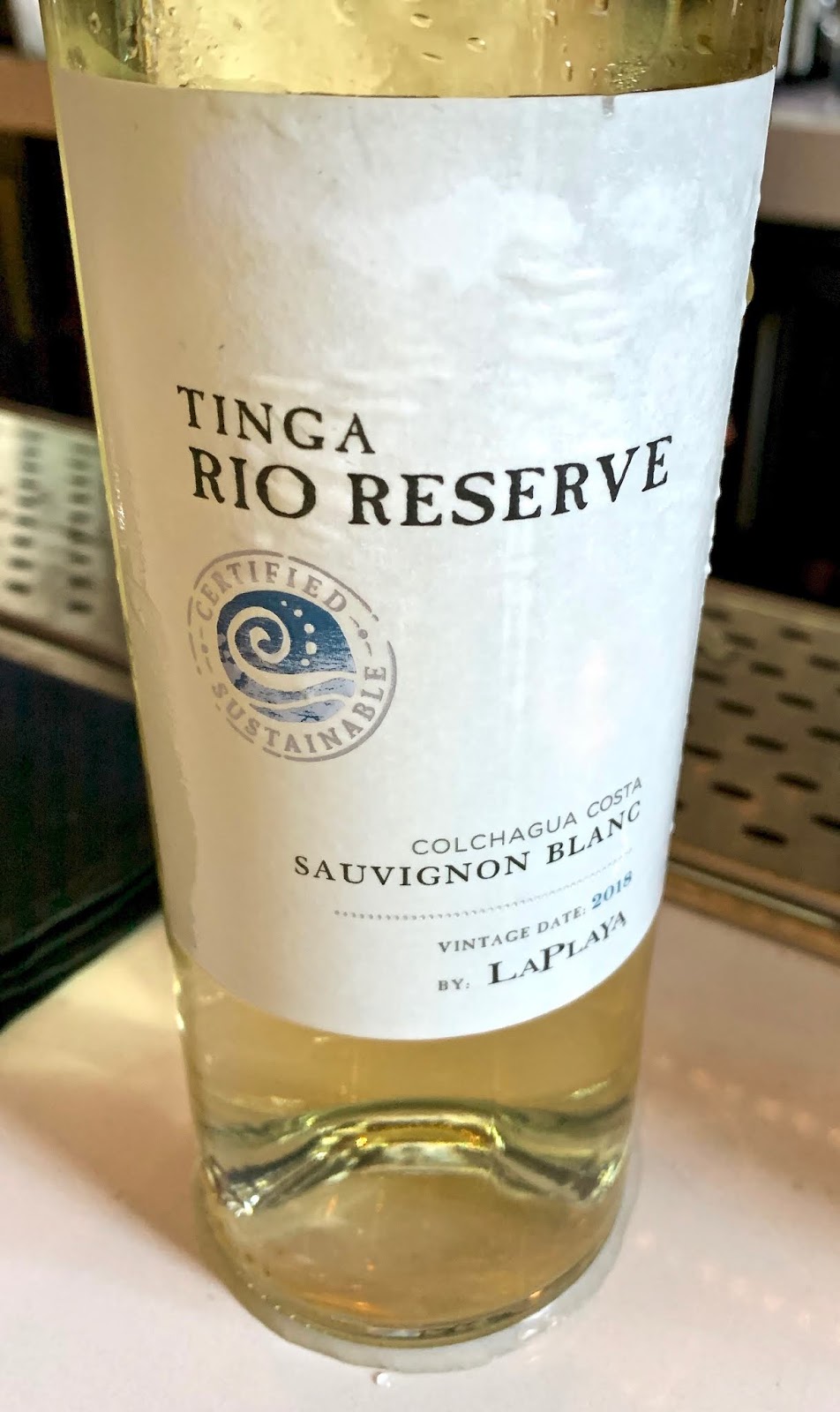
The event took place in the lobby of Hotel Zetta, where eight different operators were to discuss their services with Bay Area travel companies and invited writers (of whom I was one). The format was a sort of musical chairs in which each operator met with one or more attendees for eight minutes before a timer sounded to move elsewhere. This went on for 2-1/2 hours, with a coffee break that included a giveaway raffle, before adjourning to a conference room for a presentation by Sernatur’s regional director Ximena Castro that was probably most useful to those with less experience than mine in the region. Later, there was a Chilean social hour that included snacks and one of the finest Sauvignon Blancs I’ve ever tasted—especially welcome on an unusually hot San Francisco day.

Ximena Castro addresses the attendees.


The Chileans brought this Sauvignon Blanc along with them and, so far, I've been unsuccessful in finding it stateside.
Originally, eight different operators—some of whom I already knew—were to attend the event. In the aftermath of the recent upheavals in Santiago, though, the representatives of Antarctic Airways—with whom I would have liked to discuss their updated services—and Lago Grey - Experience Hotel were unable to get flights out of Santiago. I already knew the owners of Big Foot Patagonia Adventure and the representative of Vértice Patagonia (operator of mountain huts on the famed Paine Circuit, plus a new boutique hotel in Puerto Natales), and was familiar with Antártica 21  and Australis Cape Horn & Patagonia (both of whom sent US-based representatives). New to me were the Chile Nativo adventure operator and HD Hotel Natales (the rebranded Hotel Cisne de Cuello Negro) in Puerto Bories.

The not quite unspoken topic that permeated the meeting was what effect Chile’s recent political disruptions and disorder might have on the upcoming season. There was certainly concern, but also consensus that the Región Metropolitana de Santiago and the coastal region of Valparaíso would be more directly hit than remote Magallanes. That said, cruise ship and hotel cancellations would certainly affect a city like the regional capital of Punta Arenas, which has seen some demonstrations. I recently saw an online story—can’t find the link now—whose headline spoke of “80 percent cancellations” in Chile, but what the story actually said was that 80 percent of hotels and other services had experienced cancellations (which could have been just a single cancellation each for some).

That’s not to dismiss the issue of vandalism and disorder by a destructive fringe, even as the great majority of demonstrations have been peaceful, but President Sebastián Piñera’s embattled government has cancelled the upcoming COP climate conference (at which Swedish activist icon Greta Thunberg was due to appear and also the Asia-Pacific Economic Cooperation summit.

Personally, I would not hesitate to travel to Santiago, Valparaíso or elsewhere in Chile at present, even though I’d advise those with little or no experience of the country to be on alert. In a recent newsletter, the private Federación de Turismo de Chile cited the Subsecretaría de Turismo to the effect that  “our tourism continues to function throughout the country and the most popular destinations visited by international tourists, such as San Pedro de AtacamaElqui Valley, the islands of Rapa Nui [Easter Island] and Juan Fernández [Robinson Crusoe], the Chilean Patagonia and Torres del Paine National Park, are operating with normality.” Aeropuerto Internacional Arturo Merino Benítez is back to normal, but visitors would still do well to have travel insurance in case of disruption.

And the Money?
For foreign visitors, there may be a bright side to all this. About two months ago, the last time I wrote about exchange rates, both the Argentine and Chilean pesos were slipping against the US dollar, and that has continued with the upheaval in Chile and the recent election in Argentina, when the Peronist Alberto Fernández defeated the incumbent president Mauricio Macri.
The Dólar Blue Hoy app is a useful addition to one's smartphone.
The so-called “markets” (and many individual Argentines) have little confidence in Peronism and, consequently, Argentina’s Banco Central (Central Bank) has reinstituted a cepo cambiario (“currency clamp”) that restricts Argentines’ overseas ATM advances to US$50 per transaction (oddly, it puts no restrictions on the number of transactions per day, but those ATM charges could really add up. Meanwhile, individual Argentines can now officially purchase no more than US$200 per month, a measure that seems to be encouraging the informal dólar blue (visitors to Argentina might consider downloading the Dólar Blue Hoy app, pictured here, on their smartphones). Exactly this will develop as the Macri administration gives way to Fernández remains to be seen, but it seems likely that the informal exchange rate will benefit tourists in the short to medium term.
Chile's peso has also slipped against the US dollar and some other currencies.
In Chile, meanwhile, the peso has dipped to 740 per dollar, a fall of roughly three percent since August. This may affect prices slightly, but if foreign visitors avoid the country because of the perception of instability, services such as hotels and tour operators may drop their prices. In any event, matters are less predictable than they seemed even a few months ago.


Sunday, March 5, 2017

Emptying the VAT? Argentina, Chile & Uruguay Offer Tourists Tax Breaks

Recent developments in tourist taxation, in the Southern Cone countries of Chile, Argentina and Uruguay, should interest readers of this blog. In the near future, though, I’ll also be addressing potential visa complications in the face of the United States’ new xenophobic government.

CHILE
For many years, I’ve advised visitors to Chile that, when paying for accommodations in US dollars or by foreign credit card, they are entitled to a 19 percent discount. That’s because foreigners on a tourist visa are exempt from the country’s Impuesto de Valor Agregado (IVA, or Value Added Tax).
Termas de Puyehue, an historic spa hotel eligible for IVA discounts
For those unfamiliar with VAT, it’s a sort of sales tax that levied on products and services within Chile, but not on those intended for export. For some reason, Chile has chosen to define accommodations and some related services as export items, though it’s always mystified me that sleeping in, say, a Puerto Natales hotel might qualify as an export. It’s a legal fiction that also applies, in some cases, to meals and even tours that are part of an all-inclusive package at destinations like Termas de Puyehue Wellness & Spa and the Puyuhuapi Lodge & Spa.
The remote Puyuhuapi Lodge & Spa can also grant IVA discounts.
It’s not quite automatic, though. In the first instance, not all hotels can take advantage of it—they must apply to Chile’s Servicio de Impuesto Internos (SII, Internal Revenue Service) for a franquicia tributaria (export permit) and, in the process, prove that a minimum percentage of their clientele comes from outside the country. In reality, this requirement excludes many modest but perfectly acceptable hostales (B&Bs) and hostels from consideration, even though such facilities could probably use the tax break more than their far wealthier counterparts.
Modest accommodations, like Puerto Natales's Hostal La Cumbre, are often ineligible for IVA discounts.
There’s a recent change in the law that merits noting. Generally, on arrival, foreign visitors receive a 90-day visa, and hotels must make a photocopy of your passport and tourist in order to provide the IVA discount. Though the immigration policy itself has not changed, however, visitors who have been in the country more than 60 days are no longer eligible for the discount.

While the great majority of visitors are unlikely to stay longer than 60 days—even a brief detour in Argentina or another country restarts the clock—it’s worth noting. If it’s more, though, you might as well be a Chilean resident. Note also that the discount depends on an exchange rate that the hotel may have set early in the season, and could be less (or perhaps more) advantageous than the current daily rate.

URUGUAY
To receive an IVA discount at Jacinto, pay with your foreign credit card.
I spend far less time in Uruguay than I do in Argentina and Chile, and only recently became aware of developments in their tourist taxation regime according to Ley 17934. Set at 18 percent, Uruguay’s IVA discount benefits tourists not only in accommodations refunds, but also services such as car rentals and meals. Last year, while dining at Jacinto in Montevideo’s Ciudad Vieja neighborhood, I was surprised to find the discount applied directly to my bill when I paid by credit card. In some cases, though, the discount appeared only when I received my credit card statement at home in California.
My receipt from Jacinto indicates the IVA discount under Ley 17934
For none of the transactions in question did I have to show proof of tourist status—merely paying with a foreign credit card was sufficient. This makes the Uruguayan policy far more convenient than its Chilean counterpart but also potentially vulnerable to abuse—in theory, I suppose, a foreigner could pay for a large dinner by credit card and be reimbursed by Uruguayan friends who would thereby receive the benefit indirectly.

It’s worth adding, though, that the IVA discount for accommodations is only 10.5 percent, and it has seasonal limits—this year, for instance, it is available only until April 21st. Still, the policy benefits everyone, or at least these able to pay with the proper card.

ARGENTINA
Stays at Camping El Bolsón - which has its own brewery - are now eligible for IVA discounts in Argentina.
Both Chile and Uruguay have been doing IVA discounts for some time, but Argentina’s a latecomer to the party. The law’s been on the books since 2001, but only this summer did the government of President Mauricio Macri declare that foreign hotel guests would not have to pay the 21 percent IVA that applies to all other products and services in the country. It’s also applicable to all accommodations, ranging from campgrounds to five-star luxury hotels, though clients will have to show their passports or other identification (visitors from neighboring countries may not need passports). The only acceptable means of payment, though, is a foreign credit or debit card, or a bank transfer. Cash is not acceptable (though Argentine hotels often provide cash discounts).
A stay at Bariloche's classic Hotel Llao Llao also means an IVA discount for foreign visitors.
As always, there’s a strange twist in Argentina’s new measure—it applies only to provinces with international borders. Thus, the interior provinces of Tucumán, Santiago del Estero, Santa Fe, Córdoba, San Luis and La Pampa will not benefit from it. All these provinces probably draw more in-country visitors than foreigners, but Córdoba, San Luis and Tucumán especially could be at a disadvantage to neighbors which do have foreign borders.
Because Córdoba province has no international border, guests at Hotel Sierras in Alta Gracia - Che Guevara's boyhood home - cannot receive IVA discounts.
One final note. The current issue of Condé Nast Traveler misleadingly says that “Argentina did away with its 21 percent hotel tax for foreigners.” This is simply wrong—there never was a hotel tax for foreigners, and Argentine tourists and residents will still be on the hook for that 21 percent IVA (presuming they’re not paying cash under the table).
This kiosk poster in Santiago de Chile promotes Argentina's new tourist tax refund.

Friday, February 17, 2017

Finger Food for All! Eating on the Go in Argentina and Chile

Whenever I’m in southernmost South America, my end-of-the-day ritual is sitting down to a good meal—after spending most of my daylight hours in the essential task of updating formulaic text, it feels like a reward to dine well and enjoy a pisco sour and/or a glass of wine. Even though it’s still technically working—after all, I review restaurants in my guidebooks and this blog—it’s also an opportunity for indulgence.
A pisco sour at Afrigonia, a Patagonian fusion restaurant in Puerto Natales, Chile
At other hours, my eating habits can be strictly practical, and I often grab things on the run, even though I avoid fast-food chains. When I’m driving, especially for long distances, I’ll carry takeaway food such as empanadas that I can eat while on the move. Finger food becomes a way of life.
The pastry display at Café La Gringa, Puerto Varas, Chile
Argentines and Chileans don’t take quite the same approach. For instance, I love cupcakes and muffins, but they’re something to grab and eat on the run. Recently, though, at the downtown branch of La Gringa Bakery in Puerto Varas, I saw two locals eating blueberry muffins with forks. Maybe that shouldn’t have startled me but, to my mind, a muffin is something that you eat with your hands.

That said, Argentine and Chilean table manners differ from mine in many other items that I prefer to eat with the hands. My wife sometimes attributes that to my Scandinavian heritage and calls me vikingo (“Viking”) which, in Argentine Spanish, is roughly synonymous with “slob.” In the following paragraphs, though, I’ll try to explain the differences.
A plate of Argentine-style empanadas
To my mind, one of the world’s greatest finger foods is the Argentine empanada—roughly the size of the palm of your hand (I prefer it to the Chilean version, which is larger with heavier dough). So long as it’s not too warm and juicy—there’s a danger of splashing your shirt—I enjoy the feel of it before I bite in. Still, in many restaurants (not necessarily formal ones), Argentine will eat their empanadas with knife and fork.
A slice of onion-rich fugazzeta at Pizzería Güerrín, downtown Buenos Aires
Then, of course, there’s pizza. When I was a child in the Pacific Northwest—so many decades ago—pizza was a novelty and I recall hearing on the radio that “pizza is eaten with the hands.” Argentines, though, almost invariably choose to consume their thick-crusted, cheese-heavy pizza with knife and fork, and I sometimes feel conspicuous when I bite into a slice of my favorite cheese-and-onion fugazzeta while holding it in my hand. Chileans, for the most part, also use knife and fork when eating pizza.
A lomito sandwich from a stand on the Plaza de Armas, Santiago, Chile
Then there are sandwiches, which Chileans devour at outlets such as Fuente Mardoqueo (one of Santiago’s best sandwich shops). As the photograph shows, Chilean sandwiches can be stacked high or, alternatively, spread wide—some of them are so large as to resemble pizzas. Almost invariably, though, Chileans eat their sandwiches with knife and fork and, given their size and tendency to fall apart, it’s not an unreasonable thing—though I almost always try to use my hands. I do find that I often cannot finish a Chilean sandwich because of its size, and recommend that visitors order one for every two persons—you can always order another.
A Barros Luco - beef and melted cheese - available in downtown Santiago

That’s what Anthony Bourdain learned when he visited Chile and tried the completo—a caloric overload that I relished (pun intended!) when I was a backpacker on a budget but haven’t touched in many years. Bourdain’s famous for diving into everything and did so in Chile, but even he couldn’t finish the foot-long hot dog smothered in condiments including avocado and mayonnaise. At least he managed to avoid soiling his shirt with drippings from this notoriously messy item—which Chileans also eat with their hands.
Anthony Bourdain couldn't finish a foot-long completo when he went to Chile

Custom Search