SinceMarch of 2020, when I fled Argentina and Chile with the onslaught of the COVID-19 virus, I’ve been not quite housebound, but have only managed scattered day trips in the Bay Area and the couple short road trips to California’s Central Coast and the Sonoma/Mendocino County shorelines. Like many others, I’ve spent more time than I might care to admit in front of the TV screen, streaming whodunits and other dramas before retiring early enough to let me walk the dog at daybreak. I've avoided travel shows, because they remind me of what I can’t do until the pandemic recedes (very tentatively, my wife and I plan to return to Buenos Aires in early March for a month).
Meanwhile, in the course of exploring streaming services, I stumbled across an oddball series, a sort of black comedy, set in North Carolina but with links to Argentina. In Good Behavior, which first showed on TNT in 2016 and 2017, English actress Michelle Dockery plays the role of Letty Raines, a resourceful thief and scammer with addiction issues, who’s out on parole and trying to regain custody of her pre-teen son. This rather differs from Dockery’s role as the aristocratic Lady Mary Talbot in the PBS historical series Downton Abbey (disclaimer: I am not a fan of British costume dramas, and have not watched more than a few minutes of that one, to which my wife is addicted).
Shortly after her release from prison, Letty stumbles upon a contract killing and does her utmost to stop it (albeit unsuccessfully). In the process, she becomes involved with Javier Pereira (Juan Diego Botto), an Argentine hitman with a conscience of sorts (Botto is in fact an Argentine who spent part of his youth in the US). The Pereira character is also a chef who sometimes works in the Argentine-style parrilla (grill restaurant) owned by his sister Ava (played by Botto’s real-life sister María in a sort of meta-role).
This Javier, in Oakland, is not a contract killer.
Javier is not a Hannibal Lecter wannabe, but he does have issues with his father Oscar (played by the Argentine-American Daniel Faraldo), who has a dark past of his own. There’s an additional complication in Ava’s ex-boyfriend Teo (played by Canadian actor Juan Riedinger), but there’s plenty of comic relief as well.
Unfortunately, TNT cancelled the show after two seasons, but it remains available on Hulu (no endorsement here, but there are 30-day free trials).
Support Southern Cone Travel
If you've found this blog informative and/or useful, please click a (hopefully appropriate) ad to earn me a few pennies.
In 1970, Chilean filmmaker Alejandro Jodorowsky released El Topo, a surrealist movie that seemingly created the Acid Western genre and was a Mexican entry for the Oscars (it was filmed in Mexico, but ultimately not nominated). This year, Chilean director Maite Alberdi’s El Agente Topo (The Mole Agent) is most emphatically not a sequel, but this rather differently offbeat picture earned a nomination for best documentary, even though it didn’t take home the prize last Sunday.
On one level, The Mole Agent is a real-life spy movie in which a private detective recruits Sergio Chamy, a charming 80-something widower, to infiltrate a nursing home where the detective’s client suspects her mother has been subject to elder abuse. This involves a crash course in surveillance techniques and technology for Chamy, whose sociability swiftly inserts him into a milieu where women outnumber men by ten to one.
Alberdi’s production crew filmed the entire work, with permission (but perhaps some deception), at the Hogar de Ancianos San Francisco in the Santiago suburb of El Monte, in an area I’ve visited as a lesser-known wine region. The finished film is an outgrowth of what was originally a more general focus on Chile’s aging population—by the end of this decade, it could be Latin America’s fastest-aging country, but that’s not what foreign tourists see.
With some minor shortcomings, the Hogar de Ancianos appears to be a well-kept facility, with comfortable accommodations and pleasant gardens, that provides attentive services to its residents. Chamy eventually frustrates his handler by insisting that there is no abuse but, in the end, he concludes that loneliness and familial neglect are major issues that don’t get the attention they deserve. When the popular Chamy finally departs the home, the result is more like a feel-good comedy than an exposé. In fact, it hardly feels like a documentary at all, and Alberti has stated that there’s interest in doing a fictional version—which she herself won’t do because she’s too invested in the one she’s just finished.
El Agente Topo is available for streaming on Hulu (with English-language subtitles, free trial available).
In most years, the Northern Hemisphere winter becomes my Southern Hemisphere summer and, while I’m not a stereotypical summer beachgoer, these short California days get me thinking about the area below the Equator. Sadly, during this pandemic, it’s gotta be virtual, but one option is the cinema. Fortunately, Argentina has one of the Western Hemisphere’s most vibrant film industries, and this has been an opportunity to catch with some things I hadn’t yet seen. It’s vicarious travel but, on one level, it’s satisfying until I can return to the road—ideally, later this year.
In that context, here are brief reviews of Argentine films that I’ve watched lately, all on Netflix. Only one of them is recent, but all of them focus on absorbing (but less than edifying) aspects of life in the country.
Pizza, Birra, Faso (1998)
I’d long intended to watch Pizza, Beer, Smokes (title explanation follows in an endnote), but only recently managed to watch the feature film directorial debut by Uruguayan-born Adrián Caetano (who partnered with Bruno Stagnaro; English-language interview with Stagnaro here). It’s the tale of a group of petty thieves with few scruples—colluding with a taxi driver to rob his passengers, for instance, and stealing the earnings of a double amputee street musician.
Part of their activity is cheekily adolescent, as when they scale a fence to break into the landmark Obelisco—equivalent to DC’s Washington Monument—and climb its staircases in the darkness with the aid of cigarette lighters and paper scraps. Later they get into more elaborate and violent schemes, including an attempted restaurant robbery at gunpoint, but there is also comic relief, as when the delincuentes—who don’t know how to drive—rely on one of their taxi victims, a grandmotherly woman, to chauffeur them around the city. In an fit of compassion, they drop her off at the city airport, where she calls the cops on them.
In the movie the gang climbs the Obelisco, but the directors couldn't get official permission and thus used a studio to replicate the interior staircases.
It is something of an ensemble cast, though Héctor Anglada stands out as El Cordobés, an immigrant from the provinces who wants to run away to Uruguay with his pregnant girlfriend but can’t resist attempting one last big score (in real life, Anglada died in a motorcycle accident at the age of 26). Without spoiling the ending, I will say that this is not an inspiring movie, but it does depict a reality that most visitors will not experience but should at least acknowledge.
Ugi's is the gang's pizzería of choice.
Endnote: Pizza, beer, and smokes are the gang’s priorities, but it’s symbolic of their (lack of) status that, when one of them suggests pizza at the modest Banchero (known as creator of the iconic fugazzeta), the rest of the group overrules him for takeout at the lowest-common-denominator chain Ugi’s. Birra, of course, is the Italian word for beer, and is widely used in Buenos Aires; their preferred Quilmes is the Ugi’s of fermented beverages (no craft brews for these guys!). Faso, meanwhile, is a lunfardo (slang) term for cigarettes (everybody in this film smokes), but it can also mean a joint.
Palermo Hollywood (2004)
Set mostly in one of Buenos Aires’s fashionable neighborhoods—home to the TV and movie industry, and vigorous nightlife—Eduardo Pinto’s film has much in common with Caetano’s, but there’s a major distinction. The protagonists, Mario and Pablo, may be petty thieves (not to mention party animals), but they’ve formed a friendship across class boundaries. While Mario’s father is prosperous and politically connected, Pablo’s working-class family is feeling the pressures of living in an area that’s undergoing rapid gentrification (The trailer above is Spanish-only).
Mario and Pablo profit off Palermo Hollywood's nightlife, but the barrio's gentrification is squeezing Pablo out.
Like the characters inPizza, Mario and Pablo find themselves in a dangerous situation that, in this case, will test the limits of their loyalty to each other. For ne’er-do-well Mario, his lifestyle is a sustained teenage rebellion against his father, but for Pablo it’s his only option for survival and escape from an untenable personal predicament. To say much more would spoil an ending that some might think they anticipate.
Brian Maya, who plays Mario, also wrote the screenplay. Palermo Hollywood showed at the 2005 Sundance film festival.
Al Acecho (2019)
The most recent of these films, Francisco D’Eufemia’s Al Acecho (translated somewhat ambiguously as Furtive) tells the tale of a Pablo Silva, a park ranger who’s trying to reinvent (redeem?) himself after apparent legal problems. In the process, Silva finds himself dealing with various problems including corruption in the park’s administration, some of whom may have condoned or even promoted poaching in an area of surprising biodiversity.
Viewers shouldn’t rush to sanctify Silva, portrayed by Rodrigo de la Serna (who appeared as Che Guevara’s companion Alberto Granado in The Motorcycle Diaries and also plays a key role in the Spanish Netflix hit Money Heist). As with Palermo Hollywood, the ending may not be totally unexpected given the way the plot develops, but it’s not what D’Eufemia’s opening scenario might give us hopes of seeing.
One review described the setting for Al Acecho, Parque Provincial Pereyra Iraola, as “remote” and “little visited.” Even allowing for the fact that the film is fiction, I can’t refrain from pointing out that the park is only about 20 km northwest of the Buenos Aires Province capital of La Plata, and just 40 km from Argentina’s capital, via a major paved highway (When my wife was a student at the Universidad de La Plata, she went there with her brother and friends on day trips for barbecues). I apologize but, as a geographer, I still can’t overlook these things.
In the early to mid-1980s, when I first visited and then lived inBuenos Aires, it was in the Congreso neighborhood barely two blocks from the national legislature (which was out of service then, as Argentina chafed under a military dictatorship). Still, the area itself retained a certain elegance, with the ponds and fountains of thePlaza de los dos Congresosand architectural landmarks such as the Art NouveauConfitería del Molino.
The Plaza de los dos Congresos as seen from the Palacio Barolo (the tower of the Confitería del Molino is visible to the right of the Congress building).
My wife-to-be’s parents owned our modest apartment on Cangallo (now Perón) that was barely two blocks from the Congreso, and was within walking distance of numerous landmarks, including the Molino. They had bought the tiny (cozy?) two-bedroom unit to house their kids while attending the Universidad de Buenos Aires; there were three other apartments in the low-slung building, and everybody had access to a rooftop terrace for asados. Part of the time we shared it with my brother-in-law and his wife, and part of the time we had it to ourselves.
Today, high fences block access to the pools of the plaza (the Congreso rises behind the monument).
Accustomed to single family houses, I sometimes found the apartment cramped, but it was easy walking distance to the theater and cinema district—not to mention the world’s greatest ice creamery—along Avenida Corrientes, and to the country’s symbolic heart along the Avenida de Mayo. At the east end of Avenida stands the Casa Rosada presidential palace but, from vantage points like the observation deck of the Palacio Barolo, the west end view of the Congreso and its plazas was truly spectacular.
In better times, families gathered outside the pools, and kids waded in them.
Sadly, the area often looked less appealing close up. I always enjoyed watching kids wade into the pools on hot summer days but, in the aftermath of Argentina’s 2001 economic meltdown, city government fenced off access to them, and areas that were once gathering places became little more than thoroughfares. Even before that, in 1997, the landmark Molino shut down and gradually deteriorated even though it was declared a national historical monument shortly thereafter.
The Confitería del Molino is a true landmark (the decorative windmill itself is not yet functional, according to reports).
I didn’t really frequent the Molino, though I did pay one memorable visit when a local journalist made numerous useful suggestions for the first guidebook I ever wrote on the Argentine capital. Now, I read, the scaffolding has gone down from a major restoration and the building itself, now property of the Congreso, will reopen to include a new version of the confitería; while I have no photos of the interior, Madonna shot a kitschy 1995 video there that displays the main floor and its columns.
The renovated Cine Gaumont is another positive development in what has been a declining neighborhood.
While the neighborhood is still recovering from decades of neglect, there are other hopeful signs such as the revival of the classic Cine Gaumont, operated by the Instituto Nacional de Cine y Artes Visuales (National Institute of Cinema and Audiovisual Arts). Meanwhile, our old apartment—now the property of my wife and her three siblings—is rented out to a Colombian immigrant family. Despite the worn exterior, it’s still comfortably livable.
Our weathered apartment building, on Perón (ex-Cangallo) is better than it looks from the street.
Even though I may never live in the neighborhood again—since 2002, we’ve owned an apartment in Palermo—I look forward to revisiting the Molino and, perhaps, enjoying my morning medialunas alongside the congressional powerbrokers. At least, when it becomes possible to travel there again.
In the current months of semi-quarantined torpor I have, like millions of others, spent an inordinate amount of time in front of the tube. Often my tastes run to Scandi-Noir mysteries but, over the past week, we discovered a worthwhile alternative that takes me back to Buenos Aires and elsewhere in Latin America with Rompan Todo (Break It All), a six-part documentary on rock music south of the border (despite some notable omissions, to be detailed below).
Rompan Todo focuses primarily on Mexico (Mexico City, mostly) and Argentina (primarily Buenos Aires), and evokes nostalgia not just for the distant origins of that scene, but also for the city that I can’t visit for the foreseeable future. I’m of the generation for which rock music is a touchstone, and I touched on the Argentine scene myself in a National Geographic Traveler assignment a decade ago.
In the Beginning…
The series, though, starts with the California-born Richard Steven Valenzuela—better known as Richie Valens—who energized aspiring south-of-the-border musicians with his now standard “La Bamba,” adapted from a Mexican folk song. Not so many years later, though, the influence came from across the Atlantic with the Beatles. As the series’ Argentine producer Gustavo Santaolalla notes, the earliest Argentine bands often performed cover versions in English and were often derivative—Sandro, the “Argentine Elvis,” performed Spanish-language versions of songs like Tim Hardin’s “If I Were a Carpenter.”
This tribute album to the late Sandro is a fine introduction to Mexican and South American bands.
From the first, governments and other institutions like the Catholic Church were skeptical and often hostile toward rock. In 1971, for instance, Mexico had its own Woodstock in the unexpectedly politicized Festival de Avándaro, and Mexican officials forced rock to go underground—almost literally—for years. Argentine musicians underwent a similar experience in the approach to and aftermath of the 1976 military coup that resulted in exile for many.
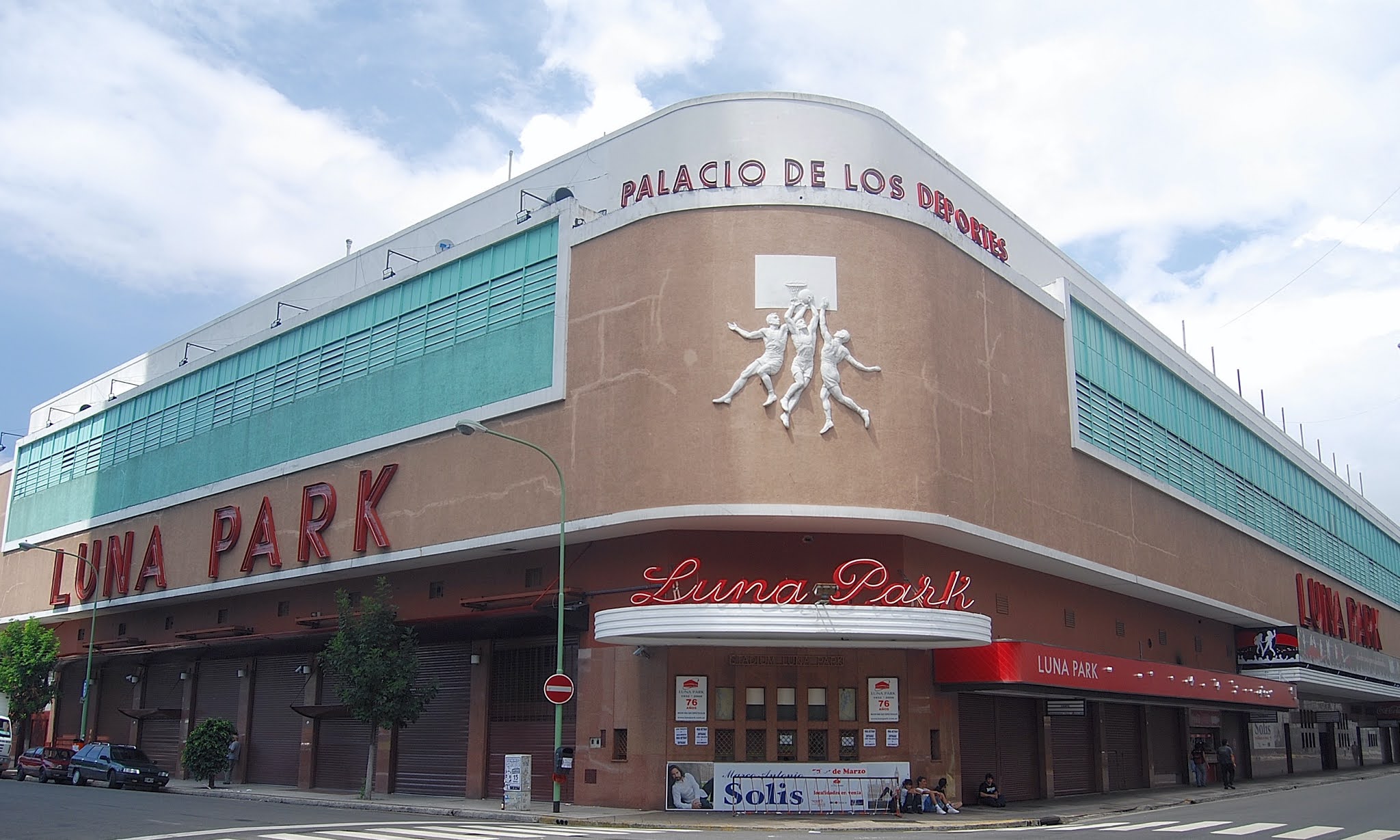
Billy Bond's fans trashed the interior of Luna Park.
One of those was Billy Bond, whose appearance in the film was a revelation–I’d never even heard of the Italian-born rocker (given name Giuliano Canterini) but, from the footage here, he seems a precursor of punk. In 1972, when he and his band La Pesada del Rock and Roll played the iconic Luna Park Stadium—an auditorium where Eva Duarte first charmed Juan Perón en route to becoming Argentina’s most powerful woman ever—Bond urged his cheap-seats fans to descend to the unsold vacancies closer to the stage, resulting in vandalism and a police round-up. Within two years, apprehensive of Argentina’s authoritarian trends, Bond left for Brazil, but continued to produce Argentine bands and, in the course of this series, he proves himself to be admirably articulate (The series, by the way, takes its name from an album by Uruguay’s Los Shakers, but “Break It All” might as well have been Bond’s motto in his youth).
Meanwhile, in Chile
Chile's coupmongers executed Víctor Jara in 1973.
Chile underwent a similar trauma with the 1973 coup that overthrew constitutional President Salvador Allende and essentially shut down the music scene—beginning with folksinger Víctor Jara, whom Augusto Pinochet’s forces tortured and killed in an especially gruesome manner. My experience there has been more limited, though I did have the good fortune to meet, in Santiago, Claudio Parra of Los Jaivas, a group that formed in 1963 (the band name, by the way, is an adaptation of their original English “High-bass,” though it can also mean a species of crab found in Chilean waters).
Los Jaivas backstage at the Teatro Universidad de Chile (Claudio Parra is second from left)
I had assumed the band left because of the coup, but Parra corrected me on that—as the film makes clear, they had already decided to head to Argentina for commercial reasons, and the coup merely delayed their departure. They then spent several years there and in Paris before returning to Chile, where they still tour every year. When I saw them in Santiago around the turn of the century, they struck me as a Pink Floyd comparable and, onscreen here, La Ley’s Beto Cuevas compares their Alturas de Machu Picchu (Heights of Machu Picchu, based on a poem by Pablo Neruda) to Floyd’s Live at Pompeii.
Rock Nacional, In the Post-War
My own experience with Argentina's rock nacional dates from the post-Falklands/Malvinas War period, when the dictatorship faltered (in a brief interview, the Dylanesque León Gieco ruefully admits that he and other musicians were complicit in supporting the war and, by extension, a regime they presumably loathed). After the conflict, though, they focused on songs with Spanish rather than English lyrics—Charly García, for instance, has recorded a Spanish-language version of the Byrds’ “I’ll Feel a Whole Lot Better” and once, in an under-the-railroad-tracks dive in Palermo, I heard him do “Soldado de Lata,” a similar adaptation of the Small Faces’ “Tin Soldier.”
A performance at Palermo's Roxy Live Bar (the bassist, second from right, is Charly García's bandmate Zorrito von Quintiero).
Fito Páez performs in El Calafate.
Other than García, the biggest names I’ve ever come close to are Soda Stereo, the first Argentine band to become a major international touring sensation, and Fito Páez, now a solo artist who also worked with García and others. I know little about Soda’s music, but I happened to be in the provincial capital of Tucumán when their publicists were passing out promotional packs of cigarettes in the central Plaza de la Independencia prior to a concert (I was not impressed). Páez I saw as part of El Calafate’s annual Festival del Lago in 2014, but the outdoor sound system was less than ideal.
Oversights and Omissions
One unspoken theme through most of the series is the scene’s overwhelmingly masculinity, but there are several prominent women, most notably Andrea Echeverri of Colombia’s Aterciopelados and Mexico’s California-born Julieta Venegas, who has worked with Santaolalla (who lives in Los Angeles). I’ll note that when I saw Charly García in Palermo, his lead guitarist was María Gabriela Epumer, who died at 39 due in part, apparently, to a medical misdiagnosis. Truly unique is Los Jaivas’ Juanita Parra (in the Chile section photo above), who replaced her father Gabriel as the group’s drummer after a fatal automobile accident. Santaolalla, though, says rock’s future is female—and, as a producer with pedigree, he’s in a position to contribute to that.
In summary, Break It All remains a worthy account of rock music south of the border (and the Equator), but with one other major omission—although it subtitles itself “The History of Rock in Latin America,” Brazil is conspicuous by its absence. I’ll confess to knowing little about its music beyond bossa nova, but a cursory glance at Wikipedia suggests that the region’s largest country has had a flourishing rock music scene ever since the mid-1950s. Perhaps Netflix should retitle the current series to represent its Spanish-language bias, and then underwrite a separate work on the history of rock em português.
When I arrived in Santiago in late February, the COVID-19 pandemic was barely underway but, a few months earlier, theestallido socialhad done away with the complacent view that Chile was the longstanding exception to regional disorder. Ignited by what had seemed a minorMetrofare increase in October, the “social explosion” transformed the capital's urban landscape, such as the landmarkPlaza Italiathat activists renamed “Plaza Dignidad” (a term which should need no translation).
Late last year, activists turned Santiago's Plaza Italia into "Plaza Dignidad," a rallying point for anti-government protests.
In the aftermath of the explosion, the center-right government ofPresident Sebastián Piñeraacceded to demands for aplebiscite on a conventionto reform the1980 constitutionthat was the legacy of the latedictator Augusto Pinochetand his legal enablerJaime Guzmán, and that ensured that the far-right would be over-represented in Congress. Pinochet’s legacy also included a“Chicago Boys”macro-economic system which, even as it made Chile Latin America’s most prosperous economy, brought enormous concentrations of wealth and major disparities—including health coverage and student debt—for which the Metro fare increase may simply have been the straw that broke the camel’s back.
It’s been building over the years, though, as I saw reinforced over the past several days when I discovered the Chilean TV series “Bala Loca” (2016) on Netflix, in which the paraplegic Mauro Murillo (Alejandro Goic)—victim of an automobile accident—is a former TV star turned crusading journalist intent on exposing the corruption behind one of the privatized health services known as Instituciones de Salud Previsional (ISAPREs). A brief trailer (in Spanish) follows here.
Murillo sets up an online news site known as En Guardia (a reference to The Guardian may not be purely fortuitous), but is unable to recruit one of his preferred journalists, Patricia Fuenzalida (Catalina Saavedra). who prefers to freelance and then dies, supposedly coincidentally, from a bala loca (“stray bullet”) during a supermarket robbery. I’m not completely up on the slang here, but its strikes me that Murillo himself, in investigating her death, becomes something of a “loose cannon” as he sees conspiracy in various government institutions including the military. He’s also an alcoholic and a cocaine junkie, facts that figure into the ultimate resolution of the story.
Bala Loca takes some inexplicable digressions and non sequiturs, particularly regarding family issues, so that its ten episodes probably could have been condensed into no more than six. Still, it offers some insights into what’s created today’s political scenario.
That said, the referendum originally called for April but postponed due to the COVID crisis, will take place this Sunday October 25th. The consensus is that it will pass, despite the hysteria of hard-core pinochetistas, as detailed in a recent New Yorker article by Peruvian journalist Daniel Alarcón. How exactly a new constitutional convention plays out, though, could be another issue entirely.
Before postponement of the plebiscite, posters rejecting it were not uncommon in upper-class districts like Las Condes.
That’s because, even if the plebiscite gets a favorable #Apruebo (“I approve”), there’s likely to be a contentious convention to determine the content of the new constitution. That’s unlike the plebiscite of 1988, when opponents of extending Pinochet’s autocracy were virtually unanimous in their rejection of him—as depicted in Pablo Larraín’s landmark movie No. The details remain to be worked out.
It's been a while since I've posted but, given the pandemic disruption of global travel, especially in my favored region of southernmost South America, I've been distracted with other matters. We're not dead yet, though, and I notice that, in recently commemorating the 75th anniversary of World War II's conclusion, the New York Times Book Review included just one minor item in the Western Hemisphere beyond the Río Grande—a children's book set in Cuba.
In that context I'll note that for every other Western Hemisphere country, the United States is not “America” but, rather, part of the Americas (In the end, we are all Americans). So, here's a book that addresses the Times's lacuna.
The Tango War covers the conflict from a southerly perspective.
In The Tango War, US journalist Mary Jo McConahay demonstrates that the Allied Forcesand Axis powers tangled (pun intended) away from the European and Asian spotlights both before and during the actual conflict. She focuses primarily on the United States and Germany, and their involvement in Mexico, Peru, Brazil and Argentina, though her title misleadingly suggests the centrality of Buenos Aires. There is less coverage of other countries, though Chile and Uruguay also figure into the story.
Hoover was a publicity hound who tried to intimidate his opponents, but Donovan preferred to work behind the scenes. While Hoover often sent ill-prepared agents into the field, primarily in Mexico, Donovan employed professionals—one of whom was the late Woodrow Borah, a colonial Mexican history specialist who was also my own outside dissertation adviser at Berkeley. Borah, a fairly conservative man whose job involved working directly under a Soviet informant supervisor, told me that his main Research and Analysis (R&A) task was tracing the movement of German money south of the border.
Beyond the Equator
Farther south, the scenario was more complex. On the Pacific Coast, the issue was Japan and, in a regrettable development, legitimate concern took an illegitimate form—with little or no evidence, Peruvian authorities collaborated to expel nearly 2,000 Japanese-Peruvians to so-called “relocation centers” in North America, where US citizens of Japanese descent were already confined. Some of these Nikkei were, in effect, held hostage for prisoner exchanges during the war, though others remained in the United States after the conflict ended.
Brazil gave off ambiguous signals, as dictator Getúlio Vargas had strong economic ties with Germany and Italy, and large German and Italian immigrant communities abounded with Nazi and Fascist sympathizers. Brazil also had its own homegrown Fascist movement, the Integralists, but Vargas’s response to Franklin Delano Roosevelt’s “Good Neighbor Policy” tipped the balance. In fact, in support of the famous 10th Mountain Division, Brazilian troops played a key role in the Allied campaign that brought down Italy’s Benito Mussolini.
British agents watched the Graf Spee from atop Montevideo's Palacio Salvo.
The Graf Spee's captain killed himself at Buenos Aires's Centro Naval.
That said, the United States laid the grounds for Argentina’s belated entry into the war, at least partially, through the exercise of “soft power” in the form of–wait for it—Walt Disney! As part of the Good Neighbor Policy, Disney and a crew of assistants known as “El Grupo” produced an animated film that depicted positive stereotypes of Brazil and Argentina, including the legendary “Gaucho Goofy.” Later, Argentine gaucho caricaturist Florencio Molina Campos worked on several Disney projects.
El Gaucho Goofy was part of a longer animated film called Saludos, ¡Amigos!
While Argentina came around opportunistically at war’s end, the country became a prime destination for ex-Nazis who, with Vatican collusion, used so-called “ratlines” to escape Europe and reach South America. Some of the most notorious war criminals, such as Adolf Eichmann and Erich Priebke, became long-term Argentine residents, but others, such as Klaus Barbie, Joseph Mengele and Walter Rauff, ended up in Bolivia, Paraguay, and Brazil. A low-level Nazi, Paul Schäfer, headed the cultish Colonia Dignidad in southern mainland Chile and cooperated with the Pinochet dictatorship before escaping to Argentina to avoid prosecution as a pedophile. Eventually extradited, he died in prison in Santiago.
The Cold War and Its Aftermath
All this constitutes a readable account that fills a notable gap in the World War II saga, but in my opinion McConahay (whom I have met) stretches it a bit to attribute Argentina’s “Dirty War” too directly to World War II. She cites Uki Goñi and Patricia Bernardi, both of whom I know, on the parallels between Nazi tactics and those practiced by their own country’s 1976-83 dictatorship (Patricia’s sister Claudia, who also works with the Equipo Argentino de Antropología Forense (Argentine Forensic Anthropology Team) is a frequent houseguest of ours in California).
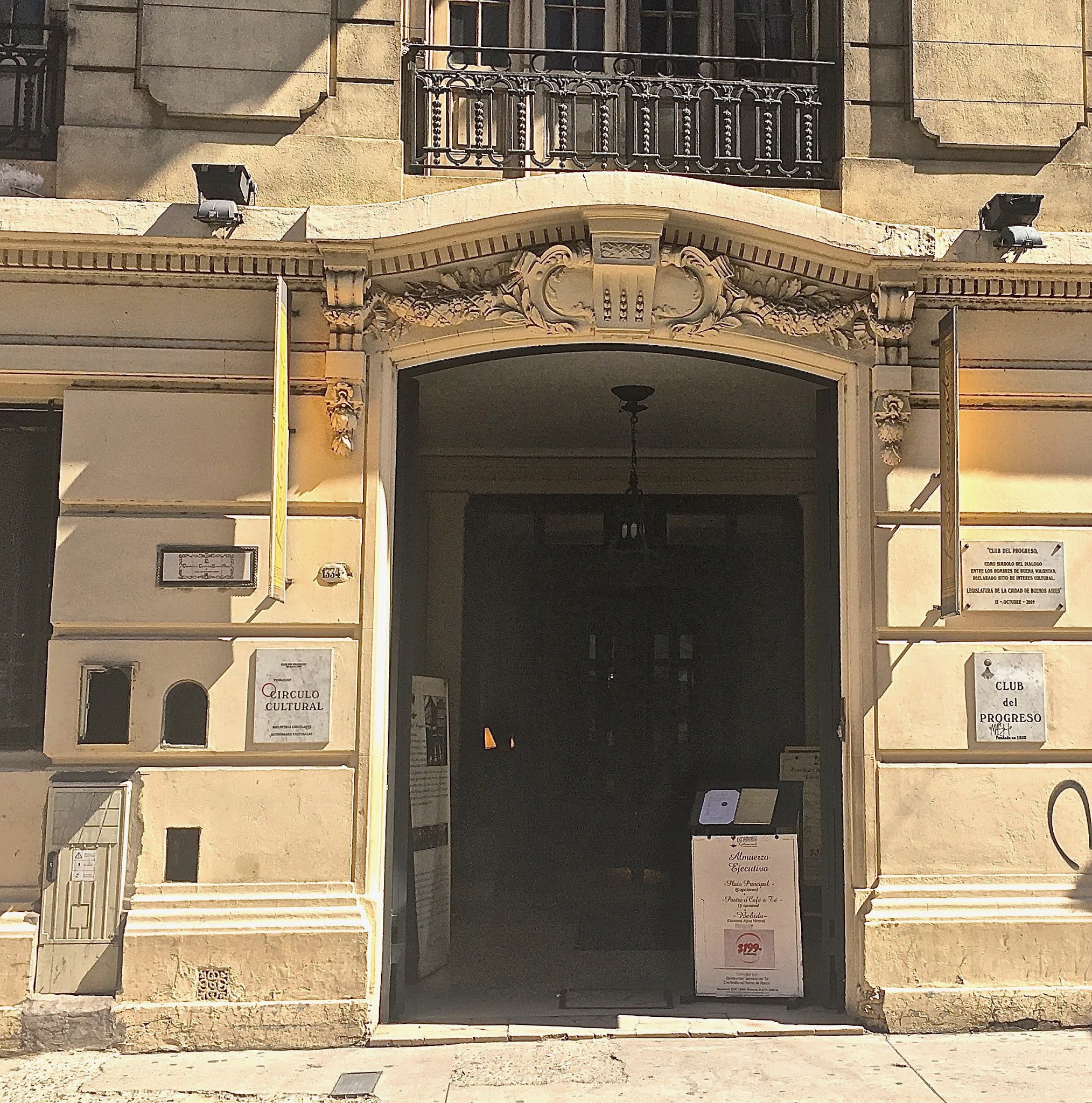
Intending to dine at the Club del Progreso, in 2002, we were startled to see a dining salon outfitted for an apparent Nazi event.
Certainly the Argentine military had extreme right-wing, often anti-Semitic elements. Anecdotally, I can’t forget the time in Buenos Aires that my wife, her brother, and I were startled to see an entire dining salon at the classic Club del Progreso restaurant outfitted for an apparent private event with swastika flags and other questionable artifacts. Preparing to leave in disgust, we nevertheless asked about the décor, and learned that it was a set for a scene in the 2003 film of Imagining Argentina, with Antonio Banderas and Emma Thompson. That relieved our misgivings for the moment, but the fact that even a period film would depict Nazi nostalgia in Argentina has left a lingering impact—especially since the United States government was not guiltless in the so-called Proceso.
Support Southern Cone Travel
If you've found this article useful and informative, please consider earning me a few pennies by clicking on an ad.
When I read Latin American literature, I usually do so in English—partly because my own Spanish, though fluent, is more academic than idiomatic, and partly because English is, presumably, the native language of most readers of this blog. I also want to provide an idea of the availability of Latin American literature—mostly Argentine and Chilean—to an English-speaking audience.
Trabucco's novel won the Man Booker International Prize.
Trabucco’s protagonists are three young Chileans, two women and a man, one of whose parents has recently died in German exile but expressed her desire to be interred in her South American homeland. When a mysterious ash storm halts flights into Santiago, the three have to cross the Andes into Argentina—in a loaner hearse—to fetch the mother’s casket at the airport in Mendoza.
Trabucco's characters don't see the same landscape I do when crossing the Andes to Argentina.
Having crossed this border many times—though never in a hearse—I found the stream-of-consciousness narration hard to follow, perhaps because I view the crossing from the viewpoint spectacular landscapes rather than as part of a surrealistic mission that gets even more so when the three amigos have trouble locating the body and, then, getting it released into their custody. The narrators take such liberties with geography that I found it difficult to follow, even as I could sympathize with their quest (I lived in Chile during part of the Pinochet dictatorship, and can still recall measures like Santiago’s 11 p.m. curfew, though I never personally felt any threat there).
Maybe I’ll have to reread this, at a more leisurely pace, to get as much out of it as Chilean millennials dealing with their parental hangover traumas would. On the other hand, I might prefer to see it as a black comedy, perhaps in the hands of nonagenarian film-maker Alejandro Jodorowsky (the trailer above is from his cult classic El Topo). Whatever the result, I’d have to say “Don’t try this at home.”