Tuesday, February 12, 2013

Dancing in the Mud? Andean Aftermath


There’s dancing in the streets of Buenos Aires today, just as there is in New Orleans and Rio de Janeiro – it’s Fat Tuesday, and Carnaval celebrations are in full swing. It’s not the spectacle in the Argentine capital that it is in Brazil or Louisiana, but neighborhood murgas (troupes) still kick up their heels. So do those in Gualeguaychú, the acknowledged capital of Argentine Carnaval, and in Uruguay (whose Museo del Carnaval in Montevideo - pictured below - is well worth a visit).
Meanwhile, in the Andes on both sides of the border, Argentines and Chilean are digging their way out of the mud left by summer storms in Argentina’s Mendoza province, which have closed the main border crossing, and the Chilean village of San Pedro de Atacama, which received almost unprecedented rainfall. In the short term, there’s been no solution for the disruptions caused by these unusual weather events.
Last Friday, I speculated that Chile’s southerly Paso Vergara might be an alternative crossing to Argentina but, according to the Mendoza daily Los Andes, the Vergara is also closed. That leaves only the Paso Pehuenche (pictured above, looking toward the Chilean side) from Talca to Malargüe, but the paper adds that the increased traffic has overwhelmed the customs and immigrations facilities along the route, “with lines of vehicles one kilometer long, and an almost five hour wait at the border post of Las Loicas,” on the Argentine side. Lines at the Chilean border post of La Mina were even longer.

With insufficient facilities at a rarely used crossing, Argentine authorities have kept the border open beyond the normal 6 p.m. closure, but that’s only helped slightly. According to one eastbound traveler, the usual five-hour journey from Talca to Malargüe took 11 hours this time. It’s still looking like a challenging season, especially with Mendoza’s wine harvest festival on the horizon.
Meanwhile, I received a couple first-hand reports from and about San Pedro de Atacama. My friend Martin Beeris, owner of the Cosmo Andino travel agency in San Pedro, reports that “The road to Calama got washed away, big, big holes really. All sites closed for three full days, only now slowly getting back to normal. The Río San Pedro returned to its course, where it used to run years ago” before authorities decided to build housing projects there. “It's a mudpool right now, many people have debris, rocks and shit up to their necks, some have actually lost their homes. No lives lost and that's a miracle. I had not seen this kind of rain since 2001, possibly even 1988. 33 millimetres in less than one hour, the first time we got wet.”
On top of that, a Dutch cyclist who was camping nearby got swept away by a mudflow but, fortunately, Carabineros police rescued him, “buried in mud and water, in precarious conditions and dressed only in shorts,” after receiving reports of an unattended tent and bicycle. With temperatures below freezing at night, the cyclist was fortunate to suffer only a broken leg and is now hospitalized in Antofagasta.

On Friday, I also speculated that the Hotel Alto Atacama might have been affected by the floods, and hotel publicist Kristina Schreck tells me that “the Alto is closed until Feb. 17 until we can get everything in order. We've been moving reservations and/or returning money to clients booked during this time.” It was not, as I had guessed, an issue of access up the narrow river canyon, but that “The pools flooded and the generator area was flooded so they're trying to fix that - less of an access issue and more of a cleaning up issue.” It’s probably a tossup whether Mendoza or San Pedro returns to normality first.


Win This App!
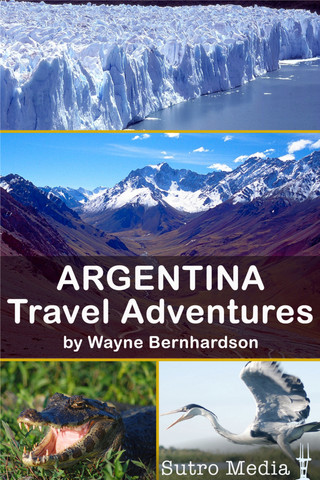
Soon, as the new edition of Moon Handbooks Chile comes out later this month, I will have a contest to give away some free copies on this blog. In the meantime, for those of you have an iPhone, iPad or iPod Touch, I am giving away ten copies of my Argentina Travel Adventures and Chile Travel Adventures apps, with no strings attached.
Simply write me at southerncone (at) mac.com, and I will send a code for a free download of either Argentina or Chile, up to a total of ten (no more than one per person, please). For those of you who use Android devices, I regret that Google does not permit such promotions, so you’ll have to shell out US$2.99 (which presumably should not break your budget).

Friday, February 8, 2013

Floods & Mud: Summer Storms Hit the Andes


In the early 1980s, I hitched a lift on a flatbed truck from the Chilean mining town of Calama to San Pedro de Atacama and, about halfway there, we found ourselves in near whiteout conditions – in the arid Atacama desert, not just rain, but snow. Fortunately, I arrived safely but now, whenever I think of the world’s driest climate, that still comes to mind.
Last April, while spending several days in San Pedro, I did not experience any rainfall, but storms in the Andes caused flash floods that washed away segments of roads in the Quebrada de Quitor, briefly closing access to my accommodations at the Hotel Alto Atacama. Today, though, it’s much worse, as the online Santiago Times reports that heavy rains have left nearly 5,000 people in San Pedro without running water and electricity. Highway damage has also closed the Paso de Jama border crossing (pictured above) to the Argentine provinces of Jujuy and Salta.
Some similar has happened in Argentina, where mudslides caused by heavy rains in the upper drainage of the Río Mendoza (as seen in the video above) have closed the international highway to Chileaccording to the Buenos Aires daily Clarín, the road has been cut in more than 20 places. This is the most important border crossing between the two countries, as international trade relies on the route; its timing is particularly unfortunate for the tourism industry, as cross-border traffic is abundant at this season. Mendoza’s annual wine harvest party, the Fiesta Naiconal de la Vendimia, begins the first week of March.

To make things even tougher for border-crossers, repairs of the international highway on the Chilean side presently require one-way traffic: westbound vehicles from Argentina may travel during daylight hours (8 a.m. to 7 p.m.), while eastbound vehicles from Chile must travel at night (8 p.m. to 7 a.m.). Until the Argentines manage to clear the road on their side, though, this is a moot question, and it remains to be seen how it affects the summer season.
Meanwhile, any Argentines vacationing in Viña del Mar who need to be back to work on Monday will have find an alternate route, and the road over the Agua Negra pass (pictured above), east of La Serena and Vicuña, has also been closed. The next closest crossing is the Paso Vergara (pictured below), east of the city of Curicó, but that involves a detour of more than 200 km south of Santiago and, once across the border, several hundred km more north to Mendoza.
What with all the currency controls, it was already difficult for Argentines to travel outside their own borders, but this is making it difficult for those who could to return. The rest of the summer could be a real challenge.

Wednesday, February 6, 2013

Welcome to Argentina? A Visa/Reciprocity Update


Several times I’ve written about the so-called “reciprocity fees” that Argentina and Chile collect from travelers with passports from countries that charge visa fees for Argentines and Chileans – most notably the United States, Canada, and Australia, but also Mexico in the case of Chile. In the case of US citizens, both countries now charge US$160 for the privilege of entering their territory. For Argentina, Australians pay US$100 (single entry), while Canadians pay US$75 (single entry, valid for multiple visits over three months) or US$150 (valid for five years).
Chile has done this for quite some time, and it’s a simple process – arriving passengers at Santiago’s Aeropuerto Internacional Comodoro Arturo Merino Benítez line up on arrival, where authorities collect the fee and affix a receipt that’s valid for the life of the passport (the “tourist card” is a separate document, usually valid 90 days and renewable for another 90). Santiago’s airport is the only border point where Chile requires “reciprocity;” arrivals at other airports, or land or maritime border crossings, pay nothing.

“Reciprocity” is a relatively recent measure for Argentina and, initially, it only applied to air arrivals at Buenos Aires. Late last year, though, the government announced a broader measure for which I had only second-hand information and, for some weeks, I’ve been trying to clarify the rules, which are singularly opaque on the Migraciones website. After getting shuttled from one anonymous functionary to another, I finally received the following summary (my translation) from the Area de Coordinación Operativa, Direccion General de Movimiento Migratorio, Dirección Nacional de Migraciones: “We are pleased to inform you that the reciprocity fee should be paid if you enter by any border crossing (whether by air, land, or sea/river). The only means that remains exempt from payment is entry by cruise ship until June 30th, 2013.”

Probably the best available summary is now on the US State Department website, which explains that US citizens (and others, presumably) must pay the fee by credit card through the Provincia Pagos website. This requires setting up an account that, I expect, most visitors will use just once in a lifetime. I haven’t had to do so yet, because I paid mine in Buenos Aires when Migraciones still accepted cash, and it’s valid for another seven years or so (though I now have to carry two passports, as the Argentines pasted my receipt in one that is now expired).

My friend Álvaro Jaramillo, who is leading a wine-and-birding tour to Chile and Argentina next month, is the first person I know to have gone through the process of paying the reciprocity fee online. Álvaro, who is Chilean-born but carries US and Canadian passports, found the process relatively straightforward, but with some glitches.

According to Álvaro, the process was “cumbersome but doable, it was not always clear what the next step was but I got through it. Largely I succeeded because I have done a lot of payments online, but this one had its slight oddities. I am not sure a little old lady from the Midwest who does not get on the computer a lot will be able to adequately manage this.” One issue appears to be that Migraciones could not be bothered to hire a professional translator: “The oddities are mainly some of language, where you have to know to ‘add form’ and ‘print ticket’ instead of ‘upload data’ and ‘print receipt’ or something that makes more sense.”

Having printed the receipt, Álvaro recommends making more than a single copy, which is scanned when entering Argentina, because “I have no idea exactly how to login again and print a new receipt in case I lose the first. What I did is print one to PDF, so that I can have a copy that I can print in the future and I would suggest that others do this if they know how to print to PDF.”

Personally, I consider “reciprocity fees” to be foolishly counterproductive measures that might more accurately be called “retaliation fees.” As a US citizen, I would prefer that my own country make it easier for foreign visitors, and it’s understandable that a discriminatory visa process – Argentines and Chileans must jump through multiple hoops to get one – would upset someone who might have to fly four hours, at great expense, for a ten-minute interview at the US consulate in Buenos Aires or Santiago. Visa reform in the US (as well as Canada and Australia) may be the only hope for ending “reciprocity” as we’re unfortunately getting to know it.

In Argentina’s case, “reciprocity” may have contributed to the fact that foreign tourism fell by more than four percent in 2012. The obligatory bureaucratic obstacle of applying online, rather than even having the option of paying on arrival as in Chile, is another disincentive. Coupled with inflation upwards of 20 percent, the fee has made Argentina a more expensive country to visit, and it may discourage budget travelers – the prosperous professionals of the future - in particular.

In all likelihood, “reciprocity” simply redistributes some tourism income directly to the government – in both Argentina and Chile, that US$160 goes to the treasury instead of hotels, restaurants and other services. Eliminating it unilaterally would require long-term thinking, but that sort of thinking is hard to come by, especially in Argentina.

Saturday, February 2, 2013

Argentine Peso Plunges Again


Not so long ago, I wrote a post about the exchange rate breach between Argentina’s official peso and the US dollar which, when I left Buenos Aires in mid-December, was selling for about 6.30 pesos on the “parallel market.” The official rate was then, and still is, slightly below five pesos but, on Friday, the skyrocketing dollar rose briefly above eight pesos before dropping slightly below.
The government of president Cristina Fernández de Kirchner professes to be unconcerned, suggesting that the dollar’s rising value is a seasonal phenomenon, as Argentines unable to purchase dollars legally are seeking them to travel elsewhere in South America or overseas. That’s not totally false, as January and February are the prime vacation months, but the rapid rise has to be cause for concern, especially when other regional currencies, such as the Chilean peso, are appreciating against the dollar.

It’s still a marginal market but, on Friday, the Buenos Aires Herald editorialized that the parallel exchange rate was “one of the many self-inflicted wounds from the currency curbs of the past 15 months which have been gradually strangling economic activity…” This week, even the loyalist daily Página/12 criticized the government for arbitrary exchange policies of “clumsy implementation, lacking transparency” that refuses to explain why it “grants or denies funds to citizens who want to exercise their right to leave the country…”

On Friday, though, the city daily Clarín suggested that government-friendly bankers could undercut the parallel market by selling dollars on the cheap, in an attempt to maintain the official rate. Meanwhile, the International Monetary Fund has censured Argentina for falsifying economic statistics, including inflation figures, allowing the country to repay its loans on more advantageous terms. A recent Los Angeles Times column, by statistician Joseph Kadane, explains the issues thoroughly.

What does this mean for visitors, though? Well, at the official exchange rate, with 25 percent inflation rather than the 10 percent the government admits to, Argentina is getting more expensive. At eight pesos to the dollar, it’s considerably cheaper but, as I’ve suggested before, this can be risky for visitors who don’t know their way around. One intermediate alternative, whose legality falls into a grey zone, is Xoom, which pays less than the black market rate but considerably more than the official rate – as of yesterday, it was about 7.40 pesos to the dollar.

I have not used Xoom myself, but I’ve had good feedback on their services from friends in Buenos Aires. It involves a bank transfer that takes place outside Argentina’s borders; Xoom then transfers the peso equivalent for a cash payout in Buenos Aires – there’s a convenient outlet in the Retiro neighborhood - or another Argentine city (there are only a handful in the provinces, however – for instance, the only Patagonian option is the city of Trelew, in Chubut province). This is obviously less convenient than the corner ATM, but the difference is great enough that it’s certainly worth consideration.
Custom Search